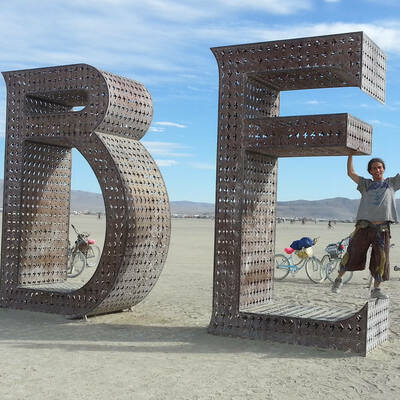
I am detecting the skeleton of a user freedom maturity model framework here.

social.finkhaeuser.de/@jens/10…

@jens @be
Jens FinkhΓ€user Β―\_(ツ)_/Β― (@[email protected])

@[email protected] @[email protected] @[email protected] Oh, absolutely! The only way to do that well is to go for an abstract enough definition! I harp on about reusability and toolkits and so forth because it's a good example, and whatever definition one comes up with should encourage that. Maybe reusability is the key term here. Applicability in a diverse range of use cases. Good words elude me for now!

social.finkhaeuser.de
TL;DR by specimen or just brevity; some reordering:

0. FOSS, formal user and developer freedom
1. Inbound = Outbound, contributor parity
2. (4 above) Franklin Street Statement, user data freedom
3. CoC, freedom from discrimination
4 (2). C4, fair paths to governance
5 (4.1). Moderation, user safety
6 (5). Userops, admin practical software freedom
7 (5.1). Community input, user practical software freedom
8 (6). TDD, code quality, malleability, docs, CI/CD, developer practical software freedom
There is the word "community" at level 7 only in the brief version.

That might be me telling myself that you're not true communal software until you're at level 7.

Maybe that's too harsh. Maybe moderation and userops are technical features that would come out of the communal process and community input should be on the level before them.
I am very much convinced that "code and docs are nice" comes last. And I think it is telling that we devs usually place it somewhere around (1) when we choose our projects to contribute to.
@clacke why not replace community input with community ownership? Of course there will always be a case where some protocols need to be agreed upon, but beyond that there should be no excuse for requiring community consensus (via only having one version of a piece of software, controlled by one clique), if your malleable software can't handle this then it's not good enough
@clacke the aim should be for the people providing 'the input' to be able to change things themselves in the end (not becoming a programmer, but doing programming without realizing) and I'm not really that interested in any other alternative
@Gnuxie Thank you, good points. End-user programmability, "userdev", definitely ties into all of this.

libranet.de/display/0b6b25a8-1…
Gnuxie πŸ’œπŸ (@[email protected])

445 Toots, 45 Following Β· Maximalist Egoist Communist Object Oriented Telephone Characteristics HackerπŸŽˆπŸ’•β€‹ Gnu is garbage πŸ†‘β€‹πŸ…ΎοΈβ€‹πŸ†˜β€‹ NOW! If I unfollowed you, you post too much and I can't deal with it I guess I should say I also co-authored this: https://applied-langua.ge/software-and-anarchy.pdf

@Gnuxie I saw "malleable software" somewhere else earlier tonight. Are people tying a specific meaning to this term? Are you, or do you generally mean that the program should be easy to adapt to new circumstances and requirements?

(basically avoiding the poisoned term "agile")
Gnuxie πŸ’œπŸ (@[email protected])

445 Toots, 45 Following Β· Maximalist Egoist Communist Object Oriented Telephone Characteristics HackerπŸŽˆπŸ’•β€‹ Gnu is garbage πŸ†‘β€‹πŸ…ΎοΈβ€‹πŸ†˜β€‹ NOW! If I unfollowed you, you post too much and I can't deal with it I guess I should say I also co-authored this: https://applied-langua.ge/software-and-anarchy.pdf

@clacke well I don't like the term malleable software very much, it is being propagated by the 'malleable systems' collective (https://malleable.systems/), what they really want is dynamic systems but they want to avoid the stigma that for some reason has been associated with dynamic programming languages and allow for a system made from static components that aren't modifiable from within the 'malleable' system to be included in their definition, which I believe is a big problem as it is contradictory and against the goals of a malleable system (as you would want to be able to modify those components).

I wrote a little bit more about this in detail with a good friend here (https://applied-langua.ge/software-and-anarchy.pdf (C-f malleable system)) if you are really interested about this but to be honest with you the ideology we put across in this book i really strong and I don't want to cause any knee jerk reactions because of that. I also don't mind explaining anything if there are more questions

Malleable Systems Collective

The Malleable Systems Collective catalogs and experiments with malleable software and systems that reset the balance of power in computing

@clacke Essentially we should not try to predict what people will want to do with their software, but instead account for them wanting to be able to do anything and things you can't possibly imagine (because you're not them)
@Gnuxie oh cool, thanks!
Gnuxie πŸ’œπŸ (@[email protected])

445 Toots, 45 Following Β· Maximalist Egoist Communist Object Oriented Telephone Characteristics HackerπŸŽˆπŸ’•β€‹ Gnu is garbage πŸ†‘β€‹πŸ…ΎοΈβ€‹πŸ†˜β€‹ NOW! If I unfollowed you, you post too much and I can't deal with it I guess I should say I also co-authored this: https://applied-langua.ge/software-and-anarchy.pdf

@Gnuxie @clacke I kinda agree but that seems too idealistic to result in a design that's really nice to use from my experience designing a complex application. But I'd love to be proven wrong πŸ˜ƒ

@be @clacke To me it's more like this is the work that needs to be done (or we have failed to ever utilize the potential of computers tbqh) and considered as we keep developing software more than some idealistic thing (and a reason why systems like this haven't been able to mature is because it does take time which isn't "affordable" (according to the boss man) when we've been using it as a means to an end for capital).

Sure though, for a lot of people it's not really clear how to go about doing this and frankly 'big tech' standard programming languages people are most familiar with are really not suited at all, in part now with the added problem of being designed by hierarchical organizations with the goal of controlling developers rather than empowering them.

Personally, I'm used to writing in Common Lisp which I take onboard more because it is a system than just a programming language and it allows me to explore new ideas really easily, it's sort of very welcoming to the idea that someone might want to do something new and completely different to what has been anticipated, and it's sort of where the Alan Kay quote 'Lisp isn't a language, it's a building material' comes from. Now I don't say this to glorify lisp or something, it's just to highlight the difference in thinking about what seems possible TBC...

Common Lisp also has a small community of very passionate people working on a project called SICL which is an implementation of Common Lisp written entirely in Common Lisp, with a (mostly apart from pedantics) AOT compiler written in Common Lisp, it's not finished but it's goddamn close. Now I mention this because to most people it seems like a very utopian thing, yet for me these people have already proven it is possible, and they actually always knew it would be possible, they just needed the time to make it and figure detail out along the way. (I mean, I don't know if I just actually played myself and this is the case for what you would call all idealists? but then if that was true, it would be very silly to criticize them if they are actually right)

So this kind of thing inspires me, we know where we need to go, we just haven't worked out the details yet and even a little experimentation can lead to insight

and just to add a little pinch of smugness, if the next paradigm is really real, and I find it, whose software is going to be the most material after that? If this is idealist then you could say realism is just an appeal to the irrelevant / denial of the change we have to face β€‹
@Gnuxie software that allows users to form application design desire paths
Gnuxie πŸ’œπŸ (@[email protected])

445 Toots, 45 Following Β· Maximalist Egoist Communist Object Oriented Telephone Characteristics HackerπŸŽˆπŸ’•β€‹ Gnu is garbage πŸ†‘β€‹πŸ…ΎοΈβ€‹πŸ†˜β€‹ NOW! If I unfollowed you, you post too much and I can't deal with it I guess I should say I also co-authored this: https://applied-langua.ge/software-and-anarchy.pdf

@Gnuxie I think even if it's a lego system where you out together closed boxes of inscrutable code, that's still an improvement over the app store where you just get the one closed box that supposedly solves your problem.

Once we're there, I feel like it's a small step to also have open boxes that are made of smaller boxes.
Gnuxie πŸ’œπŸ (@[email protected])

445 Toots, 45 Following Β· Maximalist Egoist Communist Object Oriented Telephone Characteristics HackerπŸŽˆπŸ’•β€‹ Gnu is garbage πŸ†‘β€‹πŸ…ΎοΈβ€‹πŸ†˜β€‹ NOW! If I unfollowed you, you post too much and I can't deal with it I guess I should say I also co-authored this: https://applied-langua.ge/software-and-anarchy.pdf

@clacke I disagree and do not think it's a fair analogy, it's not like a dynamic system is harder to create than a malleable one and I am prepared to argue once again that it would easier
@Gnuxie Software that exists in a million little versions is a fascinating idea to entertain. Is that what you mean by user ownership?
Gnuxie πŸ’œπŸ (@[email protected])

445 Toots, 45 Following Β· Maximalist Egoist Communist Object Oriented Telephone Characteristics HackerπŸŽˆπŸ’•β€‹ Gnu is garbage πŸ†‘β€‹πŸ…ΎοΈβ€‹πŸ†˜β€‹ NOW! If I unfollowed you, you post too much and I can't deal with it I guess I should say I also co-authored this: https://applied-langua.ge/software-and-anarchy.pdf

@clacke basically yes, the lines between developer and user should be merged/faded away
@Gnuxie I would like that very much.
Gnuxie πŸ’œπŸ (@[email protected])

445 Toots, 45 Following Β· Maximalist Egoist Communist Object Oriented Telephone Characteristics HackerπŸŽˆπŸ’•β€‹ Gnu is garbage πŸ†‘β€‹πŸ…ΎοΈβ€‹πŸ†˜β€‹ NOW! If I unfollowed you, you post too much and I can't deal with it I guess I should say I also co-authored this: https://applied-langua.ge/software-and-anarchy.pdf

@clacke I should touch up on this by saying this idea is influenced from telekommunisten ( http://media.telekommunisten.net/manifesto.pdf C-f producer-control ) in that we (with Software Anarchy) want to actually empower / enable remix culture at the software level rather than just attacking from the intellectual property law level