
Interview: Why Harsher Criminal Laws Won't Make Sexual Violence Go Away

When laws are not implemented, there is a temptation to ask for more draconian laws that are implemented even less, because of the bad conscience this may give judges, while compromising the right to fair trial guaranteed under our constitution and overcriminalising consensual sexual relations at a time when sexual mores are undergoing a dramatic change.

https://thewire.in/law/prabha-kotiswaran-sexual-violence-human-trafficking
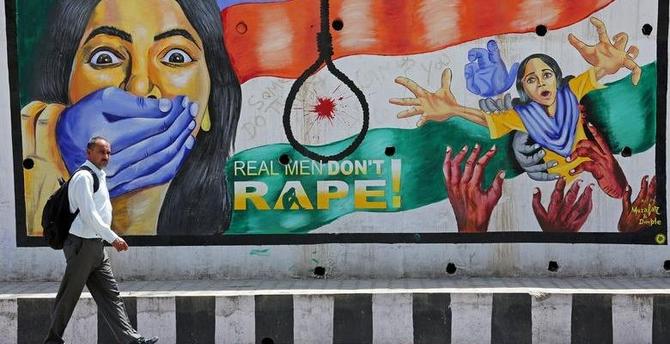
#rape #india

Interview: Why Harsher Criminal Laws Won't Make Sexual Violence Go Away

In conversation with Prabha Kotiswaran, professor of law and social justice at King's College London.

@praveen I think the legal system could use a software with a built in rules engine for allowing both sides to enter answer a series of questions using a decision tree and with an ability to scan and upload pre-authenticated documents to support their statements.

If such a system included a decision-tree based logic for at least informing the judge as to which side is legally right or not, I wonder if this wouldn't drastically lower the time it takes for cases to go through the court system.

@praveen For instance, for a case where a tenant is squatting on a property, the landlord could initiate a case for illegal squatting and that specified decision tree logic will then ask him a series of questions and also ask him to furnish a set of pre-authenticated documents.

The tenant will receive a notification and they will be able to counter with their own answers (via the decision tree logic) and also present their own documents to support their case.

After this the court can step in

@pkphilip
I guess it could help to some extend. But social problems can't be solved entirely by technology alone. There needs to be political will to bring forward such changes too. I don't expect the current ruling class would really want such changes. For me the solution starts when we are willing to get involved in politics and take ownership of the mess we are in. Ideas does not matter much if we don't find a way to implement it.
@praveen @pkphilip

https://twitter.com/random_walker/status/1202045579330760705

There is merit to this. Even though law is logical and a course of action can be a decision tree, determining something like justice from a finite set of rules is neither easy and ironically, not justified. Technology is awesome. We can avoid lawyers to a certain extent, but applying technology to solve social problems isn't always feasible. I recall the excellent "100 സിംഹാസനങ്ങൾ" here. Such a rules based system can't really determine the very real social injustice without also reinforcing the existing system.

Zynep Tufekci( https://en.m.wikipedia.org/wiki/Zeynep_Tufekci) has written and talked about it a lot. Do watch some of her talks, like this https://www.ted.com/talks/zeynep_tufekci_machine_intelligence_makes_human_morals_more_important/transcript

The blatant ignorance of privacy and people's emotions are some of the things we programmers must be aware of. Software should not just be correct, it should also do the right thing.
Arvind Narayanan on Twitter

“This 4-page zinger by @benzevgreen argues that computer scientists often do harm by relying on naive, vague, and technology-centric notions of "social good". It has the most punchy introduction of any paper I've read. https://t.co/caDXv0B53x”

Twitter

@aashiks @praveen A lot of legal process is actually quite easily definable via a decision tree.

Example: If a person is squatting on property, then a few questions about who is the actual owner of the property, whether there is an existing valid legally binding rental agreement etc can all lead to the correct decision support for the judge - that, this person is indeed an illegal squatter and should be asked to vacate the property.

@pkphilip @praveen it may not always be the case and it'd be easy to game such a system. You'd only have time to plug it with exceptions. Like I said, what we as technologists overlook is the social justice aspect. Hence the encouragement to read the book

@aashiks @praveen A fully open source solution where the rules are human readable and clear and which can be tested should work ok. Also, this is just a decision support system. The judge ultimately decides on the judgement.

There are a number of existing opensource rules engines. Ex: Drools.

@pkphilip @praveen I strongly suggest you watch the Zainep's talk. Something without a sense of morality in such cases is a drag.
@aashiks @praveen Zainep's approach uses AI which has its problems in a legal scenario. Decision trees are already being used in legal scenarios and it is a lot easier to tell how a decision was arrived at:
http://settlementperspectives.com/2009/01/decision-tree-analysis-in-litigation-the-basics/
Settlement Perspectives | Decision Tree Analysis in Litigation: The Basics

Decision Tree Analysis in Litigation: The Basics

@pkphilip @praveen As a post analysis tool it is very nice. Infact this approach can be used to validate contracts (and is being done right now). But not when there is a dispute and morals come into play. That's the crux of her talk - morality.