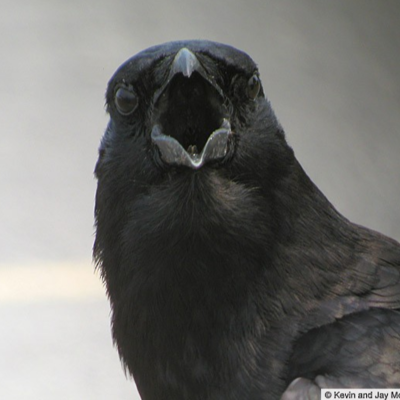
 crows call me breadlady
i’m convinced there are numerous non-human sapient species on earth but an anthropocentrism practiced at scale denies us the opportunity to discover or explore these frontiers
it’s been shown that you can teach various species intermediary languages (amy the gorilla speaking sign language, for instance) so pure translation matrices aren’t necessary for meaningful communication. moreover peoples around the world have historically developed complex material relationships with animal communities using what can be considered gift economies. for instance it’s actually pretty simple to establish trade relationships with crows 🐦
for those wondering how to establish trade relations with crows:
- feed crows food A regularly
- when crows decide to bring you gifts, feed them food B
- when crows bring you different categories of gifts, feed them a food-per-category, ex: food C for jewelry, food D for paper money, etc
- crows will recognize these exchange patterns and opt to bring you things in order to acquire desired treats
good luck! 🐦
 Alonealastalovedalongthe
Douglas Adams put it better than anyone else
"For instance, on the planet Earth, man had always assumed that he was more intelligent than dolphins because he had achieved so much—the wheel, New York, wars and so on—whilst all the dolphins had ever done was muck about in the water having a good time. But conversely, the dolphins had always believed that they were far more intelligent than man—for precisely the same reasons"
From my limited study of language and animals it seems one of the things that humans have that is rather unique is an insatiable, almost irrational desire to communicate and learn language.
When I read about animals like extremely intelligent birds it seems like any further "development" towards human benchmarks of intelligence and society are limited by a simple lack of incentive. In most cases it doesn't make sense to desire to communicate as much as a baby wants to.