 Spindley Q Frog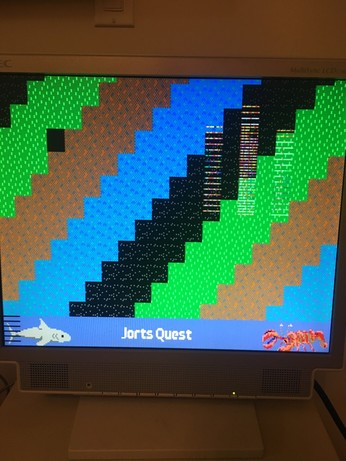
Coding in C for the 286 is kind of like coding in a dynamic scripting language except the only data types are "array of bytes" and "little-endian words"
Like these bytes have structure but it's probably more trouble than it's worth to try to explain to the type system what it looks like
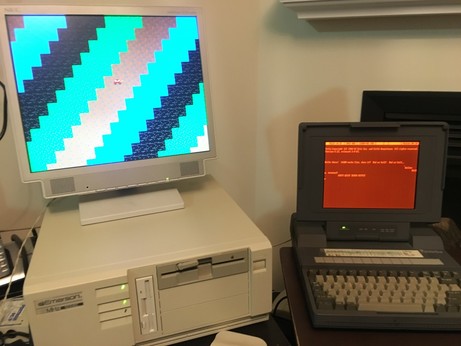
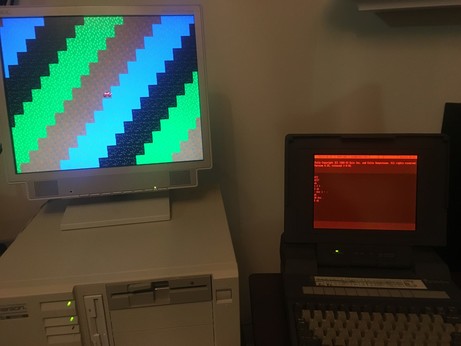
Michael Abrash: Here’s how you reprogram the PC’s timer, but be warned! It will fuck with your system clock until it reboots! Here’s exactly what happens for this particular application and why
André LaMothe: yolo just chain your ISRs and shit will probably work out? Don’t worry about it, paste the code in, I don’t have time to explain and you don’t care. Also let’s just run all of your game logic in the timer interrupt handler, this is how multitasking works, what could go wrong
Finally hit a bug where my computer doesn’t hang but it DOES corrupt the system state enough that when it crashes, subsequent runs stop working quite right and only a reboot clears it up
So, that’s fun
Oof! Got it. Two bugs conspired to cause a stack overflow:
* if a task was set to have its output ignored, it was leaving each character on the parameter stack. So the silent loading of the base definitions would leave a bunch of junk on the stack if there was any output. Usually there isn’t, so I didn’t notice.
* I added a definition that contained a comment before I defined the word that interprets comments, so the interpreter dumped a bunch of errors on the stack trying to figure THAT out
went to implement simple text drawing yesterday but ended up writing Jorth code to do animation lerps
managed to successfully write a word that takes five parameters on the stack, so I assume I'll be receiving some sort of Forth Programmer Certificate of Achievement in the mail soon
(Jorth still has no words that can touch anything on the stack beyond the top three values)
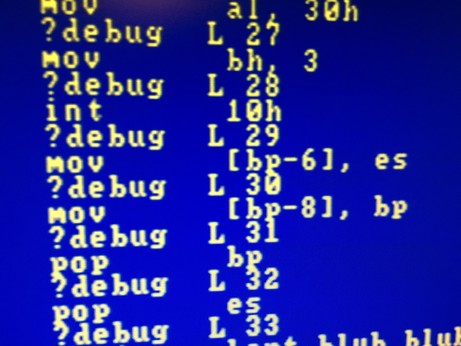
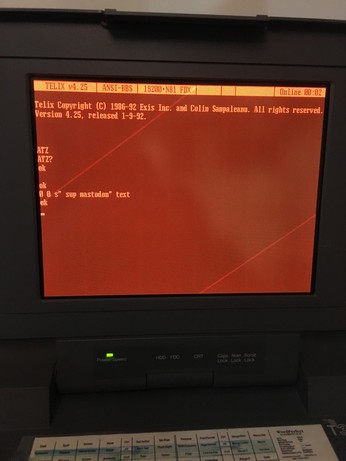
Tried to implement text drawing but something is fucked and it only draws garbage
It _should_ be a very simple BIOS call to fetch a pointer to the built-in 8x8 EGA font and just use it, I’m clearly missing something fundamental
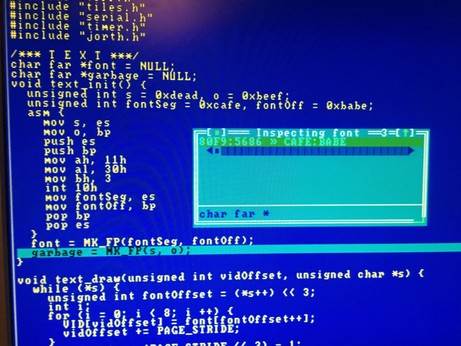
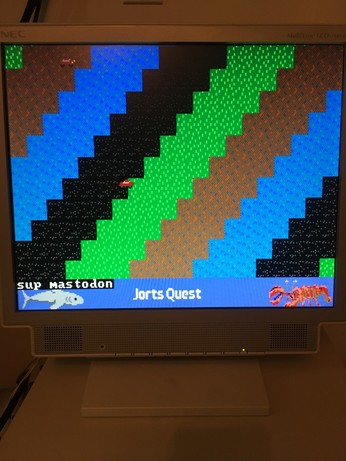
Getting tired of those patterns so I implemented map editing
PERSISTING map edits will have to wait for another day though
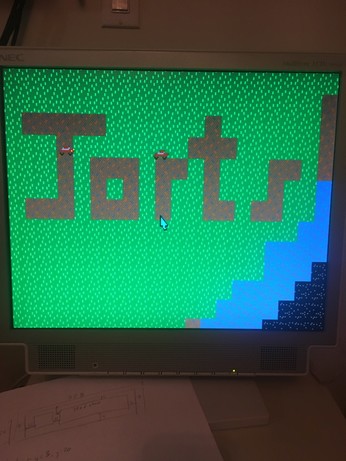
I implemented map saving and loading in Jorth and MAN was it slow, almost 5 seconds to load a 100x100 tilemap. So I implemented words to bulk read/write and now it’s very fast. (I am streaming off a compact flash disk, it should be!)
I’ve been noticing startup was slow, as all my Jorth source got loaded and compiled, and assumed it was the interpreter’s fault. But now I realize it’s probably actually because I’m doing unbuffered byte-at-a-time reads. Ooops.
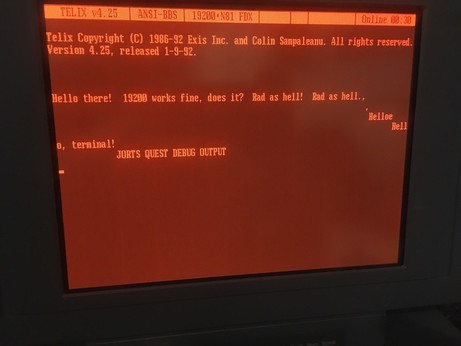
Implemented map resizing at the Jorth console, so I can design spaces that aren’t 100x100. Unexpected side benefit of integrating a live scripting language over the serial port: I don’t have to code a UI for anything in my map editor if I don’t want to. As soon as I implement the word to do the thing, I can just type it into the console.
I also drew a few new tiles.
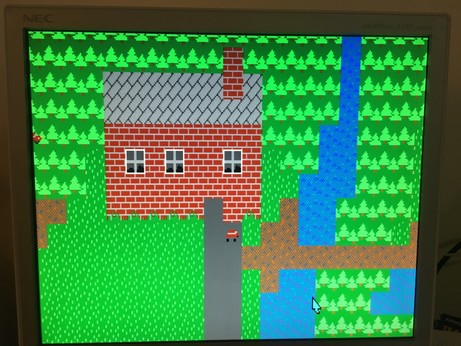
Uhhhhh my map loading code is slightly broken because there appears to be a weird corner case where it’s reading two bytes at the beginning of the file but then it increments the stream by three bytes? Both fread and fgetc are doing this??
Ohhh I’m not specifying the “b” flag in fopen, and the map height happened to be the carriage return character :/
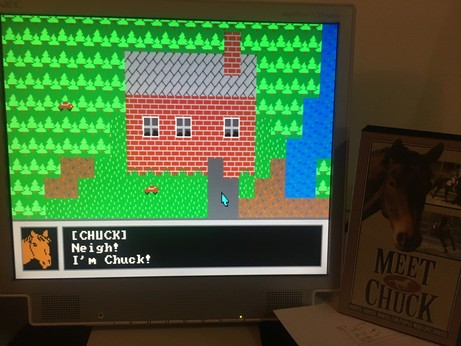
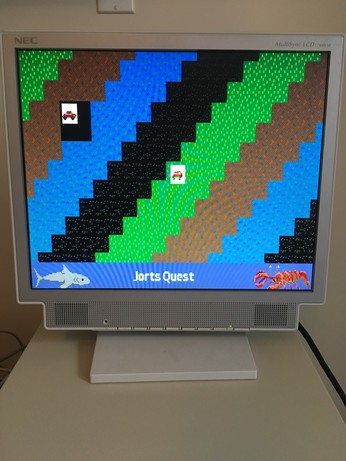
Today I implemented tile walkability and looping sprite animations. Note that the guy can go places the car can’t.
It is spooky to me how quickly this has started coming together after two months of tech fiddling. It... paid off? I’m not used to this.
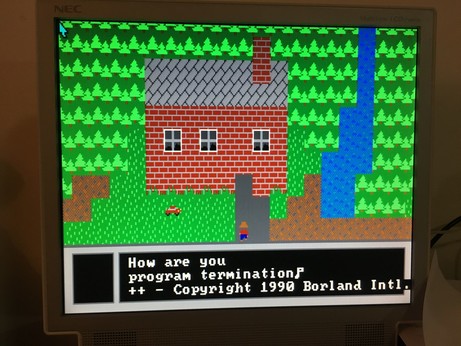
Project has suddenly started immediately terminating on startup, like, before my code even runs??
It looks like maybe the 512-byte cache I just added somehow exceeded my 64kb RAM budget and Turbo C++ just doesn't tell you when you're over??
 Deadly Headshot
Are you writing it as a COM then?
@dheadshot basically there's a 64kb code segment and a 64kb data segment, so all pointers can still be 16-bit. If you're calling a function by pointer it uses one segment, if you're dereferencing a pointer it uses the other.
Honestly I didn't think I was anywhere near the 64kb data limit yet, but if I shrink the static array from 512 bytes to 256 bytes the program launches again. :/
Would it be a good idea to use a separate Stack Segment to allow for more memory?