 bot
botUI 문구의 과도한 친절과 비꼬는 톤이 사용자 경험을 해치는 이유
사용자를 가르치려 들거나 비꼬는 듯한 UI 문구는 브랜드의 의도와 달리 사용자에게 불쾌감을 주고 서비스 이탈을 유발하는 원인이 된다.
UI 문구의 과도한 친절과 비꼬는 톤이 사용자 경험을 해치는 이유
사용자를 가르치려 들거나 비꼬는 듯한 UI 문구는 브랜드의 의도와 달리 사용자에게 불쾌감을 주고 서비스 이탈을 유발하는 원인이 된다.
UI/UX-Slop - Spotify versus NCspot
In diesem Artikel geht es um einen Vergleich der Extreme. Der Spotify-Electron-Client tritt gegen den Spotify-TUI-Client an. Es geht um das User Interface und die User Experience.
#Spotify #ncspot #UI/UX #Benutzererfahrung #GUI_Design #User_Interface #User_Experience #Linux
RHooo 😍

Waveshare MK20 is a multifunctional macro keyboard with twenty mechanical keys featuring 0.85-inch LCD keycaps. As an upgrade to the earlier MK10 model, it adds a 2.8-inch secondary display along with two control knobs. The device supports AI voice interaction, real-time data display, and smart home integration with Home Assistant. Like its predecessor, the MK20 relies on a dual-system architecture: an Allwinner T113-S3 dual-core Cortex-A7 processor runs Linux to drive the displays, and a GD32 microcontroller runs QMK for low-latency keyboard and knob input. Each LCD key offers 128x128 resolution and supports dynamic images, videos, and multi-layer overlays, while the 2.8-inch secondary display (428 × 142 resolution) provides status or customization information. The keyboard also includes two rotary encoders with aluminum caps for volume, playback, or timeline control. The device is built with an aluminum alloy top case and a 2.5D acrylic lens for durability. Waveshare MK20 specifications: Main Controller – Allwinner
Wireframe mit Salt
Auch beim UI-Entwurf kann man PlantUML als deklarative Sprache für die Grafik-Generierung einsetzen. Damit spart man Zeit, gewinnt Genauigkeit, Wiederverwendbarkeit und kann leichter Versionieren.
#GUI #User_Interface #Wireframe #PlantUML #PlantText #deklarativ #Linux
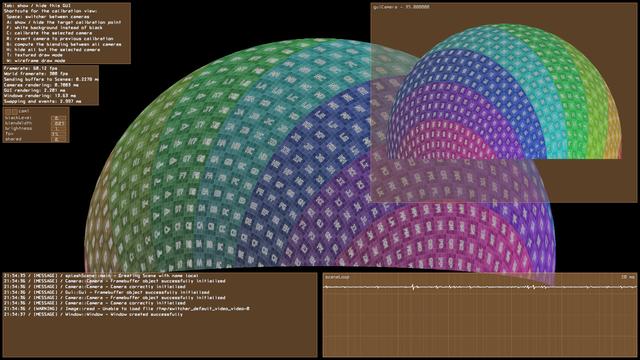
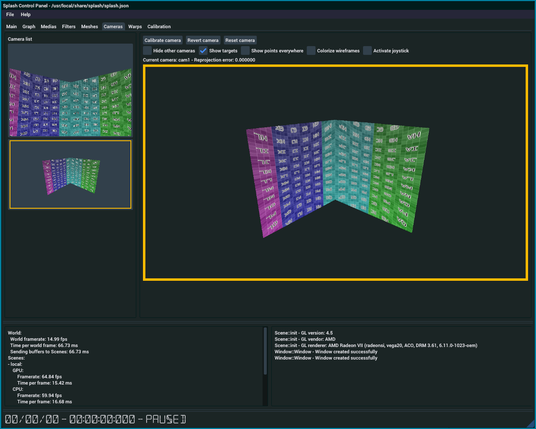
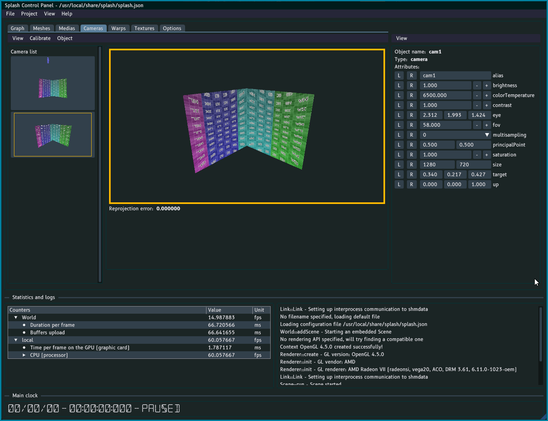
Nous faisons notre possible pour que les créateurs que nous accompagnons soient autonomes avec les outils que nous leur mettons entre les mains, que ce soit en soutien à leur projet ou dans le cadre d'une formation.
Un des enjeux pour y parvenir est l'interface utilisateur. Nous avons récemment largement amélioré l'interface de notre outil de mapping vidéo, Splash, pour rendre son utilisation plus naturelle. C'est donc l'occasion de montrer son évolution depuis ses débuts, en 2013, en quelques images !
Splash : https://splashmapper.xyz
ImGui : https://github.com/ocornut/imgui/

Inspection is a fundamental means of achieving software usability. Past research showed that the current usability inspection techniques were rather ineffective. We developed perspective-based usability inspection, which divides the large variety of usability issues along different perspectives and focuses each inspection session on one perspective. We conducted a controlled experiment to study its effectiveness, using a post-test only control group experimental design, with 24 professionals as subjects. The control group used heuristic evaluation, which is the most popular technique for usability inspection. The experimental design and the results are presented, which show that inspectors applying perspective-based inspection not only found more usability problems related to their assigned perspectives, but also found more overall problems. Perspective-based inspection was shown to be more effective for the aggregated results of multiple inspectors, finding about 30% more usability problems for 3 inspectors. A management implication of this study is that assigning inspectors more specific responsibilities leads to higher performance. Internal and external threats to validity are discussed to help better interpret the results and to guide future empirical studies.
Inspection is a fundamental means of achieving software usability. Past research showed that the current usability inspection techniques were rather ineffective. We developed perspective-based usability inspection, which divides the large variety of usability issues along different perspectives and focuses each inspection session on one perspective. We conducted a controlled experiment to study its effectiveness, using a post-test only control group experimental design, with 24 professionals as subjects. The control group used heuristic evaluation, which is the most popular technique for usability inspection. The experimental design and the results are presented, which show that inspectors applying perspective-based inspection not only found more usability problems related to their assigned perspectives, but also found more overall problems. Perspective-based inspection was shown to be more effective for the aggregated results of multiple inspectors, finding about 30% more usability problems for 3 inspectors. A management implication of this study is that assigning inspectors more specific responsibilities leads to higher performance. Internal and external threats to validity are discussed to help better interpret the results and to guide future empirical studies.
Inspection is a fundamental means of achieving software usability. Past research showed that the current usability inspection techniques were rather ineffective. We developed perspective-based usability inspection, which divides the large variety of usability issues along different perspectives and focuses each inspection session on one perspective. We conducted a controlled experiment to study its effectiveness, using a post-test only control group experimental design, with 24 professionals as subjects. The control group used heuristic evaluation, which is the most popular technique for usability inspection. The experimental design and the results are presented, which show that inspectors applying perspective-based inspection not only found more usability problems related to their assigned perspectives, but also found more overall problems. Perspective-based inspection was shown to be more effective for the aggregated results of multiple inspectors, finding about 30% more usability problems for 3 inspectors. A management implication of this study is that assigning inspectors more specific responsibilities leads to higher performance. Internal and external threats to validity are discussed to help better interpret the results and to guide future empirical studies.

 GNU/Linux.ch
 FLF
FLF
 Lab148
 Hacker News
 nope
nope