 em | שמחה
can someone tell me what's going on with וְלִבְכֹּתָֽהּ? it's like that in my tikkun, too.
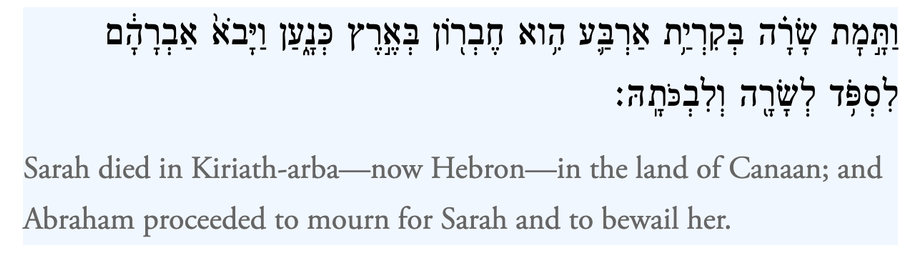
can someone tell me what's going on with וְלִבְכֹּתָֽהּ? it's like that in my tikkun, too.
but now, reflecting on it, I wish I dropped the first part. i wish i told that lady that the restorative justice interpretations of the torah existed before the world was created, and that her question is predicated on the notion of a finite, finished Torah, and that the Torah is eternal and living.
and then i wish i was the kind of person who could just refuse to elaborate.
(unless she let go of some of her understandings.)
i'm too uncomfortable with other people's discomfort sometimes. i need to learn to let people be lost.
last night at this interreligious thingy i go to, a lady asked me if i "actually believe" that the "an eye for an eye" was "really intended to be interpreted" as maimonides does: not literally but to imply the need for compensation or atonement.
i gave a pretty ok (IMO) answer, that both
can someone help me find the origin of this story?
if moschiach comes and says, "ok pack it up everyone! we're all done! the mitzvas are over and the world to come is here!" - the Torah will get new letters and everything will finally be revealed, the temple is rebuilt, whatever. we don't have to struggle anymore.
but.
you're in the middle of saying the amida
so you raise one finger in moschiach's direction, you nod knowingly. "i'll be with you in a minute", you try to say with a gentle smile.
and you finish saying the amida
i assume i made up 95% of the story, but where does it come from??
#mazeldon #jewniverse #TorahPosting #DafYomeme
Least horny Torah commentary
https://www.sefaria.org/Radak_on_Genesis.2.8.2?lang=en&with=all
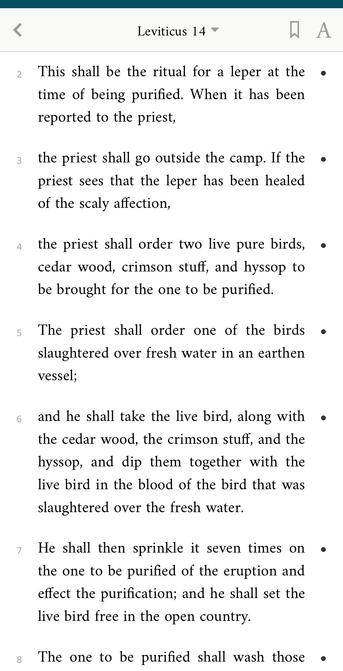
From Parashat Metzora: That’s gotta be the most confused bird ever
Bro was just vibing living his best life only to get scooped up by some guy in a funny hat, wrapped in a blanket of cedar wood, crimson things, and hyssop, and dunked in his friend’s blood before being set free. Those bloodstains are never coming out of those feathers.
A neat thing I came across while reading this past Torah portion
During the Second Temple Period, Jewish priests were tasked with maintaining the fire upon the altar of the temple as a way of honouring God even after an offering was made. A literal light unto the world. This practice was then written down by Jewish priests sometime during the Persian Period (538–332 BCE) and passed down in Vayikra (Leviticus) 6:5-7.
The fire on the altar shall be kept burning, not to go out: every morning the priest shall feed wood to it, lay out the burnt offering on it, and turn into smoke the fat parts of the offerings of well-being.
A perpetual fire shall be kept burning on the altar, not to go out.
And this is the ritual of the meal offering:
Aaron's sons shall present it before [God], in front of the altar.
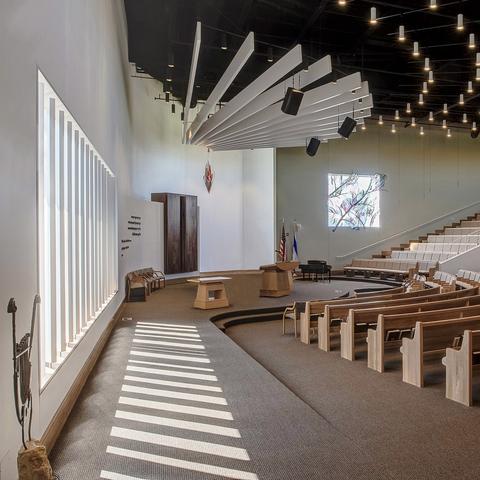
Fast forward to today and one of the key elements of any synagogue is the the ner tamid (‘eternal light’). Traditionally, an oil lamp placed somewhere above the bima (front stage) in order to honour the flame that burned without end upon the altar of the Second Temple. Some synagogues opt for a flame fed by natural gas, while others opt for an ornate lightbulb that’s always kept on.
Note that synagogues incorporate design elements that nod to the original temple in Jerusalem. This is also why the terms “synagogue” and “temple” are synonymous in most contexts.
Relevance to me
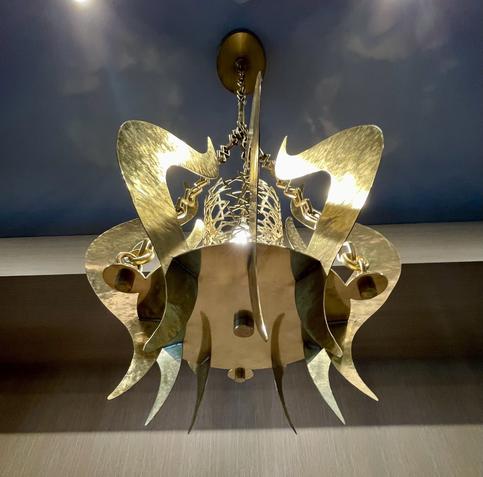
When I visited a synagogue for the first time, the ner tamid was one of the first things I identified. The one used at the synagogue I visited was a lightbulb that flickered gold light through metal and glass. It hung above the podium atop the bima. I just found that pretty interesting.
To stumble across the passage that makes the ner tamid a thing was a pleasant surprise.
Bonus fact!
Among most textual critics, Leviticus 6:7 is understood to be a a colophon, which is a tagline added by the author to the end of a text to state its purpose.
 Amaya 🌹
