 KillBait News
Study Finds High-Altitude Red Auroras May Reveal Underestimated Geomagnetic Storms
📰 Original title: Japan’s Red Aurora Mystery Just Got a Lot More Complicated, And Satellites Could Pay the Price
🤖 IA: It's clickbait ⚠️
👥 Users: It's clickbait ⚠️
View full AI summary: https://en.killbait.com/study-finds-high-altitude-red-auroras-may-reveal-underestimated-geomagnetic-storms.html?utm_source=mastodon_world&utm_medium=social&utm_campaign=killbait.mastodon_world
Study Finds High-Altitude Red Auroras May Reveal Underestimated Geomagnetic Storms
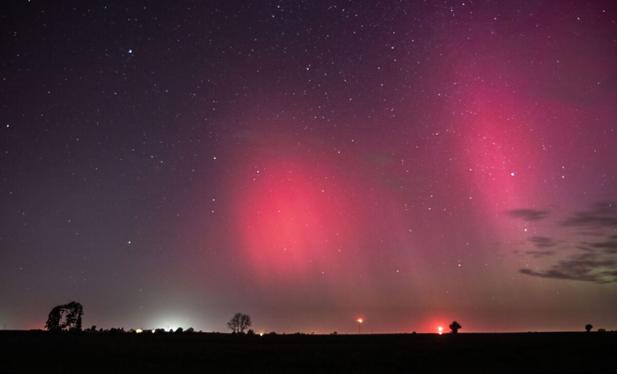
A recent study conducted by researchers from Hokkaido University and the Okinawa Institute of Science and Technology has revealed that unusual red auroras observed over Japan may indicate that some geomagnetic storms are stronger than current measurement systems suggest. The research analyzed five auroral events recorded between June 2024 and March 2025 in Hokkaido, Japan. Scientists discovered that these red auroras extended between 500 and 800 kilometers above Earth’s surface, far higher than the 200 to 400 kilometers typically associated with auroras appearing at similar latitudes. Auroras occur when charged solar particles interact with Earth’s magnetic field and collide with atmospheric gases. Red auroras are usually linked to strong geomagnetic storms, but in these cases the storms were only classified as moderately intense according to the Dst index, a standard method used to measure geomagnetic activity. Researchers believe the index may underestimate storm intensity because dense solar wind can compress Earth’s magnetosphere and distort the measurements used to calculate storm strength. The study also found that high-density solar wind appears to play a more important role in generating mid-latitude auroras than previously understood. Storms involving dense solar wind were more likely to produce the unusual auroras, even when wind speed was moderate. Citizen scientists across Japan contributed significantly by providing photographs that helped researchers estimate the auroras’ altitude when observatories were affected by cloud cover. The findings may have practical implications for satellite safety because geomagnetic storms can heat and expand the upper atmosphere, increasing drag on low Earth orbit satellites. Similar atmospheric effects contributed to the loss of 38 Starlink satellites in 2022 after a geomagnetic storm that was not initially considered severe.