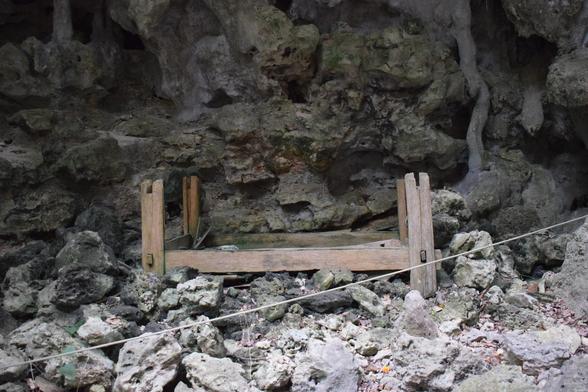
#JEArchéo #JEA2026 #Okinawa
#RyukyuLT there is a nuru-baka in kanna too.
and it's 17:00 and the museum is very strict about time so we cut here suddenly, despite it's evident there is at least 4 hours of discussions and questions left…
#RyukyuLT chinese Buddhist decoration → the zushis that come just after the wooden tomb are very chinese-influenced. are the house-shape wooden tombs also an influence of chinese Buddhism ?
in unten, the oldest tombs are the highest ones, it is not sure they were all built by the same group of people.
tombs of ancestors are sacred, they are not used anymore but still sacred, it is difficult to consider them as archaeological sites that belong to everyone and should be surveyed. as long as
#RyukyuLT it is thought that the bones in kanna come from scattered bones in the wood around that were gathered in the tomb, probably starting in the 16th c. the bones are neatly arranged in the tomb.
discussion
the origin of the wooden tombs. wooden tombs are old in the bone-washing tradition of okinawa.
kanna wood dated 1300 ad was a surprise, people all thought it was early modern. so they re-dated an other bit, 1240 ad. they gave up and accepted it was old 😁
the current tomb is
#RyukyuLT
questions what is the difference between wooden tombs and ita-zushi ?
the size. the wooden tombs really are buildings, and there sometimes are ita-zushi inside.
question about reports : most of them are in libraries
question : bones of ginoza have been analysed ?
those bones are still sacred for the people, we don't forcibly make genetic studies (that's a not hidden reference to japanese researchers who just take the bones and do what they want)
didn't hear the question, but