
Using a PCB to Reflow PCBs – Take 2!

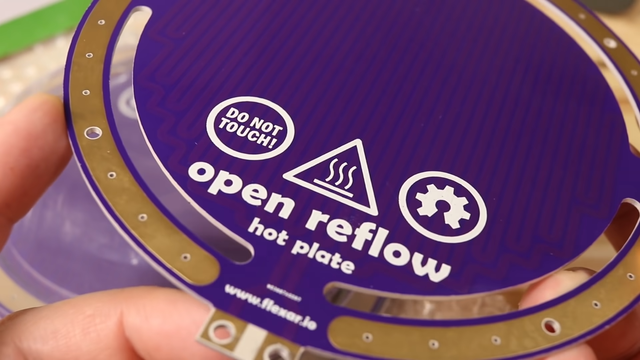
It's not too hard to make your electronics project get warm. Design your traces too small, accidentally short the battery inputs together, maybe reverse the voltage going to your MCU. We've all cooked a part or two over the years. But what about making a PCB that gets hot on purpose? That's exactly what [Carl Bugeja] did in his second revision of a PCB hot plate, designed to reflow other PCBs.

[Carl's] first attempt at making a hot plate yielded lukewarm results. The board, which was a single snaking trace on the top of an aluminum substrate, did heat up as it was supposed to. However, the thin substrate led to the hot plate massively warping as it heated up, reducing the contact against the boards being soldered. On top of that, the resistance was much greater than expected, resulting in much lower heat output.

The new revision of the board is on a thicker substrate with much thicker traces, reducing the resistance from 36 ohms on the previous design to just 1 ohm. The thicker substrate, paired with a newer design with fewer slots, made for a much sturdier surface that did not bend as it was heated.

We especially like the wiring solution [Paul] came up with for his new hot plate. Soldering to a resistive heater can be a massive annoyance since the board will act as a heatsink. While Alligator clips do work for testing, there is always the chance of them slipping and shorting against each other. [Paul] decided to make a custom flexible PCB that would connect with nylon screws to the hot plate, and fit directly onto the connection points of his power supply.

Unfortunately, this new revision of the board did have some issues as well. The biggest of these was that there was a miscommunication with the board manufacturer, and the solder mask used begins to degrade after a few hours at the operating temperature. But for light-duty work and intermittent use, it is the perfect tool.

You can read more about [Paul's] first PCB hot plate in our previous coverage of it here.
#toolhacks #heater #pcb #reflow #reflowplate #soldering

Using A PCB To Reflow PCBs – Take 2!

It’s not too hard to make your electronics project get warm. Design your traces too small, accidentally short the battery inputs together, maybe reverse the voltage going to your MCU. We&#821…

Hackaday

Iron Becomes SMD Hot Plate

Few things have changed our workshops more than surface mount components. In 1980 it would have been strange to see a hobby bench with a microscope, hot air equipment, tweezers, and all the other accouterments that are a necessity today. [Electronoobs] wanted a reflow hot plate and decided that he could repurpose a consumer laundry iron for the job. You can see the results in the video below.

Opening the iron revealed surprisingly simple circuitry, so the build has some additional parts along with a controller and an LCD, of course. The power requirement for the heating element is significant -- 13 amps -- so the plate uses a solid state relay to turn things on and off.

The iron has a ceramic bottom which is good for heat flow. There's also a mystery component inside that [Electronoobs] is hoping someone can identify.

The final build uses a single thermocouple for temperature measurement although there is a provision for more sensors. If you want to see the device in operation first, fast forward to about the 9 minute mark.

The device appears to work with some caveats. The center of the plate seems to be cooler than the edges. We wondered if using an electric skillet might have helped or even replacing the plate with something that made direct contact with the heating element. We also wondered if some thermal compound might have helped transfer heat into the plate better.

Of course, using a skillet wasn't our original idea. You don't even necessarily need to modify it much.

#toolhacks #hotplate #reflow #reflowplate #smdplate #smdsoldering #solderingplate

Iron Becomes SMD Hot Plate

Few things have changed our workshops more than surface mount components. In 1980 it would have been strange to see a hobby bench with a microscope, hot air equipment, tweezers, and all the other a…

Hackaday