Bacterial
#pathogens often exploit host factors to enhance their infectivity. This study shows that
#Salmonella Typhimurium boosts host
#polyamine production, which is crucial for expression & needle assembly of its type 3 secretion system
#PLOSBiology https://plos.io/3WRzIUb
Salmonella Typhimurium exploits host polyamines for assembly of the type 3 secretion machinery
Bacterial pathogens often exploit host factors to enhance their infectivity. This study shows that Salmonella Typhimurium boosts host polyamine production, which is crucial for the expression and needle assembly of its type 3 secretion system.
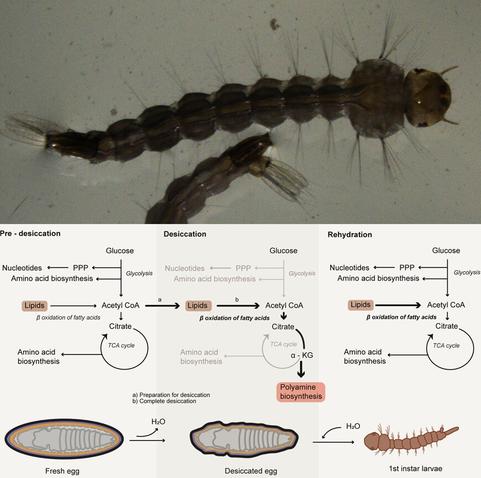
How can
#mosquito eggs survive extreme water loss, with the larvae reviving weeks after
#desiccation? @DBT_inStem study reveals rewiring of their
#polyamine &
#LipidMetabolism, which protects them during water loss, and revives cells upon rehydration
#PLOSBiology https://plos.io/3SiW6Ep
Eggs of the mosquito Aedes aegypti survive desiccation by rewiring their polyamine and lipid metabolism
While Aedes mosquito embryos are still within their eggs, they can survive extreme water loss and revive weeks after desiccation. This study reveals that this happens through unique rewiring of their polyamine and lipid metabolism, which protects them during water loss, and revives cells upon rehydration.
 PLOS Biology