
Sticker Brings the Heat

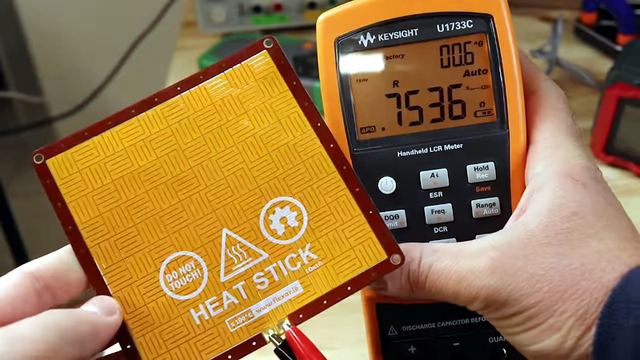
[Carl] is always looking at making heater plates for PCB reflow and other applications. In his latest video, he shows how he is using thin flexible PCBs with adhesive backs as stickers that get hot. You can find gerber files and design files on GitHub.

You might think that this is a pretty simple thing to do with a flex PCB, but it turns out while the PCB might be flexible, the traces aren't and so the typical long traces you see in a heater won't allow the sticker to bend, which is a problem if you want to wrap it around, say, a coffee mug.

The answer was to create a pattern where the traces change direction frequently, and that's what [Carl] did. He also talks about using stiffeners around the edges of the board.

The video shows quite a few tests that indicate the substrate discolor after a long time with high heat. The adhesive also tends to melt in those conditions. So the recommendation is to use them where you need lower temperatures for a long time or higher temperatures for a short duration. Of course, depending on your application, the color change may not matter as long as it doesn't affect the long-term reliability.

What would you do with a flexible heated sticker? The self-warming mug is a no-brainer. A sticker to put on exposed pipes for a cold day comes to mind. A thin 3D printer bed heater or an irregular-shaped reptile habitat might be useful, too.

As long as you are putting patterns in any way, we wondered about making thermal digits on a sticker like this. It seems like every time we check in on [Carl] he's heating up something.
#mischacks #flexpcb #flexiblepcb #pcbheater

Sticker Brings The Heat

[Carl] is always looking at making heater plates for PCB reflow and other applications. In his latest video, he shows how he is using thin flexible PCBs with adhesive backs as stickers that get hot…

Hackaday

Improved Thermochromic Clock Uses PCB Heaters For Better Contrast

We love timepiece projects round these parts, so here we are with another unusual 7-segment clock design. [Moritz Sivers] wasn't completely satisfied with his last thermochromic clock, so has gone away and built another one, solved a few of the issues, and this time designed it to be wall mounted. The original design had a single heater PCB using discrete resistors as heating elements. This meant that the heat from active elements spread out to adjacent areas, reducing the contrast and little making it a bit hard to read, but it did look really cool nonetheless.

This new version dispenses with the resistors, using individual segment-shaped PCBs with heater traces, which gives the segment a more even heat and limited bleeding of heat into neighbouring inactive air-gapped segments. Control is via the same Wemos D1 Mini ESP8266 module, driving a chain of 74HC595 shift registers and a pile of dual NMOS transistors. A DS18B20 thermometer allows the firmware to adjust for ambient temperature, giving more consistency to the colour change effect. All this is wrapped up in an aluminium frame, and the results look pretty nice if you ask us.

Both PCB designs and the Arduino firmware can be found on the project GitHub, so reproducing this should be straightforward enough for those so inclined, just make sure your power supply can handle at least 3 amps, as these heaters sure are power hungry!

Got a perfectly good clock, but desperately need a thermochromic temperature/humidity display? [Moritz] has you covered. And if this digital clock is just too simple, how about a mad 1024-element analog thermochromic clock instead?

#clockhacks #clock #liquidcrystal #pcbheater #thermochromic

Improved Thermochromic Clock Uses PCB Heaters For Better Contrast

We love timepiece projects round these parts, so here we are with another unusual 7-segment clock design. [Moritz Sivers] wasn’t completely satisfied with his last thermochromic clock, so has…

Hackaday