#parentalleavepaper #3: Only published a few weeks ago, Harvey et al. describes machine learning (ML) models to predict nonspecific binding of llama antibody fragments (called nanobodies) from a sequence.

A well-written paper and a nice application of ML to a defined issue/set of data.

https://www.nature.com/articles/s41467-022-35276-4

An in silico method to assess antibody fragment polyreactivity - Nature Communications

Off-target binding hinders the development of therapeutic antibodies and reproducibility in basic research settings. Here the authors develop a method to quantify and reduce the polyreactivity of antibody fragments based on protein sequence alone.

Nature

Second #parentalleavepaper is way outside my expertise - and full disclosure, I know the first author - the super talented Mashaal Sohail - from grad school.

Her 2019 paper in eLife found that previous studies using polygenic score analysis to measure adaptation in genetic traits influencing height were heavily confounded by the underlying genetic diversity of the populations studied.

https://elifesciences.org/articles/39702

Polygenic adaptation on height is overestimated due to uncorrected stratification in genome-wide association studies

Polygenic selection signals in humans estimated from previously existing GWAS should be viewed with caution due to concerns about residual population stratification.

eLife
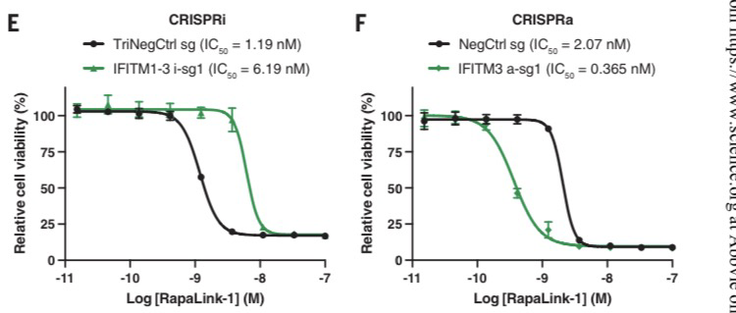
First #parentalleavepaper is something I would have read for work - Kevin Hou et al.’s excellent paper in Nature reporting a role of IFITM1-3 in the uptake of >1000 Da bifunctional inhibitors in K562 cells
https://www.science.org/doi/10.1126/science.abl5829