 Avispa Mídia
Deforestación y minería ilegal devoran los páramos andinos del sur de Ecuador
👉 https://avispa.org/?p=119624
#ecuador #Ecuador2025 #paramosandinos #paramos #latinoamerica #americalatina #AmericaLatinayelCaribe #AmericaLatinaUnida
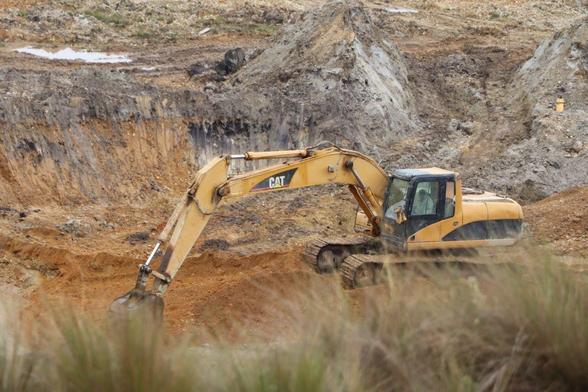
Deforestación y minería ilegal devoran los páramos andinos del sur de Ecuador
👉 https://avispa.org/?p=119624
#ecuador #Ecuador2025 #paramosandinos #paramos #latinoamerica #americalatina #AmericaLatinayelCaribe #AmericaLatinaUnida

Werneria Kunth (Compositae: Senecioneae: Senecioninae) was effectively lectotypified by Rockhausen based on Werneria rigida. Two later lectotypifications have apparently been made, firstly (presumably by Cabrera) W. graminifolia and secondly (presumably by Funk) W. nubigena, yet the Index Nominum Genericorum website has no type stated. In removing W. rigida to the then newly recognised Xenophylllum, Funk moved Rockhausen’s type thereby creating a superfluous generic synonym. All species that Funk recognised in Xenophyllum are thus wernerias in the nomenclatural sense. Two species of Xenophyllum described since Funk’s revision are transferred to Werneria: X. funkianum and X. lorochaqui. The remainder of the species of Werneria are here placed in the new genus Rockhausenia (Compositae: Senecioneae: Senecioninae), a generitype is selected, and the corresponding 27 combinations are made at species level; the relevant subgeneric and sectional combinations are also made with two subgenera recognised, one with three sections. The confusion surrounding the generic name Oresigonia is commented on. A nomenclator of all relevant names in Rockhausenia, Werneria and Xenophyllum, is provided.

 J. Pïnto