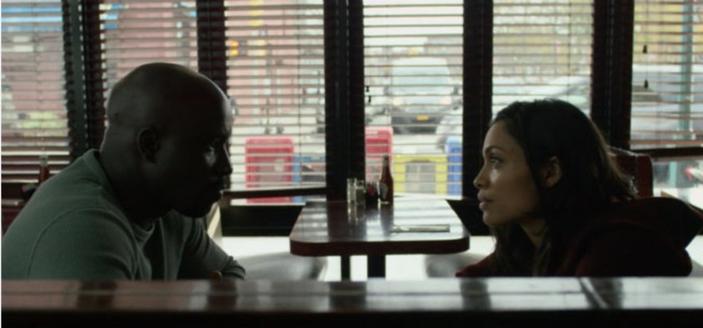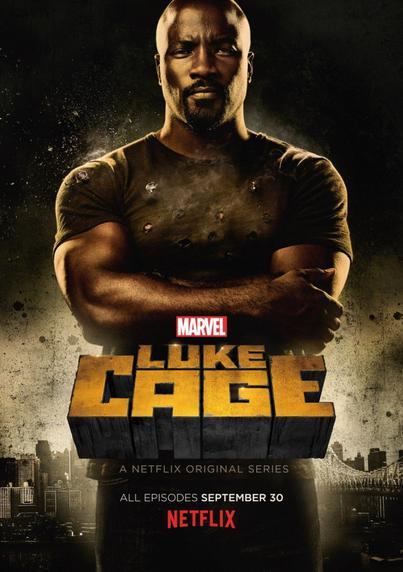
'Daredevil: Born Again' Season 3: New BTS Images Confirm Brand New Suit!! Check It Out!! #CharlieCox, #DaredevilBornAgain, #DisneyPlus, #ElodieYung, #FinnJones, #IronFist, #JessicaJones, #KrystenRitter, #LukeCage, #Marvel, #MikeColter, #WilsonBethel

Luke Cage – Season 1, Episode 6: Suckas Need Bodyguards (2016) – Review

With another episode of Luke Cage hitting the streets, there’s a sense that the show – while still as solid as the main character’s ribcage – is starting to plateau. With practically every card on the table already, it’s been fun watching Cage and his enemy (slick gangster Cornell “Cottonmouth” Stokes) engage in their little game of one-upmanship as they metaphorically wrestle for the soul of Harlem. But while the show is taking its sweet time to settle (reopen the damn barbershop already), and a bigger picture is slowly starting to emerge, I’m not actually sure where the show is supposed to going.
In fact, by the climax of this episode, it does decidedly feel like you could end the season right here as it ends with a pretty decisive victory. But still, regardless of the fact that Luke Cage seems a little aimless right now, it’s street level musings and the prepping of some supporting characters means that the show still carries some wallop.

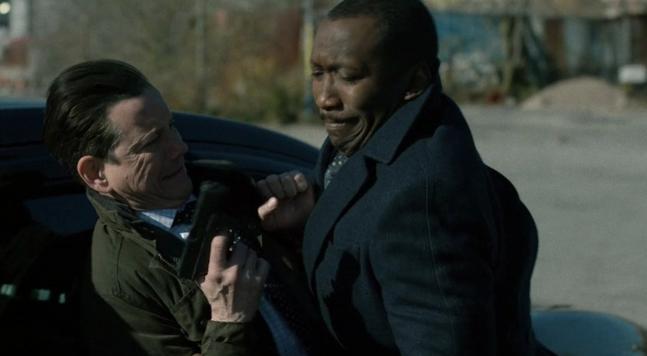
While content to lurk in the background and play both sides, Detective Scarfe finally shoots for the big time when – after agreeing to deliver his seized weapons back to him – he decides that now is a good time to hit up Cottonmouth for some blackmail. However, despite being a gifted (if corrupt) officer, Scarfe’s timing sucks balls as Cottonmouth is literally at his wits end with all the trouble vigilante Luke Cage has done to his organisation. After a brief discussion, Cottonmouth decides to pay Scarfe in hot lead as he shoots him in broad daylight with his own gun; but knowing that going to both a police station or a hospital is essentially a death sentence, the distraught detective goes to the most famous safe place in Harlem: Pop’s Barbershop. Luckily for Scarfe, Cage has recently become reacquainted with Claire Temple, who has returned to Harlem to stay with her mother and who once saved his life back in the Jessica Jones days. But while her medical expertise is enough to keep Scarfe stable, he needs to get to a hospital soon before his wounds do him in.
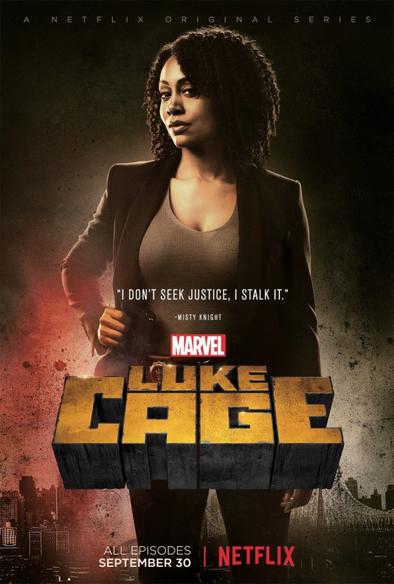
Meanwhile, Detective Misty Knight is determined to find her wayward partner and mentor, but the detective she’s been paired with has slightly a different motive – you see Lieutenant Perez is also in Cottonmouth’s employ and has been given orders to to kill the bleeding loose end. Elsewhere, Mariah Stokes-Dillard finds that her cousin’s illeagal escapades are now starting to blow back on her work as a local councilwoman, especially when a journalist tries to expose her criminal connections in a live interview.
As everyone closes in on the rapidly fading Scarfe, both Cage and Temple have to run a gauntlet of both cops and criminals in order to get the dying cop to the authorities and finally get the goods on Cottonmouth.

If my opening section made it sound like I’m suggesting that Luke Cage has gone off the boil, a can assure you that the show still delivers that cool, neo-blaxploitation vibe and features a central plot thread that changes many aspects of the whole show – it’s just that I have no idea where the show is actually supposed to be going. Obviously, I don’t want the whole game to be given away by a plot that I can see coming from a mile off, but at the same time, everything feels like it’s mostly been wrapped up by the time the credits roll – which is sort of a strange feeling considering that we’re only six installments into a thirteen episode run. By this point in Jessica Jones, or either season of Daredevil, things were ramping up as threads concerning the likes of Kingpin, Kilgrave and the Punisher were cresting nicely. However, it seems that the whole Cottonmouth problem seems to be mostly wrapped up thanks to the issues concerning a dying detective Scarfe.
Obviously I’m not blind to the foreshadowing that encircles the show. You can tell that the magnificent Alfre Woodard is chomping at the bit to edge into more overt villainy and fully embrace her comic book character of Black Mariah (her whip and nae nae jibe to an interviewer is gold standard shade) and the name Dimondback keeps getting bandied around in an end of game boss kind of way, so the show has back-up bad guys if needed, but it seems like a bit of a shame to do Mahershala Ali’s thoroughly entertaining Cottonmouth so dirty. But while the show seems to unfairly have his successors already lined up, thankfully Luke Cage is still confidently keeping its head far above water thanks to its race against the clock nature and the insertion of a familiar Marvel/Netflix lynchpin. Scoring herself something of a sprawling arc ever since first showing up in season 1 of Daredevil, the gradual transformation of gutsy nurse, Claire Temple, into something approximating her “Night Nurse” namesake has been fairly fascinating to watch. However with her arrival in Luke Cage last episode, it seems that she’s getting thrown right in at the deep end.

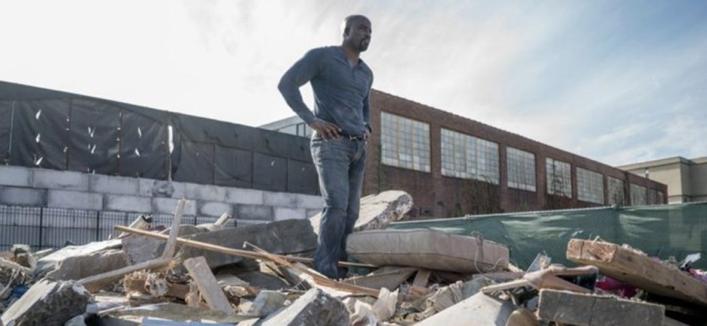
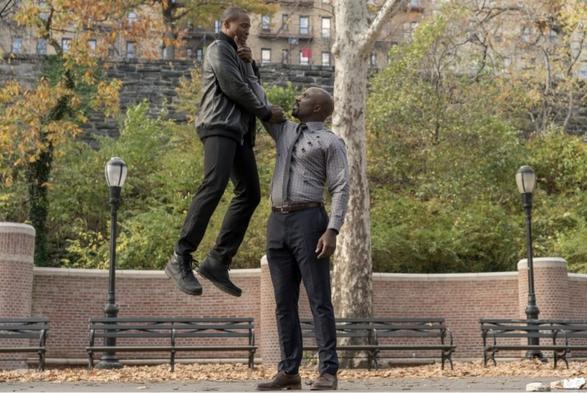
In fact, watching her suddenly in the midst of a deadly conspiracy that’s seeing her and Luke try and stay ahead of the various people trying to nab Scarfe for various reasons plays in perfectly to the type of action thrillers the show is seeking to emulate. Also, unless I miss my guess, there seems to be a spark forming between the two which means that Matt Murdock and Luke Cage are now unofficially in competition with how much game they have with the ladies. Anyway, the whole thread involving a rapidly fading Scarfe manages to keep the pace up well even if it initially comes out of nowhere, but to make up for it, it does well to effect a range of characters in a bunch of different ways. The main one is unsurprisingly Cage himself, as he has to weigh up doing the right thing in light of Scarf’s confession that he murdered Chico; but far more curious is how Misty Knight reacts to his eventual death. While it’s tough to feel bad for the corrupt cop – even after we hear about the tragic death of his young son that set him on his crooked path – Misty is utterly broken up by the passing of her mentor which feels strange considering that all we’ve seen him do is throttle a man to death with a tie. The juxtaposition of emotion for the death of a particularly nasty individual is not an entirely successful gambit for Misty’s character, but at least it gives Cage the excuse to do some classic, super-strength, hero stuff. After all, if you’re not ramming your shoulder into a speeding vehicle to stop it dead and crumple the front like tinfoil, can you even call yourself a superstrong Marvel hero? OK, it’s been done a little more spectacularly elsewhere (we cut away on impact to save on visual effects), but it’s still a cool image.

While the confusion about where the show is actually going is starting to distract me more than it should, the show continues to expand its universe thanks to the welcome and continued addition of Rosario Dawson. However, with the climactic arrest of its chief villain, are we due some massive, textbook Marvel/Netflix reset to launch us into the show’s second half? And will it actually work this time?
🌟🌟🌟🌟
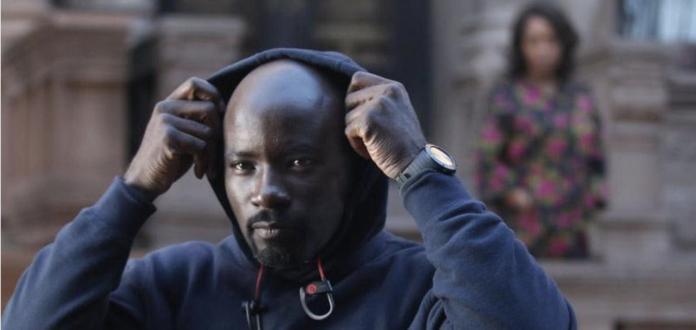
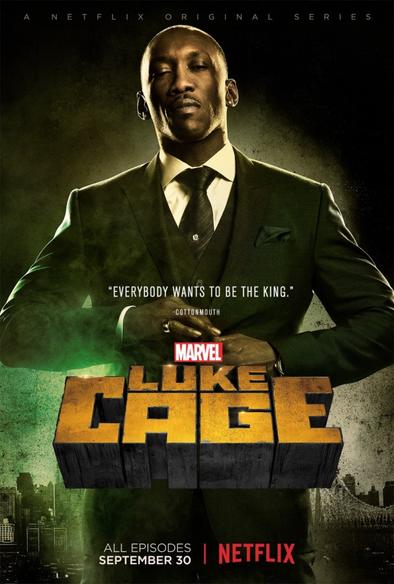
#2016 #AlfreWoodard #LukeCage #MahershalaAli #Marvel #MCU #MikeColter #Netflix #RosarioDawson #SamMiller #SimoneMissick #TheoRossi #TVReview
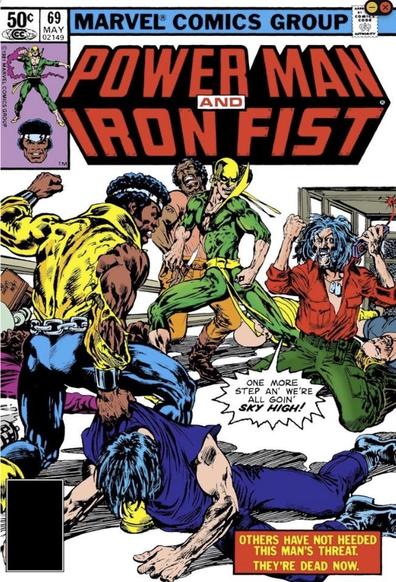
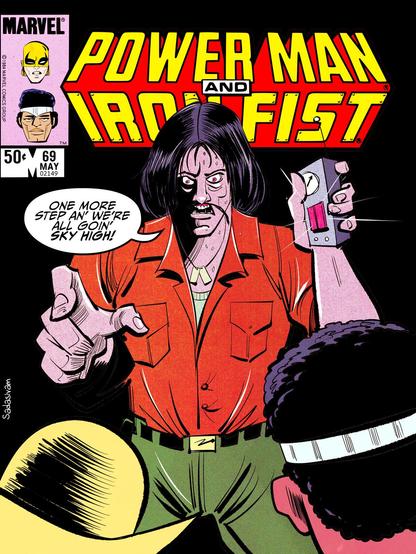
My cover reimagining for Power Man and Iron Fist issue 69. I always felt the original cover was lacking - it felt too busy and the threat implied in the cover wasn't really evident without the word balloon. So, I took a stab at re-doing it my way. #comicbookcover #process #comicart #lukecage #ironfist #powermanandironfist
‘Daredevil: Born Again’ Season 3: New BTS Images Confirm the Return of Elodie Yung’s Elektra!! Check It Out!! #ElodieYung, #CharlieCox, #DaredevilBornAgain, #DisneyPlus, #FinnJones, #IronFist, #JessicaJones, #KrystenRitter, #LukeCage, #Marvel, #MikeColter, #WilsonBethel

Luke Cage – Season 1, Episode 5: Just To Get A Rep (2016) – Review

After our trip to flashbackville, it’s time to get our asses back to Harlem of the present day to catch up on the ever growing grudge between Luke Cage and Cornell “Cottonmouth” Stokes. Thanks to a well placed subplot that filled us in on Cage’s long overdue origin story (he was introduced in Jessica Jones, remember), the cliffhanger that saw him emerging from the rubble of an exploded Chinese Restaurant (we’ll never forget you, Ghengis Connie’s) to the astonishment of both cops and the press actually still hasn’t been fully addressed yet.
Well, we’ve got time to address it now and it back to some classic Luke Cage action as the people of Harlem react to the superhero in their midst. But while “Just To Get A Rep” continues to give us a solid adaption of the blaxploitation-themed comic, there’s that lingering curiosity about where to show is going to go beyond it’s current story line.

While Harlem muses about the unbreakable black man who crawled out of the ruins of Ghengis Connie’s Restaurant, some sizable events occur that strive to make their minds up for them. But before we get into round two for the battle of the soul of Harlem, a familiar face arrives who has been through the wars recently. After getting shit-canned from her job at a hospital after an attack of undead ninjas, Claire Temple has come to Harlem to stay with her mother, Soledad, and she confides with her parent about all the weird shit she’s seen and how she wants to keep helping these super powered defenders.
Meanwhile, the thorny matter of Pop’s memorial has arrived and it’s going to be a tricky affair that goes way beyond making sure the man’s various girlfriends are all kept apart – because both Cottonmouth and Cage are due to attend. After trying to blow Luke up failed to get any traction, Cage’s assaults on his money houses and an earlier weapons deal gone bad has caused Stokes cash flow issues to got critical. If he calls in über boss, Dimondback, in to help, he’ll lose control of Harlem for good, so Cottonmouth gets his goons to extort the folks of Harlem and put the blame squarely on Cage’s interference in an attempt to turn the people against him.
After Misty Knight delivers some advice that’s sounds like a warning (or a warning that doubles as advice) to stay out of Harlem affairs, Cage instead follows his heart and addresses the complaints from the people affected by heading out and using his powers to muscle the muscle and get people’s belongings back. However, after a tense face to face with his well-meaning nemesis, Stokes starts looking into ways to bring down a man with impenetrable skin and is clued in on something called a Judas bullet – a hybrid of Chitauri metal and Hammer tech.
Soon, Pop’s memorial gets underway and both Stokes and Cage take their spot at the podium to say some words; but while they seem to be speaking about the deceased on the surface, deep down they’re really putting their case to the people of Harlem. But who will they side with?

While the fifth episode once again delivers exactly what you’d want from a Luke Cage show, there is a wonder if Netflix has finally managed to sort out their story issues. It’s been a consistent problem throughout all of Marvel’s Netflix arm, affecting both Daredevil and Jessica Jones at various points in their seasons. In fact, I read it described somewhere as Netflix constantly making four episode stories last for thirteen and while I wouldn’t quite describe it so harshly (yet), I would argue that every show so far (two Daredevils, one Jones) have been at least three episodes too long. In comparison, Luke Cage is going pretty strong, but as we’re only five episodes in, there is a feeling that “Just To Get A Rep” is going over some already familiar material to double down on a point it’s already made.
However, that material is continuing to play to the show’s strengths, so it’s still nothing to worry about just yet. That strong sense of community that the show’s thrived on comes to the forefront when both Cage and Stokes downshift their pissing contest from sizable property damage and vigilantism to something far more subtle. While Frankie Faison’s Pop has now been dead for three whole episodes, the show is very much keeping his memory at the forefront of the story. In fact, there’s a sense that Luke is going to have to accept the dead man’s burden as the unofficial conscience of Harlem if he’s ever truly going to purge the streets of criminal influences. Of course, Stokes isn’t about to let that go unopposed, and while Shades introduces him to that special, exploding Judas bullet that may be just thing for vaquishing an unshootable foe, we get to have a few gripping face-offs between Mike Colter and Mahershala Ali that crackle with social relevance. In fact, the unofficial “debate” the two have at the memorial is yet another example of the show reaching it’s full potential when it comes to merging superheroics, blaxploitation and social themes.

However, slightly less effective are the action scenes that doesn’t seem to be entirely confident about how to stage fight sequences between normal folk and a guy with untested strength limits. Watching him render horribly outmatched thugs unconscious with an open-handed bitch-bop to the head is a cool concept, but it isn’t shot or choreographed with any particular flare and thus is a little underwhelming. Simply put, we need a more physical threat for our protagonist pronto. But still, the more mental threat of Stokes trying to sully Cage’s name before he gets too much support in Harlem proves to be interesting enough.
Proving to be most interesting of all is the inevitable arrival of Rosario Dawson’s Claire Temple, the Netflix universe’s closest answer to Nick Fury (as in that she pops up bloody everywhere). However, rather than having her just pass through, we see that she’s been granted a continuing arc after the trauma she experienced in Daredevil’s second season. While she survived that attack from the Hand, her job sure didn’t, so she’s now come to Harlem to stay with her mother played by Sônia Braga. With Temple having multiple experiences stitching up Matthew Murdock and having already met and saving a comatose Luke Cage while cameoing in Jessica Jones, hopefully she’ll have something important to do as she’s shown interest in becoming a triage nurse for busted superheroes. I guess it’s no accident that she’s arrived in the show in the same episode that floats the concept of a Judas bullet…

While it’s settled nicely into its various themes and plots, there’s a sense that Luke Cage may have to up it’s game soon as watching our bullet-proof brother batter helpless thugs with no resistance is already getting a little stale. However, with Chitauri tech on the horizon, Claire Temple in the house and the animosity between Cage and Stokes getting ever more personal, the show ain’t breaking anytime soon.
🌟🌟🌟🌟

RETURN TO LUKE CAGE REVIEW #2016 #LukeCage #MahershalaAli #MarcJobst #Marvel #MCU #MikeColter #Netflix #RosarioDawson #SôniaBraga #SimoneMissick #TheoRossi #TVReview

Luke Cage – Season 1, Episode 4: Step In The Arena (2016) – Review

Ah yes, the good old, tried and true origin story. Every hero gets one, it seems, as it’s a time honored tradition in comic book adaptions – after all, how else are we going to find out the story behind how a hero got their particular brand of abilities. However, while there was a time were virtually every superhero title out there was an origin story, later attempts realised that maybe it was time to give the overused trope a rest and skip right to the hero already being fully formed. Much like Daredevil and Jessica Jones before him, Luke Cage has benefited mightily from showing up pre-powered, but like them they eventually went back and covered their pasts thanks to some liberal use of flashbacks. Well, after three episodes (and a whole bunch of appearances in Jessica Jones), it’s time to finally see what forged the man into who he is today – and while we’re at it, clear up a lot of dangling backstory concerning the character of Reva Connors: Luke Cage’s wife.

As Luke lay unconscious in the rubble of a Chinese restaurant blown up by a rocket fired by local crime boss, Cottonmouth, his mind drifts back to equally uncomfortable moments from his past when his life all but came to an end. Once a former policeman and going by the name Carl Lucas, we join him as he’s being sent to Seagate prison after being framed for a crime he didn’t commit. Trying to build up an emotional wall to try and protect him from the strain of incarceration, Lucas is adamant he’s not letting anyone in, but soon, inspite of himself, he befriends long timer Squabbles and finds himself getting attracted to prison psychologist Reva Connors.
However, remaining a thorn in his still penatratable side is the man in charge, sadistic corrections officer Albert Rackham, who is eager to coerce Lucas into joining his illeagal fighting ring by any means necessary. Applying pressure in all the right places, Carl soon finds himself sliding into a dark place as he endures multiple brawls in order to keep those he cares about safe; but after accumulating numerous scars and a magnificently unkempt afro, Reva finally catches on and tries to save him.
The result is Rackham’s goons (which include Shades) almost beating Carl to death, but unbeknownst to many, Seagate has a secret habit of illeagally experimenting on prisoners who volunteer. Dumping him in a water tank that would make Weapon X proud, Reva convinces Dr. Noah Burstein to try an experimental procedure on Lucas to promote advanced healing, but after Rackham arrives and screws everything up, the resulting explosion has an unintended side effect. Now granted super strength and unbreakable skin, Lucas literally punches his way out of Seagate and survives the swim to shore where he meets up with Connors and adopts the name, Luke Cage. However, while it seems that the pair are owed a happily ever after, Jessica Jones has already told us that’s never going to happen…

While I’m in agreement that indulging in an origin story is unnecessary when we’re already well versed in the details (I mean, do we really need to see the shooting of Uncle Ben or the Waynes again?), it’s still worth indulging in when the character in question has an origin that isn’t common knowledge. It’s also nice to see a Marvel/Netflix show that gets the timing right and drops a flashback episode on us that actually feels organic to what’s actually occuring in the story. Thanks to Luke being buried alive in the debris of an exploded restaurant, we’re still left with an extended cliffhanger, but it’s one that weaves nicely around the flash-forwards that keep the current characters relevant while we wistfully look back courtesy of Vincenzo Natali, the director of Cube and Splice.
It’s also cool that the show mixes things up to turn the entire episode into a prison movie as we watch Carl Lucas try various methods to survive a prison term in the callous hellscape of Seagate prison. All the familiar tropes are there; a kindly, but doomed, old timer who shows him the ropes; a brutal man in charge who enjoys stripping the humanity from his prisoners; a kindly psychologist who manages to bring our hero out of the emotional exile he’s placed himself in; and it not only proves to be a nice chance of pace for the season, but it’s a refreshing shift for superhero titles in general as the usual aspects of superhero creation (defective equipment, billion to one chance of survival, bullshit science) merge well with the prison story.

Of course, while the overall tale is pretty grim, we also find the episode in a weirdly playful mood too, as not only do we get some fun banter between Lucas and Squabbles over who’s the best out of Bruce Lee and Jet Li, but we get some dutiful nods at classic comic book lore. In fact, the moment where our hero inadvertently recreates his comic accurate look from the 70s proves a goofy, lighter touch the series has thus far been missing and it’s worth the price of admission alone just to see him announce that he looks like “a damn fool” before removing that iconic “tiara”. However, as much as the episode works as a great origin, there is the issue that for most of it to make sense, you need to have some Jessica Jones cliff-notes to hand as it leaves the act of tying up most of the threads completely down to you. Once the newly christened Luke Cage and Reva run off to start new lives, the episode neglects to fill us in on what happened next (she’s ultimately murdered by a mind controlled Jessica Jones as the villainous Killgrave seeks to dig into the super power research she was involved in), which is a little presumptuous of the connected universe to just assume we can remember what occurred without some handy prompts. It’s not the end of the world, but it is fairly messy considering so much of Cage’s past was revealed in an entirely other show.
However, with this taken into account, “Step In The Arena” still proves to be a great installment that not only doesn’t ruin the momentum of the show, but actually uses its change of time and location at exactly the right moment to allow Cage in the present to finally step forward and gave something akin to an “I am Iron Man” moment as he addresses the press. Flicking from blaxploitation to prison movie with ease, it’s good to see that Luke Cage has found it’s own way to subvert superhero tropes much like his future Defenders stalemates did, and while a lot of familiar details are expected in the actual physical creation of our hero, it’s also smart enough to use them in meaningful, new ways. Plus, we actually got to see him in a yellow silk shirt and a tiara…

Four episodes in and Luke Cage is still going strong while ploughing fresh territory in an overcrowded genre. While some of the dot-connecting could have been a bit cleaner (would including a bit of revealing footage from Jessica Jones really been so hard?), the prison flashbacks prove to be a perfectly placed diversion to prove that Harlem’s hero for hire is still impressively showing his power, man.
🌟🌟🌟🌟

#2016 #ChanceKelly #CraigMumsGrant #Disney #LukeCage #Marvel #MCU #MikeColter #Netflix #ParisaFitzHenley #SimoneMissick #TheoRossi #TVReview #VincenzoNatali

Luke Cage – Season 1, Episode 3: Who’s Gonna Take The Weight? (2016) – Review

After the last episode managed to get the Luke Cage experience down cold, it’s now up to the rest of the season to maintain it, and what better way to churn up that superhero momentum than to focus on our unbreakable hero finally striding out into the streets of Harlem and attempting to clean them up with some literal strong-arming. It’s here that we truly get to reap the benefits of that all-encompassing image that only gets more vital as time goes on: a black man impervious to gun crime. But beyond the fact that our hero is immune to various calibres of gunfire, we find that he’s now ready to step up and purge Harlem of crime in the memory of recently slain father figure, Henry “Pop” Hunter after years of hiding his abilities.
However, this wouldn’t be a Marvel/Netflix show without an opposing force that wants the same thing, but is prepared to get it by any means necessary. No, I’m not talking about Cornell “Cottonmouth” Stokes; I think it’s time for us to take a closer look at Mariah Dillard…

After placing himself on the bench while tending bars in Hell’s Kitchen and sweeping hair in Harlem, Luke Cage realises that it’s time to get in the game after the overzealous actions of an excitable gangster tragically took the life of Pop. A friendly pillar of the community, Pop was shot down after trying to put together a parley to save the life of overstepping youth, Chico, who had been part of a trio who thought it would be a great idea to rob local Kingpin, Cottonmouth.
While I genuinely thought Chico had been fatally torn up in the salvo that killed Pop, it turns out he was merely hospitalised and we soon find him nervously fielding questions from Misty Knight and her partner, Scarfe. However, while Chico remains tight as a clam, he eventually spills all to Luke, who needs to know how Cottonmouth’s operation works in order to hit the gangster as hard as he can in the place where it hurts the most – his wallet. Raiding his money drops, but leaving the illegal money for cops to find, Cage is softening up Cottonmouth’s operation just enough for all the funds to be transfered to the fortified Crispus Attucks building for safe keeping. But when it arrives, he springs into action, using his durable hide and super strength to bulldoze his way in, beat the crap out of everyone, and make off with a large pile of money.
His aim? Cage hopes to not only hurt the operations of Cottonmouth and his corrupt counsel-woman cousin, Mariah Dillard, but he hopes to use the cash to keep Pop’s bullet ridden barber shop afloat and help a few others with their financial woes. However, despite trying to frame the raid on rival gang boss Domingo, matters are undone somewhat when Chico finally grows a conscience and goes to the cops. Unfortunately for everyone involved (and especially for Chico) it seems that Scarfe is as corrupt as they come, and after murdering his wannabe informant, he delivers news to Cottonmouth about who really put a dent in his operation. Cottonmouth’s reaction proves to be fittingly explosive…

We’re only three episodes in and it seems that the neo-blaxploitation vibes the show was hoping to evoke are still firing on all cylinders. I was worried that after the huge moment of killing off Pop, the show would take an early time-out to let that death percolate, but thankfully the powers that be have recognised that it’s in their best interests to seize the day and capitalise on the moment. Yes, there’s plenty of eulogising of the fallen pillar of the community, but the episode is far too smart to spend it wallowing in grief when there’s far more valuable ways to utilise it. Remember, in the short time it’s been on, one of Luke Cage’s greatest assets is the sense of community the show puts out that connects virtually everyone together, no matter which side of the law they fall on – and Pop connected everybody.
This provides an organic and convenient way (not for Pop, obviously) to bring a lot of characters face to face and have confrontations about the big picture. For a start, it’s always a good idea to get your hero and villain together for a pow-wow and while Cage and Stokes have met a few times before, they’re now on far equal footing as they discuss Cornell paying for Pop’s funeral with barely concealed threats. With every episode, Mahershala Ali is getting ever cosier in the skin of Cottonmouth and the more stress the gang boss gets put under, the more fun the actor is obviously having, which proves to be a remarkably good counter to Mike Colter’s clench-jawed righteousness. In fact, by the end of the episode, both characters have gotten to fully embrace their character’s comic book nature by forging full-tilt into full-blown heroism and villainy. Cage gets to go on a cool, superhero rampage, busting up crooks and bending car doors around them in a manner that may not match the scope of the MCU movies, but still gets the point across. However, on the other hand, Cottonmouth gets to retort by dropping subtlety and ends the episode by shooting an actual fucking rocket into a Chinese restaurant while his enemy is chowing down on dinner and it continues to perfectly exaggerate the blaxploitation vibe with superhero bombast.

However, as cool as this all is, the supporting characters are also undergoing intriging changes of their own. Take Frank Whaley’s cynical detective Scarfe, for example – I don’t think anyone’s overly surprised that he’s turned out to be rotten, but rather than just selling info to Cottonmouth, he takes it upon himself to murder notorious loose-end, Chico, by throttling him to death with a necktie, which is way more dramatic than just being on a criminal’s payroll. Similarly, Alfre Woodard’s Mariah is proving to be one to watch as she seems to have the same warped views on preserving a city as Daredevil’s Wilson Fisk. She genuinely seems to love Harlem and wants to preserve both the community and her place in it, but the fact that she’s willing to allow her cousin to use any force necessary to keep the money flowing makes her both an incredible hypocrite and extremely dangerous. Still, while they both operate in the shadows, thankfully the show has allowed Misty Knight to finally use those “superior” detective skills she’s supposed to have and figure out that Cage has powers. However, where the character has weirdly failed put two and two together in the past after seeing bullet holes in Lukes clothes but not in his skin (while living in a world where the Hulk exists, no less); thankfully she’s catching on, but this is thankfully diffused by the fact that Simone Missick is given more chances to flesh out the iconic, destined to be one-armed, detective by having her deliver stories from her past which go even further to create that sense of community the show does so well to cultivate.

Another super-strong episode arrives courtesy of Guillermo Navarro – frequent cinematographer to both Guillermo Del Toro and Robert Rodriguez – and he takes that blaxploitation motif and brings it deeper into the world of superheroes than ever before by letting both it’s hero and villain fully cut loose. However, while its great to watch Luke Cage haul off on some fools and Cottonmouth retaliate with some heavy ordinance, it’s the changes in the supporting cast who are starting to really deliver the sense of community that the show us excelling in.
🌟🌟🌟🌟

RETURN TO LUKE CAGE REVIEWS #2016 #AlfreWoodard #Disney #GuillermoNavarro #LukeCage #MahershalaAli #Marvel #MCU #MikeColter #Netflix #SimoneMissick #TVReview

Luke Cage – Season 1, Episode 2: Code Of The Streets (2016) – Review

Three seasons into Netflix’s Marvel universe have already taught me to be somewhat wary. While Daredevil and Jessica Jones both had dizzying highs that genuinely could be hailed for moving the superhero genre into bold, new directions, their shows have also been mired by some pretty confounding pacing that repeatedly would cut off the season’s momentum at the weirdest moments. Simply put, while I’ve grown to be immensely fond of what the Neflix’s Marvel side hustle has given us, I’ve already learned that a season highpoint is usually temporary.
So it’s with mixed feelings that I have to say that Luke Cage’s second episode is precisely what I’d want a Luke Cage show to be. After the scene setting of episode 1, the show has already settled us into its world nicely and now promises to give us the full, Power Man treatment. But here’s my issue: if a show in this notoriously inconsistent universe peaks in its second episode, is the show going to be able to keep it up for another eleven episodes?

In the aftermath of the botched hijacking of Cornell “Cottonmouth” Stokes’ arms deal, all hands are on deck to locate the final member of the trio that stole a sizable amount of cash. While one member was shot on the scene and another was captured and beaten to death by Cottonmouth himself, everyone has feelers out to lay their hands on the final member, Chico. Stokes obviously has his goons – Tone and Shades – out looking for him, and detective Misty Knight and her cynical partner, Scarfe, are also beating the street in order to close the case; but the one with the most skin in the game is Pop.
After reforming himself after a decade in prison, Pop has ensured that his barber shop is “Switzerland” to the various townsfolk on both sides of the law and as Chico and his now-dead friends used to hang out there, he just wants the kid to be safe. Knowing that Luke Cage popped his superhero cherry last night and saved a Chinese restaurant from some money collecting thugs, Pop calls in a favour and tasks the unbreakable man with locating Chico in order to parley some sort of deal with Cottonmouth. Slowly growing more eager to head out onto the streets and do some good, Cage agrees, but unbeknownst to him, events have been set in motion that is about to spell disaster.
As everyone looking for Chico sets foot in Pop’s barber shop sooner or later, the various groups on both sides of the law soon start to get acquainted with one another, but it’s Cage who mamages to find the kid first and convince him to come back in. However, it’s tough to keep secrets in Harlem for long and after Tone gets wind of Chico’s location, he decides to take matters violently into his own hands. But when the bullets stop, the terrible ramifications light a fire under Luke to set things right and look into just how deep the bond between Stokes and his city council woman cousin, Mariah, truly is.

I’ve never actually read a solo Luke Cage comic before, but I’d mostly become familiar with the character thanks to Brian Michael Bendis’ use of him in both his Jessica Jones titles and the New Avengers, however, if I had to imagine how I would picture a modern, live action Luke Cage playing on screen, it would totally be exactly like “Code Of The Streets”. While it may admittedly be a little short on moments where it’s title character stretches his mighty sinews and slap some street thugs around, but when it comes to letting this corner of the MCU naturally breathe, it’s nigh-on perfect. Obviously, the entire point of it is to galvanise our hero into action by building up to a tragedy that’ll give him the push he needs to fully embrace his destiny, but the way the episode goes about it means that it’s main cast – plus a few pleasant additions (hi, Turk) – all get plenty of screentime to further their arcs.
To strip it to its basics, Code Of The Streets covers the basic beats of a superhero motivational arc. The hero starts off reluctant, unwilling to ply his skills toward making things better, but thanks to a tragic death that probably could have been avoided his he’d blossomed quicker, he realises that his gift of shrugging off bullets has to be channeled into something more selfless. However, when you add the various layers that the showrunners have already put into place, everything comes alive and much like how Daredevil’s strengths lay within it’s gritty crime operatics and Jessica Jones played into feminine fears of toxic masculinity, Luke Cage’s crowning feature is making Harlem itself a living breathing character which gives it’s varied cast plenty of room to move around in. There’s also that welcome dip into black culture too, that not only gives us a Faith Evans performance at Harlem’s Paradise, but we also get an intriguing conversation where Cage and Pop name drop black, literary, crime writing greats such as Chester Himes and Walter Mosley. Not only does it aid the authenticity of the show, but it’s a nifty way to clue unfamiliar viewers into elements of black culture that could prove to be the seed to aid people to explore further.

Beyond the cultural aspect, I was genuinely floored that the show would kill Frankie Faison’s Pop so soon into the season, but even though the show has him go through the same ordeal as the Wayne parents or Uncle Ben to motivate the lead, at least the show manages to flesh him out a little more before an overzealous Tone lights up Pop’s barbershop in order to get at Chico. But with the deepening of Pop’s history, we also find that the episode uses it to enrich everything else – obviously, he’s something of a mentor to Luke, but when we delve into Pop’s past we find that he actually came up through the streets with Connell and Chico’s father. Further more, he also has a preexisting relationship with Misty as everyone in Harlem growing up knew him and we also discover that the multi-talented detective knows her way around a basketball court too.
However, the most important thing about Pop getting popped is how it sets both the hero and the villain on their respective courses. Cage is still as proud as ever, stumbling across Mariah Dillard’s involvement and intimidating a street punk who addresses him with the n-word (Cage hates the n-word); but it’s Mahershala Ali’s Stokes who gets fired up the most, realising that his underling overstepped his bounds and course correcting by hurling him off the nearest roof. However, while there’s a couple of minor logic issues (with the Avengers being public knowledge, and Misty being a detective and all, surely she should be able to figure out that Luke has powers instantly) and Netflix’s inability to properly plot out their Marvel seasons for the full thirteen episodes looms large, right now Luke Cage is operating at full strength.

While I have to say that Luke Cage potentially peaking so early would be considered a win for other shows, we’ll have to see whether it can keep that momentum, or ends up crashing out by the midway point. However, this shouldn’t take anything away from the fact that Code Of The Streets is a near-perfect showing for Marvel’s hero of Harlem and the world that surrounds him.
🌟🌟🌟🌟🌟

RETURN TO LUKE CAGE REVIEWS #2016 #AlfreWoodard #Disney #FrankieFaison #LukeCage #MahershalaAli #Marvel #MCU #MikeColter #Netflix #SimoneMissick #TheoRossi #TVReview

Luke Cage – Season 1, Episode 1: Moment Of Truth (2016) – Review

It’s worth mentioning that in only three seasons of television, the Netflix arm of the Marvel Cinematic Universe had managed to deliver more diversity in its lead characters than the entire MCU had in the eight years since Robert Downey Jr. smugly announced he was Iron Man. Just take a quick run down the list: Daredevil’s super senses may massively compensate for the fact that he’s blind, but he’s still disabled. Similarly, Jessica Jones was headlining her own self titled series years before we saw the words Captain Marvel on a movie poster and finally, while Black Panther and Sam Wilson becoming Captain America may have set a great many things right within the MCU, Netflix had already said a fair few things about black superheroes thanks to the 2016 release of Luke Cage. But while it’s all very well for a show to delve deep into complex social matters, does it still manage to find that all important balance between gritty, urban commentary and sock-em’-on-the-jaw superheroics?

In the wake of his introduction in Jessica Jones, we find super strong, super durable Luke Cage back in Harlem and still laying low despite working multiple jobs to get by. When he isn’t sweeping hair at the barbershop owned by ex-gangster Henry “Pop” Hunter, he’s washing dishes behind the scenes at Harlem’s Paradise, the prospering nightclub belonging to crime boss Cornell “Cottonmouth” Stokes, and while you may be wondering why a man with superpowers is reduced to doing such remedial jobs, all Luke worries about is keeping his head down and remaining true to his moral beliefs.
However, as he just wants to make rent and keep his pride, we see that the sprawling world in which he lives is about to get shaken up after a couple of youths from the area think it’s a good idea to jack an arms deal going on between Stokes’ men and neighbouring gang leader Domingo Colon. The resulting fallout not only creates tension between the criminal organisations and creates a cash flow problem that trickles down to Stokes’ cousin, New York City Council member, Mariah Dillard, but the people above Cottonmouth send Herman “Shades” Alverez in to get things back on track.
Meanwhile, on the other side of the law, NYPD detective Misty Knight is investigating the bloody fall-out of the arms raid and while two of the offending kids are rapidly taken out of the picture by various means, the third, Chico, is still in the wind with the rest of the money. But what does any of this have to do with Luke Cage? Well, not a damn thing if he has anything to say about it – but after a one night dalliance with Knight and an altercation with Dillard’s men about squeezing locals for money, it seems that despite his desire to be left alone, Harlem need a hero to hire.

While Netflix’s Daredevil gave us a sprawling crime epic and Jessica Jones put a superhero spin on psycho thrillers while pulling no punches about the female experience and toxic relationships, it seems that the first season of Luke Cage is looking to merge the two. Even as early as the first episode, the show fully places both a swaggering crime boss and a corrupt political official front and centre with Mahershala Ali’s Cottonmouth and Alfre Woodard Mariah Dillard jumping through the typically stressful hoops that come with trying to hold together a criminal empire within the MCU. But beyond all the crime stuff, the show is obviously incredibly enthusiastic about bringing the black experience to the Marvel Cinematic Universe in ways we’ve never seen it before, as the showrunners load up every frame with references to the Harlem culture.
Obviously, the entire show plays on a sort of neo-Blaxploitation vibe, which isn’t surprising considering the character originally spawned from the explosion of such movies as Shaft, Foxy Brown, Super Fly and the like, but beyond that, the camera lingers on various black literature laying in various apartments, concentrates on using music by black artists pounding over the speakers (every episode is named for a song title by hip hop duo Gang Starr) and frequently has characters openly discussing race in multiple scenes. If you wanted more black representation in superhero media, the makers of Luke Cage seem more than willing to go all in.

However, while the above is undoubtedly important, it’s all going to be wasted somewhat if the show it’s contained in doesn’t hold interest; but while the image of a law abiding black man being impervious to bullets is something of a powerful image (even more so in the subsequent wake of BLM), the first episode of Luke Cage’s solo show actually goes a little slow on the heroics, hired or otherwise. Obviously, we have an entire world to surround Mike Colter’s Cage with, be it the aforementioned antagonists, or the likes of Frankie Faison’s kindly Pop or Simone Missick’s stand out, Misty Knight; however, there’s a feeling that anyone leaping onto this show without watching any of the previous superhero seasons may feel that Cage himself is too much of an enigma. While it’s refreshing to see a black hero not be fueled by bombast, but instead move with stoic dignity, the fact that a good portion of his past had already been touched upon in Jessica Jones means that the whole business of his murdered wife, Reva, is frequently referenced but never explained. Similarly, it’s strange to see Cage, who has gone from running his own bar to slumming in barber shops and washing dishes, now have way more of a stand-off attitude than he did in that previous show and it’s almost as if the show has regressed Cage a little to give him more of an arc to play with here.
Still, as first episodes go, it’s as reliably solid as Cage’s epidermis. Everything is lit in warm, golden hues; the score is sublime; I love the opening titles and we even get far more overt references to the greater MCU (street sellers are hocking DVD footage of the battle from the Avengers); but while the show is taking its time to bring out the hero in our lead, it’s going great guns when it comes to fleshing out its villains. In fact, the shot of Cottonmouth standing in front of a painting of Biggie Smalls with the picture’s crown looking like it’s sitting on his head may actually be the most iconic villain shot in MCU history. Still, before the episode comes to an end, we get to see Cage do his stuff and take out a bunch of thugs; but while I don’t think the sight of someone breaking their fist on Cage’s jaw will ever get dull, Luke seems to be overwhelmed by the numerous introductions of his own cast.

A strong opening for Luke Cage’s solo show gives us plenty new characters to catch our attention, with Harlem itself almost taking the standout lead role. But while the premiere works admirably hard to engrain black culture into every single shot, it’s lead seems strangely passive for a character that should’ve hit the ground running after being introduced in a previous show.
🌟🌟🌟🌟

#2016 #AlfreWoodard #Disney #FrankieFaison #LukeCage #MahershalaAli #Marvel #MCU #MikeColter #Netflix #PaulMcguigan #SimoneMissick #TheoRossi #TVReview