 Panethos
The charm fades when lake castles replace cottages
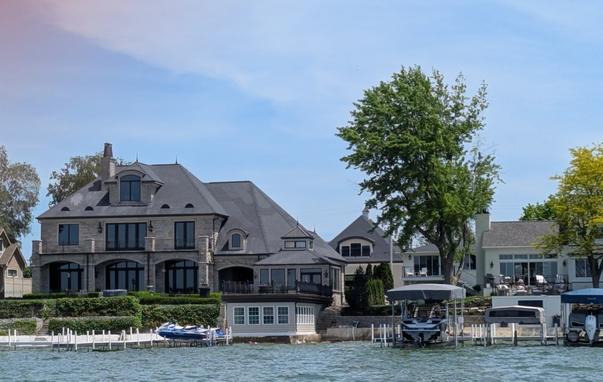
Our family has been spending joyous summer adventures for more than 40 years on an approximate 3,000 acre natural lake in northern Indiana. While the vacations are fun, the lakeside development trends during that period have seen many quaint lakeside cottages replaced by what can only be called lake castles. As a result, during that same period, much of the historic charm that drew so many here from Indianapolis, Chicago, Fort Wayne, and elsewhere has faded.
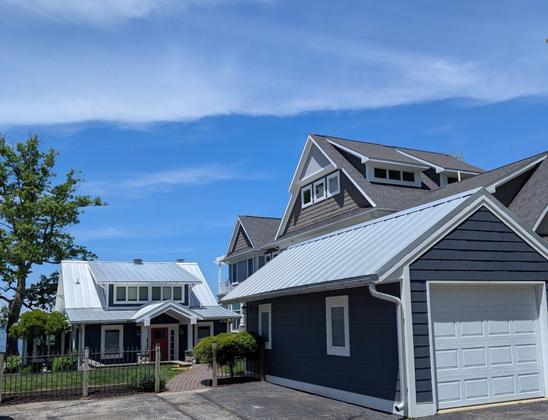
Older lake cottage adjacent (left) to a newer lake castle (right)This is not to say that the lake itself is less appealing, but more the general atmosphere of a summer getaway has been lost to suburbanized, supersized McMansions that now overpower everything that came before them. As more people crowd into these “palaces,” the shorelines are occupied by more people and the lake becomes a waterborne gridlock of motor boats, jet skis, wave riders, kayaks, canoes, sailboats, skiers, and paddle boards, especially on weekends and holidays.
While impacts to the waterbodies themselves are a fairly common topic of concern among environmental groups, what seems to be often overlooked is the loss of so many historic lake cottage dwellings. On some lakes, the rapid depletion and replacement of traditional lakeside cottages is leaving precious few that depict the earliest stages of lakeside vacation home development from the early 20th century.
Lake castle to the left and an older cottage to the rightTo be fair, even our family added space onto a 1909 lake cottage in the early 1980s to share family gatherings at the lake. In the 40 odd years since then, our cottage has become one of the “small fry” of the shoreline, as one new castle after another has replaced the traditional cottages of yesteryear. Despite our add-on, it’s one thing to house 8-10 people in a traditional lakeside cottage while it’s a whole other to hold 30-35 in a “supersized” one.
Aside from the aforementioned concerns, troubling aspects of lake castles versus traditional lake cottages include but are not limited to:
- Significantly greater lot coverage
- Loss of tree canopies
- Size and scale that overwhelm older properties and in some cases the capacity of local infrastructure
- Impeded viewsheds as homes creep closer and closer to the shoreline
- Decreased sunlight
- Added traffic on local streets
- Lack of parking or congested parking along narrow streets
- Potential for large increases in storm water runoff
- Less green area for storm water absorption
- Use of larger cottages as short-term rentals instead of family cottages
To address these concerns, communities should consider the following zoning amendments and be sure to train their zoning board of appeals not to issue carte blanche variances to every applicant unless they can prove practical difficulties or hardships that are unique to their situation. Just because an applicant wants a variance is not a sufficient reason without practical difficult or hardship.
- Lot coverage maximums
- Yard setback minimums
- Impervious surface maximums
- Height maximums
- Floor-area ratios
- On-street parking standards
- Storm water detention and retention requirements
- Short-term rental regulations
In addition, greater publicity about the rapid loss of traditional (historic) lakeside cottages should be incorporated into preservation efforts locally and nationally.
Otherwise, the “castle-ization” or our lakeshores will continue unabated and entire generations of vacation housing may disappear from certain lakes across the country.
Peace!
#environment #geography #history #lakeCastles #lakeCottages #lakes #landUse #planning #tourism #travel #zoning