 Тунеядец 🛌
Prachtkerl. Zur richtigen Zeit am richtigen Ort, im die richtige Richtung, und grün angehaucht ist er auch noch.
#FotoVorschlag #kleinegrünemännchen #grunemannchen #Notausgang
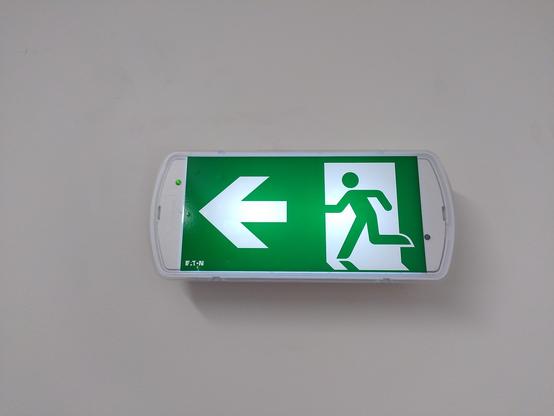
Prachtkerl. Zur richtigen Zeit am richtigen Ort, im die richtige Richtung, und grün angehaucht ist er auch noch.
#FotoVorschlag #kleinegrünemännchen #grunemannchen #Notausgang
#ScienceBusters @sciencebusters
Podcast mit Martin #Puntigam und @astrodicticum :
Die Farben des Universums - SBP124
Über die Farben des #Regenbogens, kleine, #grüneMännchen, die #Grauheit des Mondes, unsichtbare #Farben und wann das #Universum unbunt ist
In Ausgabe 124 geht es um das neue Buch von Florian Freistetter, die Farben des Universums, das aber eigentlich überall rot ist.
Webseite der Episode: https://sciencebusterspodcast.podigee.io/124-die-farben-des-universums-sbp124
Mediendatei: https://audio.podigee-cdn.net/2357889-m-d92a86bfa1c7208c08953483a91dfcbd.mp3?source=feed
In Ausgabe 124 des Science Busters Podcasts stellen wir das neue Buch von Astronom Florian Freistetter vor: "Die Farben des Universums. Er erzählt Kabarettist Martin Puntigam unter anderem, wozu man Photo- und Astrometrie braucht, warum in der Wissenschaft Dinge oft was anderes bedeuten als im Alltag, dass Licht immer eine Farbe hat, wie man einen roten Planeten blau macht, wieso das ganze Universum eigentlich rot ist, was der Doppler-Effekt in Joseph Frauenhofers Leben war, wie einem ein gerettetes Leben finanziell helfen kann, was die vielen Spektrallinien bedeuten, wie effektiv Dopplers Schinaklfahrten waren, welche Farbe die Mikrowelle hat, was unbunte Farben sind, weshalb der Mond so grau ist, ob sich Aristoteles über alles Gedanken gemacht hat, warum man ein Schwarzes Loch sehen kann, das noch dazu orange ist, wieso grün im Universum oft seltsam ist, weshalb es keine grünen Sterne geben kann, wie gefährlich unsichtbare Farben werden können & seit wann es kleine grüne Männchen gibt.

Understanding the characteristics of microbes during long-term space missions is essential for safeguarding the health of astronauts and maintaining the functionality of spacecraft. In this study, a Gram-positive, aerobic, spore-forming, rod-shaped strain JL1B1071T was isolated from the surface of hardware on the China Space Station. This strain belongs to the genus Niallia, with its closest relative being Niallia circulans ATCC 4513T. The genome of JL1B1071T is 5 166 230 bp in size, with a G+C content of 35.6 mol%. The average nucleotide identity and digital DNA–DNA hybridization values between JL1B1071T and N. circulans ATCC 4513T are 83.3 and 27.5%, respectively, both below the recommended thresholds for species delineation. The major cellular fatty acids were anteiso-C15:0 and iso-C15:0. The major quinone was menaquinone-7 (MK-7). Notably, strain JL1B1071T demonstrates a unique ability to hydrolyse gelatin, suggesting that it can utilize gelatin as a substrate in nutrient-limited environments. Genomic analysis of JL1B1071T revealed two conserved signature indels in the GAF domain-containing protein and DNA ligase D protein, which are specific to the genus Niallia. Additionally, structural and functional differences in proteins BshB1 and SplA were identified, which may enhance biofilm formation, oxidative stress response and radiation damage repair, thereby aiding its survival in the space environment. Based on phenotypic, physiological and chemotaxonomic characteristics, as well as genome annotation, strain JL1B1071T was considered a novel species within the genus Niallia and is proposed to be named Niallia tiangongensis sp. nov. The type strain is JL1B1071T (=GDMCC 1.4642=KCTC 43715).
 Norbert_R 🦣
 🐘
🐘 el loco