 WE AND THE COLOR
DIY Stone and Cement Texture Is the Interior Trend Rewriting What “Affordable” Means in Home Design
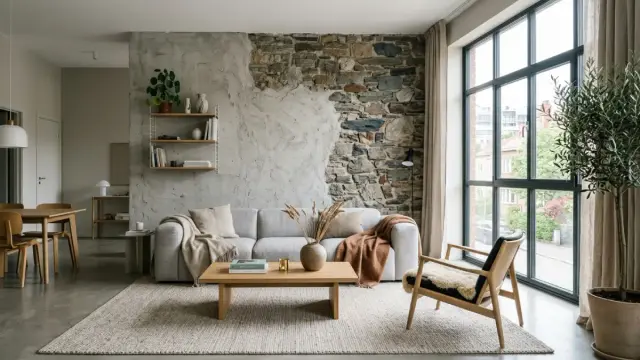
Something has changed in how people decorate their homes, and it’s not about buying a new sofa or repainting walls in the latest Pantone tone. Instead, people are reaching for a $12 tub of joint compound, a palette knife, and an old thrift-store vase — and producing something that looks like it belongs in a minimalist gallery in Copenhagen or a Milanese design studio. The DIY stone and cement texture movement is, without question, one of the most consequential grassroots trends in interior design right now. And it’s accelerating.
Seriously, this isn’t a flash-in-the-pan aesthetic. It sits directly at the intersection of three converging forces: the 2026 interior design push toward sensory, tactile surfaces; the broader economic pressure pushing people away from premium designer pieces; and the creative confidence that social media — particularly TikTok and Instagram Reels — has handed to an entire generation of home decorators. When a DIYer can turn a plastic planter into something that reads as a $900 limestone vessel, the whole logic of the décor market quietly starts to break down.
Why Is the DIY Stone and Cement Texture Trend Exploding Right Now?
The timing isn’t accidental. In 2026, interior design’s dominant aesthetic vocabulary is rooted firmly in the earthy, the raw, and the tactile. Honed stone, brushed concrete, and leathered quartzite — these finishes have taken over the premium segment of the market. Simultaneously, design publications and trend reports have unanimously pointed to imperfection as a marker of taste. Trowel marks, uneven edges, visible hand strokes: these qualities are no longer flaws. They’re the point.
That shift in cultural values opened a window for DIY creators who realized that the same rough, geological quality expensive designers were selling could be replicated with materials that cost almost nothing. Joint compound — commonly used in drywall finishing — turns out to be a remarkably effective medium for producing a stone and cement texture on almost any surface. So does ready-mixed micro-cement, now widely available in consumer-grade kits from brands like Smartcret. The materials democratized an aesthetic that used to require either a stone mason or a significant budget.
Moreover, the appetite for this specific look is intensifying, not fading. Searches for faux stone finish, micro-cement furniture, and DIY textured vases have climbed consistently through 2025 and into 2026. TikTok’s #fauxstone and #microcement tags have accumulated hundreds of millions of views combined. The conversation has moved well beyond early adopters.
The Earthen Object Economy: A Framework for Understanding the Trend
To understand what’s driving this movement at a structural level, consider what I call the Earthen Object Economy. This is the cost-per-perceived-value model that powers the DIY stone and cement texture trend. Here’s how it works: the perceived value of a stone or cement-textured object is calibrated against expensive designer counterparts. A matte, rough-surfaced concrete coffee table from a premium brand retails for $600 to $2,000. A DIYer who coats an old IKEA LACK table with micro-cement and seals it properly ends up with something functionally and visually equivalent — for under $40 in materials.
The gap between input cost and perceived output value is extraordinary. That gap is exactly what makes this trend sticky. It’s not just about saving money. It’s about the satisfaction of producing something that reads as expensive, curated, and intentional. That psychological return — the feeling of beating the system — is part of the product.
Furthermore, the Earthen Object Economy rewards material knowledge over purchasing power. The creator who understands how to layer joint compound for depth, how to sand between coats for variation, and how to finish with a matte sealer has a genuine skill. That skill translates directly into objects that peers recognize as beautiful.
What Materials Are DIYers Actually Using for Stone and Cement Textures?
The material toolkit for this trend is surprisingly compact. Most DIY stone and cement texture projects draw from one of three primary mediums.
Joint Compound (Drywall Mud)
Joint compound — sometimes called drywall mud or drywall compound — is the most accessible and forgiving of the three. It costs around $10 to $15 for a large tub at any hardware store. Applied with a palette knife, a flexible trowel, or even a piece of cardboard, it builds up organic, irregular surfaces that mimic the look of raw stone or aged concrete. It dries light and requires painting, typically with a matte or chalky-finish paint in warm neutrals: limestone beige, warm grey, clay, or bone white. The texture it creates has a genuinely geological quality — especially when multiple thin layers are applied, sanded lightly between coats, and finished with earthy tones. DIY creators have used it to transform everything from smooth ceramic vases to flat IKEA picture frames to chipboard side tables.
Micro-Cement
Micro-cement is a step up in both cost and finish quality. A cement-based coating applied in very thin layers, it produces a refined, seamless stone and cement texture that professionals use on floors, walls, and built-in furniture. Consumer-grade micro-cement kits — typically including primer, the cement layer, and a protective sealant — are now widely available. Brands like Smartcret have made this material genuinely accessible to beginners. The finish it creates is denser, harder, and more durable than joint compound alone. On furniture surfaces like coffee tables and dining tops, sealed micro-cement behaves like the real thing: water-resistant, wipeable, and age-worthy.
Textural Additives: Baking Soda, Sand, and Plaster
A third tier of DIY stone texture techniques involves mixing textural additives — baking soda, fine sand, or Venetian plaster — into standard paint or a thin plaster base. This approach is especially popular for vases and decorative objects. Baking soda mixed into matte paint produces a surprisingly convincing porous, limestone-like surface. Sand mixed into a primer creates grip and grit before a tinted topcoat. These methods are less durable but perfectly suited for decorative pieces that won’t endure daily wear.
The Layered Imperfection Method: How the Best DIY Results Happen
One of the most important conceptual contributions this trend is making to broader design thinking is what I call the Layered Imperfection Method (LIM). This is the approach — intuitive to experienced DIY creators, counterintuitive to beginners — of deliberately building imperfection into the application process rather than trying to correct it.
The Layered Imperfection Method works like this. Apply a first, thin base layer of joint compound or micro-cement unevenly. Let it dry completely, then dry-sand it lightly — not to smooth it flat, but to knock down the sharpest peaks and reveal variation in the surface. Apply a second, even thinner layer, again unevenly, catching some areas and leaving others exposed. Sand again lightly. Then apply color in a dry-brushing technique that catches ridges and leaves recesses darker. The result is a surface with actual visual depth — something that looks as though it has been shaped by geological forces rather than a first-time crafter on a Sunday afternoon.
This method is precisely why the best DIY stone and cement texture results look so convincing. They exploit the same visual logic that makes real limestone or concrete interesting: color variation, surface irregularity, and the interplay of light across an uneven plane.
The Material Memory Effect: Why These Textures Feel So Right in 2026
There’s a psychological dimension to this trend that deserves serious attention. I describe it as the Material Memory Effect: the involuntary sense of calm, groundedness, and temporal depth that rough, stone-like surfaces trigger in the human nervous system. This is partly explained by biophilic design theory, which holds that humans have an innate positive response to materials and forms found in nature. Stone and earth are among the oldest visual inputs the human brain has processed. When you place a cement-textured object in a room, you’re not just adding a decorative piece. You’re inserting a signal that registers as stable, ancient, and real.
In an era defined by digital overstimulation and hyper-polished media aesthetics, that signal hits differently. The rough, matte, irregular surface of a joint-compound vase is the visual and tactile opposite of a glossy, Photoshopped Instagram grid. It says: This thing is physical. This thing has weight. This is the Material Memory Effect at work — and it’s a large part of why this aesthetic is resonating so broadly across demographics.
DIY Cement Texture on Coffee Tables: A Case Study in the Trend’s Logic
Consider the humble IKEA LACK coffee table. It retails for around $35. It’s made of particleboard with a printed laminate surface. It’s functional, inoffensive, and spectacularly generic. Tens of millions of them exist in homes worldwide. Now consider what happens when a DIYer sands the surface lightly, applies two coats of micro-cement, seals with a matte waterborne polyurethane, and pairs the result with a linen sofa and a hand-thrown ceramic bowl on top.
The object transforms. Not structurally, but perceptually. The same table that read as a placeholder now reads as an intentional design choice. The cement texture signals materiality, weight, and a design sensibility connected to the broader 2026 aesthetic of raw, honest surfaces. The total material investment is under $50. The perceived value upgrade: significant. This is the Earthen Object Economy operating in practice.
The coffee table case also illustrates an important secondary advantage of DIY stone and cement texture work: longevity of aesthetic fit. Micro-cement and joint compound finishes are inherently timeless in the same way natural stone is. They don’t read as trend-specific the way, for instance, a terrazzo-print laminate would. A properly finished micro-cement coffee table will look relevant in five years in a way that most fast-fashion furniture pieces won’t.
How to Start: A Practical Guide to DIY Stone and Cement Texture at Home
Choosing Your Surface
Almost any rigid surface can accept a stone and cement texture treatment. Wood, MDF, cardboard-core furniture, ceramic, plastic (with primer), and concrete all work. The surface must be clean, dry, and free of grease. Glossy surfaces need a light sand or a bonding primer first. IKEA frames, thrift-store vases, side tables, and lamp bases are all excellent starting points.
The Basic Joint Compound Method (for Beginners)
Start with a pre-mixed, lightweight joint compound. Apply it directly to your primed surface with a palette knife or flexible drywall knife in thin, irregular strokes. Work quickly and embrace the streaks and ridges. Let it dry fully — usually 24 hours, depending on thickness. Sand lightly with 120-grit sandpaper to smooth the sharpest edges without flattening the texture. Apply a second thin layer if you want more depth. Once dry, paint with a matte or chalky-finish paint in a warm neutral — bone, clay, warm grey, or natural linen. Dry-brush a slightly darker tone into the recesses. Seal with a matte finishing wax or matte varnish for durability.
The Micro-Cement Kit Method (for Furniture Surfaces)
For coffee tables, shelves, or any surface that will see daily use, a consumer micro-cement kit is the more durable option. Apply the included primer coat first and let it cure. Mix the micro-cement powder with the provided binder and apply in two thin layers using the included squeegee or a flexible trowel, working in even, overlapping strokes. Sand lightly between coats with a fine-grit sanding pad. After the final layer cures, apply two coats of the included sealer. The result is a true micro-cement surface: hard, water-resistant, and genuinely beautiful.
The Tactile Translation Index: Measuring How Good a DIY Stone Finish Really Is
Not all DIY stone and cement texture results are equal. I propose the Tactile Translation Index (TTI) as a simple evaluative framework — a scale of one to five that measures how convincingly a DIY finish mimics natural stone on both a visual and physical level.
A TTI score of one means the finish looks clearly artificial up close: unnatural color, obviously plastic or paper texture underneath. Furthermore, a TTI of three means the finish reads correctly at normal viewing distance but reveals its origin on close inspection. And a TTI of five means the surface is genuinely indistinguishable from natural stone or professional micro-cement — even when touched. Most well-executed joint compound finishes with thoughtful color work land around three to four. Properly applied micro-cement seals consistently achieve four to five.
The TTI framework is useful because it reframes DIY quality assessment. Instead of asking “does this look handmade?” — which implies a deficit — it asks “how effectively does this material translate into a convincing stone experience?” That’s a fundamentally different and more generative question.
The Surface Authenticity Score: Why Imperfection Has Market Value Now
Related to the TTI is another concept worth naming: the Surface Authenticity Score (SAS). This is a measure of the perceived emotional legitimacy of a surface finish — specifically, how “real” it feels relative to its production context. A factory-produced faux-marble laminate has a low SAS: it looks like stone, but everyone knows it isn’t, and the industrial precision of its reproduction makes the pretense obvious. A hand-applied joint compound finish on a thrift-store vase has a high SAS — not because it perfectly mimics stone, but because its hand-worked quality signals genuine creative intention.
In 2026, Surface Authenticity Score may matter more than visual perfection. The cultural appetite is clearly running toward things that carry evidence of their making. Trowel marks, slight color variation, visible hand strokes: these aren’t imperfections. They’re authenticity signals. They tell the viewer that a human being engaged deliberately with a physical material and produced something unique. That signal carries real aesthetic and emotional value — and it’s exactly what makes DIY stone and cement texture finishes so compelling right now.
What This Trend Predicts About the Near Future of DIY Design
The DIY stone and cement texture trend is pointing toward something larger than a surface finish. It signals a fundamental shift in the relationship between consumers, objects, and the act of making. Several predictions follow from the current trajectory.
First, the consumer micro-cement market will expand significantly through 2026 and 2027. The product category barely existed as a mass-market offering three years ago. Today it includes multiple accessible brands, tutorial ecosystems on TikTok and YouTube, and a growing aftermarket of application tools designed specifically for beginners. This will only accelerate as the aesthetic continues to resonate.
Second, the DIY stone texture technique will migrate from decorative objects into architectural surfaces. The same logic that drives a DIYer to coat a vase will drive them to apply micro-cement to a bathroom wall, a kitchen island backsplash, or a fireplace surround. The confidence and skill base is building. The materials are available. The aesthetic case is solid.
Third, and perhaps most interestingly, brands in the affordable furniture space will respond. Expect to see IKEA and similar brands introducing products with factory-applied stone and cement texture finishes — a direct acknowledgment that their core customer is currently achieving this look independently and outside their product ecosystem.
The makers are ahead of the market. They usually are.
My Personal Take: Why This Trend Is More Than Aesthetics
I think this movement matters beyond its visual appeal. At its core, the DIY stone and cement texture trend is about reclaiming a relationship with physical material that modern consumer culture has systematically severed. When everything you own is a product manufactured somewhere invisible and shipped in a box, your home becomes a showroom of other people’s decisions. When you coat a surface with your own hands, mix a color, sand a layer, and seal a finish — that object becomes yours genuinely in a way a purchased piece never fully can be.
There’s also something honest about the material itself. Joint compound is a construction material. Micro-cement is an industrial coating. Using these things to make beautiful objects isn’t pretending. It’s a kind of material transparency: the object looks like what it’s made from, more or less. That honesty feels right for this cultural moment. People are hungry for things that don’t try too hard to be something they aren’t.
Finally, the results genuinely look good. This isn’t a trend that requires you to squint and use your imagination. A well-executed stone and cement texture on a coffee table, a vase, or a wall panel is a genuinely beautiful thing. The craft is learnable, the materials are cheap, and the aesthetic payoff is real. That combination doesn’t happen often. When it does, the trend tends to stick.
Frequently Asked Questions About DIY Stone and Cement Texture
What is DIY stone and cement texture in interior design?
DIY stone and cement texture refers to the technique of applying materials like joint compound, micro-cement, or plaster-based mixtures to furniture, vases, frames, or architectural surfaces to create a rough, stone-like, or concrete-like finish at home. The result mimics expensive natural stone or professional micro-cement surfaces at a fraction of the cost.
What is the difference between joint compound and micro-cement for DIY stone textures?
Joint compound is a drywall finishing material — affordable, widely available, and easy to work with, but not inherently water-resistant. It’s best suited for decorative objects that won’t see heavy use. Micro-cement is a cement-based coating that, when sealed, creates a durable, water-resistant surface suitable for furniture, countertops, and walls. Consumer micro-cement kits are available for DIY use and produce a more refined, professional stone and cement texture than joint compound alone.
Can you apply a stone and cement texture to IKEA furniture?
Yes. IKEA furniture — particularly laminate-surfaced pieces like the LACK coffee table or KALLAX shelving — can accept a micro-cement or joint compound treatment after light sanding and a bonding primer coat. The result is a convincing stone-like finish that significantly upgrades the aesthetic of otherwise generic flat-pack furniture.
How durable is a DIY micro-cement finish on a coffee table?
When properly sealed with a matte waterborne polyurethane or a micro-cement-specific sealer, a DIY micro-cement finish on a coffee table is surprisingly durable. It resists light moisture, scratching, and daily use. It’s comparable in durability to a painted furniture finish, though it won’t match professionally applied micro-cement in long-term performance. Resealing every one to two years extends its life significantly.
What paint colors work best for DIY faux stone vases?
Warm neutrals — limestone beige, raw linen, warm grey, bone white, and clay — are the most convincing colors for faux stone finishes. Darker tones like charcoal, slate, and raw umber work well for basalt or dark granite aesthetics. The key technique is dry-brushing a slightly lighter color over the topcoat to catch ridges, which adds the dimensional color variation that makes stone convincing. Matte or chalky-finish paints are essential — gloss finishes immediately destroy the stone illusion.
Is the DIY stone texture trend sustainable?
In many respects, yes. The trend is fundamentally about upcycling existing objects — thrift-store vases, old furniture, IKEA basics — rather than purchasing new. Joint compound and micro-cement are low-VOC materials relative to solvent-based paints and coatings. The aesthetic extends the useful life of objects that might otherwise be discarded. The combination of upcycling, material frugality, and longevity-focused aesthetics makes this trend meaningfully more sustainable than fast-fashion furniture cycles.
What is micro-cement, and how does it create a stone-like finish?
Micro-cement is a thin, polymer-modified cement-based coating applied by hand in multiple layers over existing substrates. It cures to a dense, continuous surface that closely mimics the look and texture of poured concrete or natural stone. Unlike traditional cement, it can be applied directly over existing tile, wood, or other surfaces without demolition. When tinted in warm, earthy tones and sealed with a matte finish, it produces a stone and cement texture that is visually indistinguishable from far more expensive natural stone treatments.
Check out other trending topics in the Interior Design category at WE AND THE COLOR.
#cementTexture #decoration #design #DIY #fauxstone #homeImprovement #interiorDesign #microcement #upcycling