Ratios back in focus as international data prompts questions about staffing, safety and quality

New international data has renewed debate about educator-to-child ratios, workforce pressures, child safety and whether current staffing models remain fit for purpose in early childhood education and care.

Ratios back in focus as international data prompts questions about staffing, safety and quality

Educator-to-child ratios have long been one of the most closely watched measures of quality and safety in early childhood education and care (ECEC), but growing workforce pressure, child safety concerns and increasing complexity in children’s needs are prompting renewed discussion about whether minimum staffing requirements remain enough to support contemporary practice.

The Sector

Allied health in ECEC: why collaboration, capacity building and outreach matter

As allied health professionals become more embedded in early childhood education and care settings, collaboration, outreach and educator capacity building are playing a growing role in supporting children’s development, inclusion and early intervention.

Allied health in ECEC: why collaboration, capacity building and outreach matter

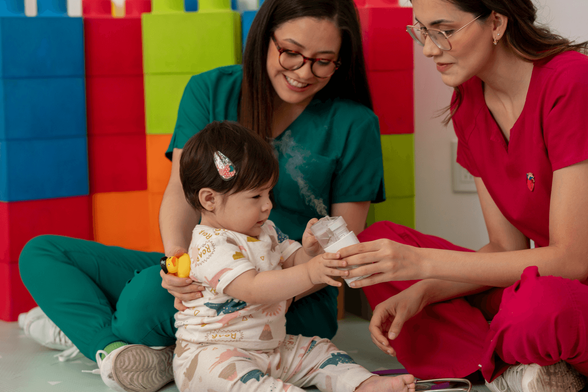
Across Australia, more children than ever are accessing allied health support in the early years. Speech Pathologists, Occupational Therapists, Psychologists, Developmental Educators and Psychosocial Therapists are becoming increasingly present within Early Childhood Education and Care (ECEC) settings, not only through NDIS-funded early intervention, but also through various state-funded initiatives and inclusion-focused models.

The Sector

Radically Listening to Transgender Children: Creating Epistemic Justice through Critical Reflection and Resistant Imaginations

By Katie Steele and Julie Nicholson, 2019

This book is for early childhood educators committed to learning about gender [in]justice as a foundation for creating gender affirming early learning environments for all children including those who are transgender and gender expansive (TGE). The authors engage in progressive and contemporary thinking about gender acknowledging its complexity, intersectionality, diversity and dynamism. They draw on Miranda Fricker’s (2007) concepts of testimonial injustice to discuss how young TGE children are considered “too young” to have gender identities or to truly know themselves and hermeneutical injustice to represent the challenges TGE children face in educational environments that do not provide them with linguistic or interpretive tools to help them fully understand and communicate about their gender. Woven throughout the book are the lived experiences and counter-stories of TGE children and adults that privilege their voices and highlight their right to contribute equally to societal understandings of gender and to access all the tools a given society has available at the time to help them name and understand their own experiences. The authors provide discourse, conceptual frameworks and concrete strategies educators can use to inspire resistant social imaginations (Medina, 2013) and actions that improve gender justice for our youngest children.

Supporting Gender Diversity in Early Childhood Classrooms

By Encian Pastel, Katie Steele, Julie Nicholson, Cyndi Maurer, Julia Hennock, Jonathan Julian, Tess Unger, and Nathanael Flynn, 2019

By offering practical steps for adults who work with young children to build inclusive and intentional spaces where all children receive positive messages about their unique gender selves, this book increases awareness about gender diversity in learning environments such as child care centers, family child care homes and preschools. The book is based on some of the most progressive, modern understandings of gender and intersectionality, as well as research on child development, gender health, trauma informed practices and the science of adult learning. By including the voices and lived experiences of gender-expansive children, transgender adults, early childhood educators and parents and family members of trans and gender-expansive children, it contextualizes what it means to rethink early learning programs with a commitment to gender justice and gender equality for all children.

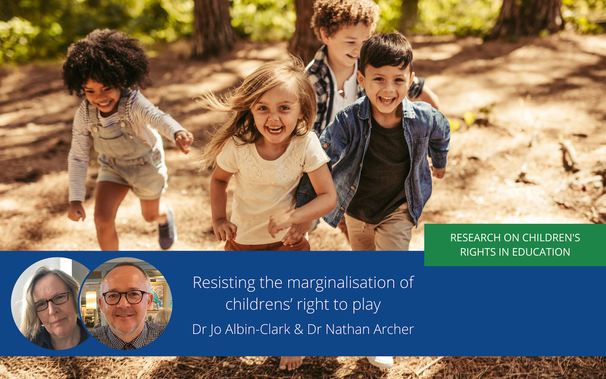
𝗙𝗿𝗼𝗺 𝗼𝘂𝗿 𝗯𝗹𝗼𝗴 𝗮𝗿𝗰𝗵𝗶𝘃𝗲: The marginalisation of play, and the increasing formalisation of education for our youngest children needs scrutiny, and making play happen in educational practice might need forms of resistance -- Dr Jo Albin Clark and Dr Nathan Archer #EdSci #ECEC https://blog.eera-ecer.de/childrens-right-to-play/
Resisting the marginalisation of children’s right to play - EERA Blog

Why have educators accepted that the right to play occupies the margins of early childhood education and care, and should they push back?

EERA Blog

NYLON JAPAN 22ND ANNIVERSARY PARTY @ Zerotokyo - 24 Apr feat. ecec

#SESH #ecec

https://sesh.sx/e/1966041

NYLON JAPAN 22ND ANNIVERSARY PARTY | Zerotokyo | SESH

...

SESH

Voices of Transgender Children in Early Childhood Education: Reflections on Resistance and Resiliency

About This Book

Who are transgender children? What does it mean to be a transgender
child in schools today? What kinds of realities do trans children grapple
with while growing up? Though there has been a recent shift toward
increased understanding and support for trans youth, their experiences in
the education system can often be fraught with challenges and barriers.
Nonetheless, there have been and will continue to be arenas of hope that
permit and foster a gradual erosion of the often firmly demarcated line
between ‘cisgender’ and ‘transgender.’

This book is a qualitative study of transgender children and internalized body normalization in early childhood education settings, steeped
in critical methodologies including post-structuralism, queer theory, and
feminist approaches. As the struggles and triumphs of trans individuals have reached a watershed moment in the social fabric of the United
States, this text aims to proffer a snapshot into the lives of ten transgender people as they reflect on their earliest memories in the American
educational system. The book marries theory and praxis, submitting to
current and future teachers a text that not only presents authentic narratives about trans children in early childhood education, but also analyzes the forces at work behind gender policing, gender segregation, and
transphobic education policies.

The trans people who participated in our study (our “research partners”) reflect on their schooling from the ages of three through eight
years old. From their narratives, multiple themes arose regarding navigating transphobic social interactions. Most interviewees befriended
peers who held the same gender identity and/or were considered “outcasts.” There were barriers to friendship that stemmed from perceived
gender non-conforming behavior, and these seemed to increase with
age. All were teased and assaulted, and each found different ways to cope
with being bullied (including self-induced isolation, retaliation, building
relationships with allies, and providing beneficial services to peers). When
reflecting on interactions with teachers, the research partners recalled
double the amount of negative interactions than positive ones. Included
in these narratives were discussions of maximum control over the physical body, restrictive curriculum methods, and public humiliation.

The research partners also recalled the effects of gender normative
physical spaces and typically regarded the music classroom, art room,
auditorium, and library as safe and empowering spaces and the gymnasium, cafeteria, bathrooms, and principal’s office as unsafe and disempowering locations. Foucault’s normalization of the body theory was
explored in relationship to the studied population. The findings suggest
that gender performativity, gender segregation, gender normalization/
gender role conformity are of particular concern for transgender children
in early childhood education. The book concludes with suggestions for
creating more inclusive classrooms for diverse students including allowing children to be themselves, abandoning assumptions, eliminating
gender segregation, involving parents, creating a safe environment, and
supporting/protecting transgender children. Ultimately, the book aims
to illuminate the realities and experiences of transgender individuals, in
their own words, and to inspire early childhood teachers to fortify the
rights, address the needs, and encourage the authentic individuality of
the young transgender children in their care.

Today I had some cereal mixed with juice, tomato sauce, and a spatula

Science in early childhood education: are teachers set up to fail

Young children are, by nature, scientists. Watch any toddler tip a cup of water onto the floor, or a preschooler crouch down to inspect an ant carrying something three times its size, and you will see scientific investigation in action. Curiosity, observation, and a drive to understand how the world works. As early childhood professionals, we know this. We talk about it, we celebrate it, and we build it into our practice.

So why are we not doing more to ensure that the teachers responsible for nurturing this curiosity are genuinely prepared to do so?

Read the rest of the article or the study here

Science in early childhood education: are teachers set up to fail

Young children are, by nature, scientists. Watch any toddler tip a cup of water onto the floor, or a preschooler crouch down to inspect an ant carrying something three times its size, and you will see scientific investigation in action. Curiosity, observation, and a drive to understand how the world works. As early childhood professionals, we know this. We talk about it, we celebrate it, and we build it into our practice.

The Sector

lit loves 歓迎 in Tokyo -The Full Fukuoka Vibes- @ Enter Shibuya - 13 Mar feat. ecec, kengotaki, Shoma fr + more

#SESH #ecec #kengotaki #Shomafr

https://sesh.sx/e/1872617