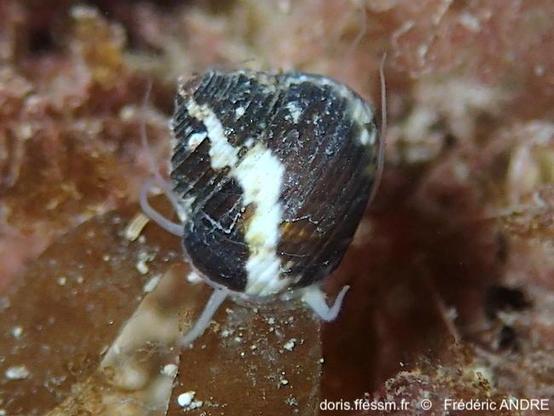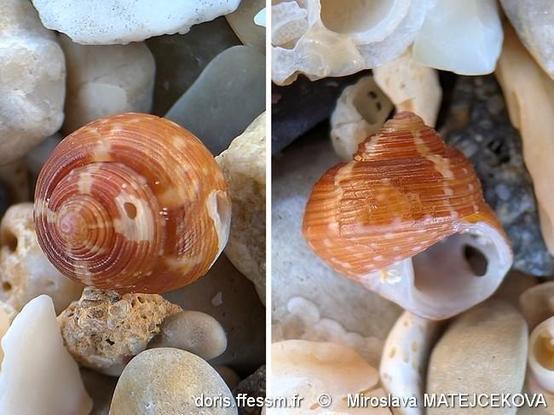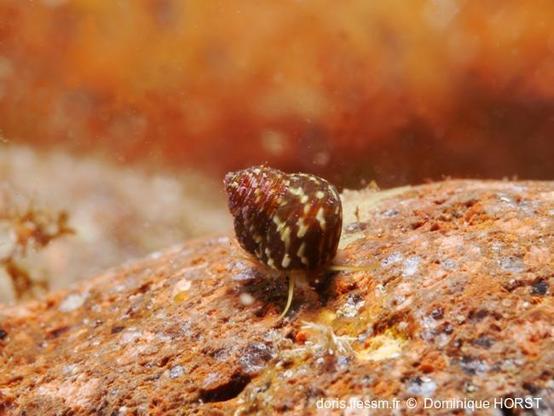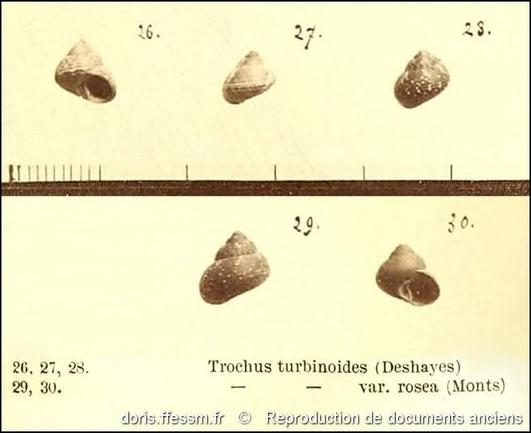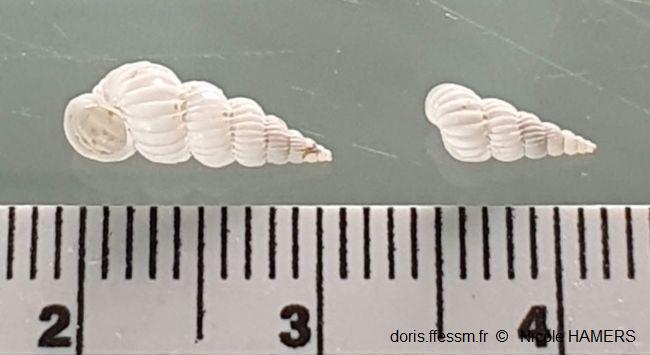
Un nouveau petit #bivalve fouisseur fait son apparition sur notre site : la donacille cornée.

SABOURIN Nadine, DELEMARRE Jean-Louis, HUET Sylvie in : #DORIS, 06/03/2026 :
Donacilla cornea (Poli, 1791), https://doris.ffessm.fr/ref/specie/5766

#Mollusques #coquillage #biodiversite #lamellibranches #ffessm #biodiversty #shells #Pelecypoda

Nouvelle fiche publiée : le #chirurgien anneau d'or, endémique de l’#océanIndien.

BOURJON Philippe, SITTLER Alain-Pierre in : #DORIS, 05/03/2026 :
Ctenochaetus truncatus Randall & Clements, 2001, https://doris.ffessm.fr/ref/specie/3226

#biodiversite #poissons #fishes #Vertebrata #biodiversity #Teleostei #FFESSM #Acanthuridae #bio

Un #Tintinnine n'est pas un fan de Tintin (ni de Milou et pas spécialement de Tournesol). Les Tintinnine sont des #Ciliés, microscopiques organismes #unicellulaires eucaryotes.
Vous en saurez plus avec la fiche du jour : le tintinnide campanule (à cause de sa forme :-))

QUINTIN Christophe, HULLÉ Maurice, MÜLLER Yves in : #DORIS 03/03/2026 : Tintinnopsis campanula (Ehrenberg, 1840), https://doris.ffessm.fr/ref/specie/6136

#biodiversite #Oligotrichea #biodiversity #plancton #bino

#Challenge ! Si vous la rencontrez en plongée, utilisez sur le bateau, pour vous faire mousser, le nom complet de cette #algue, objet de la dernière fiche publiée : Bonnemaisonia aux androphores en forme de massue !
Ça claque ! 😉 😆

LAMARE Véronique, VERLAQUE Marc in : #DORIS 01/03/2026 :
Bonnemaisonia clavata Hamel 1930, https://doris.ffessm.fr/ref/specie/6153

#biodiversite #vegetaux #Rhodophyta #Rhodobiontes #biodiversity #blagounette

Voici le post mensuel du mois de mars "Biologie marine, #ludique, pour les néophytes", toujours par notre participante régulière, Murielle, depuis son #estran normand.
Cela parle de plumes, de polypes polymorphes et de sève des arbres...

https://doris.ffessm.fr/Forum/Biologie-marine-ludique-pour-les-neophytes-Mars-2026-100496

#DORIS #biodiversite #ffessm #BiologieMarine

Pour changer un peu des publications sur les nudibranches du genre Doto, voici le... touloulou atlantique à béret noir ! :-o
Quoi t'est-ce ?
Voir la dernière fiche publiée :

FEY Laurent, NOËL Pierre in : #DORIS, 26/02/2026 :
Hartnollius lateralis (Fréminville in Guérin, 1832), https://doris.ffessm.fr/ref/specie/5881

#Biodiversite #arthropoda #crabes #CaraIbes #biodiversity #ffessm #malacostraca #décapodes

La nouvelle fiche reste sur un #gastéropode européen mais lui rajoute une belle #coquille costée !
C'est la smithielle costulée.

HOARAU André, HORST Dominique, JUAN HORST Elisabeth, SITTLER Alain-Pierre in : #DORIS 23/02/2026 :
Smithiella costulata (Risso, 1826), https://doris.ffessm.fr/ref/specie/6178

#biodiversite #Mollusca #biodiversity #ffessm #shells #coquillage #Mangeliidae #Neogastropoda #Conoides

The Nereids

In Greek mythology, the Nereid/Nereides are sea nymphs (female spirits of the sea/waters), the 50 daughters of Nereus (the “Old Man of the Sea”) & Doris (an Oceanid). They’re sisters of the Nerites. They often accompany Poseidon & can be kind to sailors (as in the Argonauts’ search for the Golden Fleece).

While they’re often grouped together as a group of sea nymphs, they represent the multifaceted nature of the Mediterranean.

The Nereids were distinct from other nymphs. Like the freshwater Naiads or the deep-ocean Oceanids. They were specifically associated with the Aegean Sea. The Nereids symbolized everything beautiful & kind about the sea. Their beautiful voices sang as they danced around their dad. They’re pictured as beautiful women crowned with branches of red coral & dressed in white silk robes trimmed with gold.

They lived with their dad, Nereus, in the depths of a golden palace. While there were 50 sisters, 3 stand out:

  • Thetis, the mom of a legend
    • She was so beautiful & powerful that Zeus & Poseidon courted her. Until a prophecy says that her son would be greater than his dad. To stop this prophecy from upsetting the “cosmic balance” (so Zeus’ power stayed with him), Zeus forced Thetis to marry a mortal king, Peleus. This wedding was the catalyst for the Trojan War. It’s where Eris threw the “Apple of Discord.” Thetis spent her life trying to protect her son, Achilles, from his destiny. She was 1 of the few nymphs to have a significant cult following, particularly in Laconia & Thessaly.
  • Amphitrite, the Queen of the Sea
    • Amphitrite is the “First Lady” of the ocean. Poseidon may be the king, but Amphitrite represents the sea’s actual substance. Legend says that she initially ran away from Poseidon’s romantic advancements. She hid in the Atlas Mountains to get away from Poseidon. Poseidon sent a dolphin to find her & plead his case. The dolphin successfully pleaded Poseidon’s case. She agreed to marry Poseidon. Poseidon put the dolphin in the stars as a reward (the Delphinus constellation).
  • Galatea, the beloved & the bitter
    • She was loved by the giant cyclops, Polyphemus. However, Galatea loved a mortal shepherd named Acis. In a fit of rage, Polyphemus crushed Acis with a boulder. Galatea, using her divine sea powers, transformed her lover’s blood into a river (the River Acis in Sicily) so that he could remain immortal in spirit.

In Homer’s Iliad XVIII, when Thetis cries out in sympathy for the grief of her son, Achilles, for the slain Patroclus, her sisters show up. 4 of her sisters, Cymodoce, Thalia, Nesaea, & Spio, were among the nymphs in the training of Cyrene. Later on, these 4 together with their sisters (Thetis, Melite, & Panopea) were able to help the hero Aeneas & his crew during a storm.

In 1 account, Cassiopeia boasted that her daughter, Andromeda, was more beautiful than the Nereides. The Nereids were livid at Cassiopeia’s claim. Their divine homie, Poseidon, being sympathetic towards them, sent a flood, & a sea monster to the land of the Aethiopians, demanding Andromeda’s sacrifices.

These sea goddesses were also said to reveal the mysteries of Dionysus & Persephone. The Nereids were worshipped in several parts of Greece. More specifically, in seaport towns, such as Cardamyle & the Isthmus of Corinth.

In the ancient world, the Nereids weren’t some fanciful fairy tales. They were a part of a functional religious system. Historical records show that sailors & military commanders (like Alexander the Great) offered sacrifices to the Nereids before going out on dangerous voyages.

The Nereid is the direct ancestor of the modern mermaid. The Greeks usually pictured them as fully human. But later Roman & Hellenistic art began to blend them with fish-like features.

The 3rd largest moon of Neptune is called Nereid. It was discovered in 1949 by Gerard Kuiper. The moon is famous for having 1 of the most eccentric (non-circular) orbits of any moon in the solar system. Also, there’s a “lake” in Antarctica that bears their name.

#Achilles #Acis #AcisRiver #AegeanSea #Aeneas #Aethiopians #AlexanderTheGreat #Amphitrite #Andromeda #Antarctica #AppleOfDiscord #Argonauts #AtlasMountains #Cardamyle #Cassiopeia #Cyclops #Cymodoce #Cyrene #DelphinusConstellation #Dionysus #Doris #Eris #Galatea #GerardKuiper #Greece #GreekMythology #Hellenistic #Homer #Iliad #IsthmusOfCorinth #KingPeleus #Laconia #Mediterranean #Melite #Naiads #Neptune #Nereid #Nereides #Nereus #Nerites #Nesaea #Oceanid #OldManOfTheSea #Panopea #Patroclus #Persephone #Polyphemus #Poseidon #Roman #SeaNymphs #Sicily #Spio #Thalia #Thessaly #Thetis #TrojanWar #Zeus

Toujours de nouvelles fiches de #nudibranches du genre Doto pour la #Méditerranée et #Atlantique Nord-Est ! Voila une équipe très active !
Aujourd'hui sort la doto des floridées.

MÜLLER Yves, GIRARD Pascal in : #DORIS, 22/02/2026 :
Doto floridicola Simroth, 1888, https://doris.ffessm.fr/ref/specie/2136

#Gastropoda #biodiversite #Nudibranchia #biodiversity #haydraires #ffessm #biologieMarine

La série des fiches de #nudibranches du genre Doto s'allonge. Aujourd'hui arrive la #méditerranéenne doto à tête noire.
Pour en savoir plus :

MÜLLER Yves, GIRARD Pascal in : #DORIS, 18/02/2026 :
Doto cervicenigra Ortea & Bouchet, 1989, https://doris.ffessm.fr/ref/specie/4898

#biodiversite #Mollusca #heterobranchia #ffessm #biodiversity #Nudibranchia #Dendronotacea #CNEBS