 Intentional Faith
When the Way Was Opened
A Day in the Life of Jesus
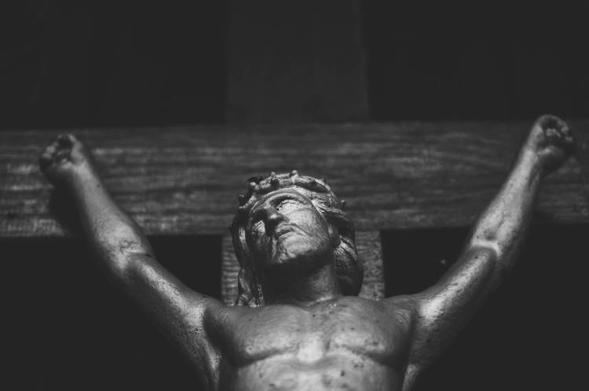
There are moments in the life of Jesus that feel almost too weighty to approach casually, and the moment of His death is surely one of them. When I sit with the Gospel accounts of the crucifixion, I am always struck by how creation itself seems unable to remain silent. Matthew tells us that “the earth shook, and the rocks were split” and that even death loosened its grip as tombs were opened (Matthew 27:51–52, italics added). This is not merely poetic language or dramatic embellishment; it is Scripture’s way of insisting that what happened on that cross reverberated through heaven and earth alike. Jesus’ final breath was not the quiet end of a failed mission but the thunderclap of divine accomplishment.
As I walk through this scene with you, I want us to notice how public and undeniable Christ’s death was. Darkness covered the land. The veil in the Temple was torn from top to bottom. An earthquake shook Jerusalem. Roman soldiers—men hardened by violence and execution—were seized with fear and confessed, “Surely this was God’s Son” (Matthew 27:54, italics added). The Gospel writers seem determined to tell us that no one paying attention could miss the significance of this moment. Even those who did not yet understand fully knew that something irreversible had taken place. As commentator R.T. France notes, “The death of Jesus is interpreted not as a tragedy to be explained away but as an event of cosmic and theological significance.” That distinction matters. Christianity does not begin with private spirituality but with a public act of redemption.
One detail that continues to draw my heart back is the tearing of the Temple curtain. This was no thin drape but a massive veil that separated the Most Holy Place from the rest of the Temple. According to Jewish tradition, it symbolized the boundary between a holy God and a sinful people. Only the high priest could pass beyond it, and only once a year, carrying blood not his own. Hebrews helps us understand the meaning behind this moment when it says, “We have confidence to enter the Most Holy Place by the blood of Jesus, by a new and living way opened for us through the curtain, that is, his body” (Hebrews 10:19–20, italics added). The Greek word for “confidence,” parrēsia, speaks of boldness and freedom of speech. What once required fear and distance is now marked by nearness and welcome.
This is where the crucifixion becomes deeply personal for me—and for you. The tearing of the veil was God’s declaration that access is no longer restricted. We do not approach God through layers of mediation, ritual, or spiritual performance. We come through Christ Himself. His broken body became the doorway. Hebrews 9 reminds us that Jesus entered the heavenly sanctuary “once for all by his own blood, thus obtaining eternal redemption” (Hebrews 9:12, italics added). That phrase “once for all” reshapes how we understand prayer, repentance, and daily discipleship. I no longer draw near hoping I have done enough; I draw near trusting that Jesus has.
The presence of the women at the cross also deserves our attention. While many disciples had scattered, these women remained—watching, grieving, bearing witness from a distance. Their faithfulness was quiet but courageous. They remind me that proximity to Jesus does not always look triumphant. Sometimes it looks like staying when everything feels lost. In their watching, they model a discipleship that refuses to turn away from suffering. As N.T. Wright has observed, “The women are there as witnesses because love keeps vigil even when hope seems buried.” Their presence assures us that God honors steadfast faith, even when it feels powerless.
What moves me deeply is that Christ’s death did not end in silence or secrecy. The centurion’s confession echoes through history because it comes from an unexpected mouth. Rome’s representative recognizes what many religious leaders refused to see. This reminds me that the cross confronts every system of power—religious, political, and personal—and forces a decision. Either Jesus is who He claimed to be, or the world itself has lost its moral center. There is no neutral ground at Calvary.
The tearing of the veil also invites us into a new way of living with God. Direct access means honest prayer. It means bringing fear, doubt, grief, gratitude, and hope into God’s presence without pretense. The Hebrew idea of drawing near, qarab, implies intimacy and approachability. Because of Christ, God is no longer distant but near—not because His holiness has diminished, but because His mercy has prevailed. This changes how I start my day and how I end it. I can speak to God at any moment, confident that I am heard, not because my words are eloquent but because my Savior is sufficient.
As I reflect on this day in the life of Jesus, I am reminded that the cross is not merely the means of forgiveness; it is the opening of relationship. Jesus did not die simply to cancel debt, but to restore communion. The earthquake, the torn veil, the opened tombs—all testify that separation has been shattered. The way back to God is not guarded by fear but marked by grace.
May this truth settle deeply into your spirit today. May you walk with the quiet assurance that nothing stands between you and the Father except Christ—and that Christ stands there gladly, bearing the marks of love. May your prayers be honest, your faith resilient, and your devotion shaped by the One who opened the way with His own life. Blessings to you as you seek to walk closely with Jesus, not at a distance, but in the confidence of direct access and enduring grace.
For further theological reflection on the meaning of the torn veil and Christ’s atoning work, see this article from The Gospel Coalition:
https://www.thegospelcoalition.org/article/why-the-temple-curtain-tore-when-jesus-died/
FEEL FREE TO COMMENT, SUBSCRIBE, AND REPOST, SO OTHERS MAY KNOW
#ADayInTheLifeOfJesus #atonementOfChrist #directAccessToGod #JesusCrucifixion #tornTempleVeil