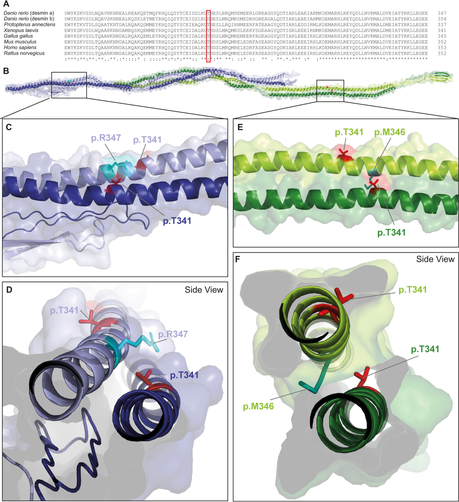
The myofibrillar myopathy–linked variant DES-p.T341P impairs desmin filament assembly - Molecular Biology Reports
Desminopathies are clinical heterogenous and range from isolated skeletal myopathies to different cardiomyopathies or combinations of both. At the molecula
📰 "Desmin mutations in cardiomyocytes increase susceptibility to coxsackievirus B3 infection by impairing antiviral IFN-beta response and upregulating viral receptors expression"
https://doi.org/doi:10.1186/s13287-025-04878-2https://pubmed.ncbi.nlm.nih.gov/41761335/ #Desmin
Desmin mutations in cardiomyocytes increase susceptibility to coxsackievirus B3 infection by impairing antiviral IFN-β response and upregulating viral receptors expression - Stem Cell Research & Therapy
Background Desmin-related cardiomyopathies caused by mutations in the DES gene are characterized by cytoskeletal disorganization and impaired cardiomyocyte function. Viral infections, particularly with Coxsackievirus B3 (CVB3), have been implicated as environmental triggers for cardiac decompensation. However, the interaction between desmin mutations and viral infection has never been explored. Methods Human induced pluripotent stem cell-derived cardiomyocytes (hiPSC-CMs) from a healthy donor (control-CMs) and from patients carrying DESS46Y, DESD214−E245del, or DESP419H mutations (DESmut-CMs) were infected with the cardiovirulent enterovirus CVB3/28. Structural changes were assessed by immunofluorescence for sarcomeric proteins and desmin. Contractile function was evaluated through video-based motion tracking. Viral replication, protein expression and antiviral responses were measured via plaque assays, immunostaining, and qPCR. Coxsackievirus and Adenovirus Receptor (CAR) and cell-surface vimentin expression were quantified post-infection. Results DESmut-CMs exhibited baseline sarcomeric disorganization and desmin aggregation, which were further aggravated by CVB3/28 infection in a mutation-specific manner. CVB3/28 significantly reduced spontaneous contractility in control-CMs, DESS46Y, and DESP419H-CMs, with minimal effect in DESD214−E245del-CMs. Infected DESmut-CMs showed enhanced viral replication, increased VP1 expression and elevated virion release. This was accompanied by a stunted IFN-β response, reduced APOBEC3A expression, and infection-induced upregulation of viral receptors CAR and cell-surface vimentin. Conclusion CVB3/28 infection compromises the structural integrity and contractile function of cardiomyocytes and exerts a more severe effect in cells harboring DES mutations. These findings underscore a pathogenic synergy between genetic cytoskeletal defects and viral infection, revealing a mechanistic basis for the heightened vulnerability of patients carrying mutation in DES gene to virus-induced cardiac decompensation. Summary CVB3/28 infection disrupts cardiomyocyte structure and impairs contractility, with more severe effects in cells carrying DES mutations. By enhancing viral replication and weakening antiviral defenses, DES mutations act synergistically with CVB3/28 infection to increase the risk of cardiac dysfunction.
📰 "A Rare Presentation of a Large Pleomorphic Rhabdomyosarcoma of the Inferior Vena Cava (IVC): A Case Report"
https://doi.org/doi:10.7759/cureus.102016https://pubmed.ncbi.nlm.nih.gov/41728531/ #Desmin
A Rare Presentation of a Large Pleomorphic Rhabdomyosarcoma of the Inferior Vena Cava (IVC): A Case Report
Rhabdomyosarcoma (RMS) in adults is a rare, aggressive malignant tumour of mesenchymal origin with a poor prognosis. Hematoxylin and eosin (H&E) staining showing cellular population of large, rounded epithelioid, rhabdoid, plump spindled, and bizarre multinucleate tumour giant cells, as well as immunohistochemistry showing extensive staining of the atypical tumour cells for desmin and myogenic differentiation 1 gene (MyoD1) with multifocal coexpression of myogenin, are characteristic of RMS. We present a rare and unique case of a male in his 50s who presented with a two-week history of right-sided intermittent dull groin and back pain associated with bilateral lower limb swelling, who was diagnosed with a 9 cm right retroperitoneal pleomorphic RMS involving the inferior vena cava (IVC), causing complete IVC occlusion. He underwent an extensive en bloc resection of the tumour. We also discuss the signs, symptoms, relevant investigations, and various treatment options in managing a patient with pleomorphic RMS.
📰 "Evaluation of rapid evaporative ionization mass spectrometry (REIMS) relationships with biochemical markers of tenderness in beef Longissimus lumborum steaks"
https://doi.org/doi:10.1016/j.meatsci.2026.110063https://pubmed.ncbi.nlm.nih.gov/41702079/ #Desmin
A carotid web with accumulation of myofibroblasts: a case report - BMC Neurology
Carotid webs are increasingly recognized as potential sources of ischemic stroke among young patients without conventional cardiovascular risk factors. How
📰 "Immunoreactivity for CD34, Desmin, Keratins, KIT, Alpha-Smooth Muscle Actin, S100, and Vimentin in Malignant Mesenchymal Neoplasms in Guinea Pigs: A Series of 62 Cases From a Single Institution"
https://doi.org/doi:10.1002/vms3.70801https://pubmed.ncbi.nlm.nih.gov/41631521/ #Desmin📰 "Desmin-p.L112Q Disturbs Filament Formation and Is a Likely-Pathogenic Variant Associated with Dilated Cardiomyopathy"
https://doi.org/doi:10.3390/jcdd13010003https://pubmed.ncbi.nlm.nih.gov/41590830/ #IntermediateFilament #Desmin📰 "Ovarian Thecal Metaplasia of the Adrenal Gland: A Contemporary Case Series With Immunohistochemistry"
https://doi.org/doi:10.1177/10668969251407236https://pubmed.ncbi.nlm.nih.gov/41533747/ #Desmin Rxiv cytoskeleton