
This week we revealed a proposal to build cities from lava

This week on Dezeen, Icelandic architect Arnhildur Palmadottir revealed her "radical and gigantic" Lavaforming proposal at the DesignMarch festival in Reykjavík.

Palmadottir proposed using controlled lava eruptions to create buildings, which she says would be substantially more sustainable than those built with steel and concrete.

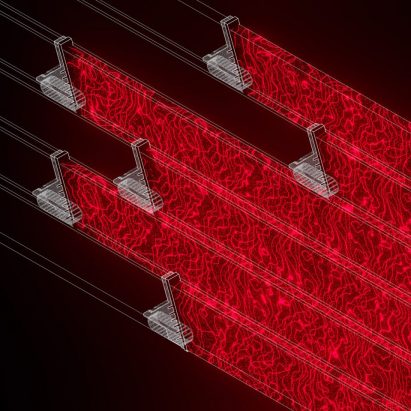
She envisions boreholes being drilled into the earth until they reach molten lava. This would then be directed into controlled flows that could either be used to form traditional building materials, be 3D printed while molten, or be cooled in situ to become the structural base for a city.

Deconstructivism "killed off postmodernism" Peter Eisenman told Dezeen in an interview

In other architecture news this week, US architect Peter Eisenman spoke to Dezeen as part of our series on deconstructivism. He argued that deconstructivism killed postmodernism.

"It killed off postmodernism," he said of the architectural movement. "Kitsch postmodernism was at the high point at the Venice Biennale in 80 and deconstructivism killed that off."

Also as part of the series, we took a closer look at Coop Himmelb(l)au's rooftop extension on Falkestrasse in Vienna, which the studio's co-founder Wolf Prix told Dezeen "broke all the rules."

The Taipei Performing Arts Center opened in Taiwan

Taiwan's long-awaited Taipei Performing Arts Center in Taipei, which was designed by Rem Koolhaas of Dutch studio OMA, completed this week. The centre has a cuboid central form from which three auditoriums protrude.

Koolhaas took a similar approach to the design of the CCTV Headquarters in Beijing, which was featured in our series revisiting deconstructivist architecture. He designed the distinctive skyscraper to encourage alternative forms for high-rise buildings.

Snapchat released a selfie drone called Pixy

In design news, Snapchat's parent company Snap launched Pixy, a "friendly" selfie drone that weighs just 101 grams and has bright-yellow plastic casing.

We also spoke to designer Yinka Ilori in an exclusive interview about his belief in the importance of multidisciplinary creativity. "I want to see a lot more architecture and artist collaborations," Ilori said.

"I bring the humour, the community and the joy, which I think is what's lacking in some architecture," he added.

The Elizabeth Line is set to open later this month

In UK news, Crossrail's head of architecture Julian Robinson told Dezeen about the thoughts behind the architecture of London's new Elizabeth Line.

Set to open on 24 May, the subterranean railway is the biggest single upgrade of London's transport network for more than a century.

This week also saw a group of leading industry organisations including the Royal British Institute of Architects team up to create a building standard that will verify net-zero carbon buildings in the UK.

Ten bold residential staircases designed by architects

This week we also rounded up 10 bold staircases designed by architects. Popular projects this week include a cabin perched over a forested site in Washington State, and another cabin, this one raised on stilts in the English countryside, as well as architect Frank Gehry's first housing project in the UK.

Our lookbooks showcased serene wet rooms and warm wood-clad kitchens.

This week on Dezeen

_This week on Dezeen is our regular roundup of the week's top news stories. Subscribe to our newsletters to be sure you don't miss anything. _

The post This week we revealed a proposal to build cities from lava appeared first on Dezeen.

#all #architecture #news #thisweekondezeen #volcanicrock #designmarch
Exhibition explores relationship between Iceland's eider ducks and farmers

Twenty-six designers and artists have interpreted the process of farming eiderdown for the Eider and Farmer exhibition at the Alvar Aalto-designed Nordic House in Reykjavík as part of this year's DesignMarch.

Named Eider and Farmer: A symbiotic relationship, the exhibition aims to draw attention to the interdependence of farmers and sea ducks in Iceland, which produces around 75 per cent of the world's eiderdown.

Above: Are we studio? used eiderdown in an installation at the entrance to the exhibition. Top: Auður Ösp Guðmundsdóttir and Hanna Jónsdóttir made two disguises for the exhibition

In a traditional Nordic process, farmers collect eider from nests and provide protection for the eider ducks while they are on land.

However, the relationship is under threat due to climate change impacting the ducks' habits and the growing age of the eider farmers.

And Anti Matter created a suite for humans based on the ducks

"The eider and eider farming is under threat by climate change as well as by changes in lifestyle, with people moving from the farmlands to the cities," explain curators Hildur Steinpórsdóttir and Rúna Thors.

"Learning from this sustainable, but gradually declining Nordic heritage, the project gives rise to innovation and production of new artworks. Fresh viewpoints emerge, as well as thoughts on how we treat our environment and harvest our planet."

[

Read:

Five Icelandic geothermal pools "where strangers cross paths and acquaintances meet"

](https://www.dezeen.com/2022/05/06/icelandic-geothermal-pools-bathing-culture-exhibition/)

Eider, which is described by the curators as the "most insulating material on earth" naturally falls from the ducks' breasts while nesting to allow their body warmth to reach their eggs.

This material is collected by around 350 eider farmers in Iceland, including the country's president Guðni Thorlacius Jóhannesson, before being cleaned and used to fill coats and duvets.

Anne Lass, Lisbeth Burian and Rikke Houd created a nest-like sound installation

As part of the three-year research project, the artists from Iceland, Denmark and Norway spent time with one of the country's eider farmers to understand the individual ways they cared for the ducks and collected eider.

The artworks each aim to draw attention to the unique and traditional process. At the entrance to the exhibition is an installation created by Are we studio?, which draws attention to the lightness of eiderdown by hanging it alongside a yellow fan.

Íris Indriðadóttir & Signý Jónsdóttir designed a new uniform for eider farmers

Several artists were inspired by the duck's nest. Anne Lass, Lisbeth Burian and Rikke Houd created a nest-like sound installation called Eider Or – the listening nest, while Gabriel Johann Kvendseth built a nest from his and his family's hair.

Artist Margrét H Blöndal photographed a large number of nesting areas that were made by five- and six-year-olds from the Landakotsskóli school in Reykjavík.

Artist Margrét H Blöndal photographed nests made by children

Others created Eider-informed costumes, with Íris Indriðadóttir and Signý Jónsdóttir designing a uniform for farmers to wear while collecting the down; meanwhile, Auður Ösp Guðmundsdóttir and Hanna Jónsdóttir created a par of disguises to be used on land or at sea.

And Anti Matter drew on the fact that eider ducks only spend 25 days a year on land for their project named Infinite Ocean, which is a suit devised to allow humans to spend large periods of time at sea in the face of rising sea levels.

Friðgeir Einarsson and Sigrún Hlín Sigurðardóttir knitted ducks

Other artists created pieces in a wide range of mediums. Friðgeir Einarsson and Sigrún Hlín Sigurðardóttir contributed various forms knitted from wool, including a phone number that visitors can call and hear the artists recreating the duck's calls.

Hilda Gunnarsdóttir & Loji Höskuldsson displayed a set of bed linen embroidered with images depicting how farmers deter predators so ducks can get a good night's sleep, while Bjarki Bragason's watercolour painting depicts one of the farming areas.

Hilda Gunnarsdóttir &andLoji Höskuldsson's bed linen was displayed alongside Bjarki Bragason's watercolour

Other contributors to the exhibition include Eygló Harðardóttir, who created a pair of visual diaries depicting her time with the ducks, and artists Brynhildur Pálsdóttir and Ólöf Erla Bjarnadóttir, who made a series of ceramic eggs that are displayed on the floor at various locations throughout the exhibition.

The exhibition also inlcude a film made by Kristbjörg María Guðmundsdóttir, Ragna Margrét Guðmundsdóttir and Vilborg Guðjónsdóttir and an AI-generated film created by Arnhildur Pálmadóttir and Samuel T Rees.

Kristbjörg María Guðmundsdóttir, Ragna Margrét Guðmundsdóttir and Vilborg Guðjónsdóttir created a film for the exhibition

The curators hope that the exhibition will draw attention to the fact that eider farming may be on the decline.

"By documenting and sharing experiences from different eider-farming traditions the aim is to create awareness of this unique Nordic heritage," added Steinpórsdóttir and Thors.

"The average age of the eider farmer is on the rise, so we fear for the future," they continued. "Will this tradition fade out and disappear? Will the ducks lose their protectors and therefore the population of eiders will decrease? Will climate change take its toll? We hope this project opens up this fascinating world of eider to people of all ages."

Brynhildur Pálsdóttir and Ólöf Erla Bjarnadóttir's ceramic eggs are displayed in several locations

The exhibition, which opened during DesignMarch, runs until the 31 July. An exhibition on Iceland's geothermal pools called Bathing Culture at the Museum of Design and Applied Art also opened during the festival.

The photography is bySunday & White Studio.

DesignMarch took place from 4-8 May 2022 in Reykjavík, Iceland. See Dezeen Events Guide for an up-to-date list of architecture and design events taking place around the world.

The post Exhibition explores relationship between Iceland's eider ducks and farmers appeared first on Dezeen.

#all #design #exhibitions #designmarch

Arnhildur Palmadottir proposes building cities from lava

Icelandic architect Arnhildur Palmadottir has revealed her "radical and gigantic" Lavaforming proposal at this year's DesignMarch festival in Reykjavík.

Lavaforming would see controlled lava eruptions being used to create buildings, which according to the designer would be substantially more sustainable than those built with steel and concrete.

"Lava is the building material of the earth, but instead of letting landscapes form naturally over millions of years we can take over Earth's building process and produce a whole city for humans in a few weeks," Palmadottir told Dezeen.

"It would mean that we have a sustainable source of building materials that can itself also produce the energy needed to handle and process it."

Above: Arnhildur Palmadottir explained her Lavaforming proposal during this year's DesignTalks. Top: lava would be directed into chambers to create building material

Lavaforming was exhibited at the Ásmundarsalur art gallery in Reykjavík during the 2022 edition of DesignMarch by Palmadottir, who is the founder of architecture practice SAP.

Her proposal envisions boreholes being drilled into the earth to reach molten lava, which can then be directed into controlled flows.

She proposes three ways that the lava could be used to make buildings. Firstly it could be directed into chambers to cool into required forms that could be used as a traditional building material.

Secondly, it could be directed in a molten state to be 3D printed. And finally, it could be directed into parallel trenches where it would cool in situ and be used as the structural basis for a city.

Vast amounts of lava could be used as building material

The Lavaforming concept was developed by Palmadottir in response to the growing awareness over the carbon dioxide (CO2) emissions connected to construction and in particular concrete.

She developed the proposal to demonstrate that construction requires radical change to become more sustainable.

Lava would be funnelled into trenches to harden

"The project started by looking at modern building materials – their carbon emissions and effects on the environment," said Palmadottir.

"Lavaforming is the architecture of a technologically advanced society that has abandoned profit maximisation and is, therefore, free to explore solutions to the building material crisis of the world."

[

Read:

Weber Arquitectos builds San Simon Cabins from volcanic rock

](https://www.dezeen.com/2020/07/12/weber-arquitectos-san-simon-cabins-volcanic-rock/)

"We work and live in systems that are fixed and predetermined, we have supply chains that run smoothly and have been fine-tuned so that we can get products, buildings and food in a simple and fast way", she continued.

"Changing this is not easy and this is what is preventing us from taking real steps to reduce carbon dioxide emissions and the effects of climate change. But it also makes you think, what would happen if we think outside of those systems and if we look at things from a different angle."

The harden lava would be used to support buildings to create a city

While Palmadottir believes that the proposal could be realised, she acknowledges that it is unlikely to become a reality. She hopes, instead, it will demonstrate the scale of the issue facing the architecture and construction industry.

"In one way the project is a naive attempt at proposing a new way of building and we want to push this idea as far as we can because we believe this will happen," she said. "On the other hand, we want to convey the hopelessness of modern architecture and the future."

[

Read:

Architects should give up concrete say experts at Architecture of Emergency climate summit

](https://www.dezeen.com/2019/09/20/concrete-climate-change-architecture-emergency/)

"We are basically saying 'this is the only logical and rational solution to the climate crisis we have no other answer when it comes to making the building industry truly sustainable,'" she continued.

"So if this radical and gigantic undertaking is the only avenue for a sustainable building method, imagine how fucked we are."

Palmadottir presented her proposal during DesignMarch as part of the DesignTalks programme during a session focused on the role of design in shaping alternative futures.

DesignMarch took place from 4-8 May 2022 in Reykjavík, Iceland. See Dezeen Events Guide for an up-to-date list of architecture and design events taking place around the world.

The post Arnhildur Palmadottir proposes building cities from lava appeared first on Dezeen.

#all #architecture #volcanicrock #designmarch

Five Icelandic geothermal pools "where strangers cross paths and acquaintances meet"

Bathing Culture at the Museum of Design and Applied Art in Reykjavík tells the history of geothermal pools in Iceland as part of DesignMarch. Here are five that demonstrate how the culture has changed over the past century.

Opened during this year's coronavirus-delayed DesignMarch festival, the Bathing Culture exhibition, which continues until 25 September, aims to highlight the country's unique culture of bathing in its numerous geothermal pools.

"In Iceland the pool is a place where strangers cross paths and acquaintances meet, it serves a purpose similar to the plaza in a warmer climate, the pub in England or the cafe in France," explained Sigridur Sigurjonsdottir, director of the Museum of Design and Applied Art.

"For us it is a source of wellbeing and part of everyday life."

The Bathing Culture exhibition is at the Museum of Design and Applied Art in Reykjavík

Curated by product designer Brynhildur Pálsdóttir and Iceland University ethnology professor Valdimar T Hafstein, the exhibition charts the changing relationship between Icelandic people and its pools that are fed by naturally heated water.

It is split into three sections that document the different eras of bathing culture, starting with Learn, which is focused on early 20th-century public pools that were designed to encourage people to swim.

[

Read:

Jubilee Pool in Penzance reinvented as UK's first geothermal seawater lido

](https://www.dezeen.com/2022/02/22/jubilee-pool-penzance-geothermal-scott-whitby-studio/)

These were followed in the late 20th-century by pools designed with hot tubs and slides that are covered in the Play section, and finally, the relatively recent emergence of spa-like pools is the focus of the Enjoy part of the exhibition.

"Bathing Culture traces the development of public pools in Iceland from the beginning of the 20th century when the focus was on learning, hygiene and physical education, to the 1960s when playing became a key element, and finally to the present when pleasure is the ultimate goal of a spa-like experience," explained Sigurjonsdottir.

Read on for five pools that chart the history of geothermal bathing in Iceland:

Photo is by Ragnar Vignir/Reykjvík Museum of Photography

Sundhöll Reykjavíkur by Guðjón Samúelsson (1937)

Sundhöllin, which translates as swimming palace, opened in 1937 and is one of the oldest public pools in the country.

Designed by Iceland's state architect Guðjón Samúelsson, who also designed the nearby Hallgrímskirkja church, the modernist building contains a 25-metre-long main pool and several hot tubs.

Photo is by Bjarni Eiríksson/Reykjvík Museum og Photography

Laugardalslaug by Einar Sveinsson, Bjarni Konráðsson and Jes Einar Þorsteinsson (1968)

Designed by city architect architect Einar Sveinsson in the 1960s, and later explanded by Bjarni Konráðsson and Jes Einar Þorsteinsson, this complex in the Laugardalur district of Reykjavík has an Olympic-sized 50 metre pool connected to a 400-square-metre "fun pool".

Typical of the era, it has a large water slide and numerous hot tubes of different sizes and temperatures. The photograph shows children queuing for the slide in 1988.

Photo is by Gunnar Sveinsson/Reykjavík Museum of Photography

Árbæjarlaug by Úti og Inni Architects (1993)

The Árbæjarlaug swimming pool in Reykjavik again combines space for play and exercise. A dome covers the entrance and an indoor pool that is connected to the outdoor pool for playing.

A series of slides, hot tubs and a 25-metre pool are arranged around it.

Photo is by Basalt Architects

Blue Lagoon by Basalt Architects (1999)

Set alongside the Svartsengi geothermal power station, the Blue Lagoon is Iceland's best known geothermal spa. Opened in 1987, it is the first pool within a lagoon created from the power plant's waste water.

This lagoon was later removed and in 1999 the current modern-day spa faculty opened with the Retreat at Blue Lagoon hotel (pictured) added to the complex in 2018.

Photo by Basalt Architects

Guðlaug Baths by Basalt Architects (2021)

Set on the beach in the small town of Akranes, the Guðlaug Baths is a two-level hot tub topped with a viewing platform.

Water flows from the oval-shaped hot geothermal pool on the middle level to the cooler pool at the bottom.

DesignMarch takes place from 4-8 May 2022 in Reykjavík, Iceland. See Dezeen Events Guide for an up-to-date list of architecture and design events taking place around the world.

The post Five Icelandic geothermal pools "where strangers cross paths and acquaintances meet" appeared first on Dezeen.

#all #design #iceland #exhibitions #reykjavík #swimmingpools #designmarch

Watch the third session of DesignMarch's talks on designing digital realities

Dezeen has teamed up with DesignMarch to livestream a day of talks focused on the role of design in shaping alternative futures. Tune into the third session here at 3:15pm Reykjavik time, which includes a talk by speculative architect Liam Young.

DesignTalks is a programme of live talks taking place at the Henning Larsen Architects-designed Harpa Concert Hall and Conference Centre in Reykjavik, Iceland, which will be moderated by Dezeen's founder and editor-in-chief Marcus Fairs.

The third and final session will explore how designers are expanding realities into the digital realm, as well as how speculative design can be a useful tool in creative and critical reflection with the potential to guide the designs of the future.

The session will feature contributions from an array of architects, designers and experts, including digital fashion designer and founder of The Fabricant Susanne Vos and Arnhildur Pálmadóttir, founder of architecture practice SAP, as well as filmmaker and speculative architect Liam Young, who will join remotely.

Digital fashion designer and founder of The Fabricant Susanne Vos will be on the panel

DesignTalks takes place on May 4 in Reykjavik and is split up into three themed sessions.

The first session was livestreamed earlier on Dezeen and focused on approaches to resilient design, circular thinking and regeneration, with featured speakers including architect and founder of Exploration Architecture Michael Pawlyn and Mexican designer Gabriela Sánchez y Sánchez de la Barquera.

Founder of architecture practice SAP Arnhildur Pálmadóttir will be amongst the panelists

The second session, which focused on environmental restoration and the notion of rewilding, was also livestreamed earlier on Dezeen and featured contributions from architectural researcher Stefán Laxness and Pentagram partner and information designer Giorgia Lupi.

The day will conclude with the official opening ceremony of the DesignMarch festival, Iceland's largest design fair. Curated by Hlin Helga Guðlaugsdóttir, the festival brings together discussions, exhibitions and shows spanning architecture, fashion, interiors and graphic design.

Speculative architect and filmmaker Liam Young will join the panel remotely

You can find out more about the full lineup of talks here.

DesignMarch takes place from 4-8 May 2022 in Reykjavík, Iceland. See Dezeen Events Guide for an up-to-date list of architecture and design events taking place around the world.

Partnership content

This article was written as part of a partnership with DesignMarch. Find out more about our partnership contenthere.

The post Watch the third session of DesignMarch's talks on designing digital realities appeared first on Dezeen.

#dezeenxdesignmarch2022 #all #architecture #design #talks #architectureanddesignevents #designmarch #livestreams

Watch the second session of DesignMarch's talks focusing on environmental restoration and rewilding

Dezeen has teamed up with DesignMarch to livestream a day of talks that focus on design's role in shaping alternative futures. Tune in from 1pm Reykjavik time to watch the second session live, which will include a talk by Pentagram partner Giorgia Lupi.

DesignTalks is a programme of live talks taking place at the Henning Larsen Architects-designed Harpa Concert Hall and Conference Centre in Reykjavik, Iceland, which will be moderated by Dezeen's founder and editor-in-chief Marcus Fairs.

The second session will focus on environmental restoration and the notion of rewilding, as well as the design of data, information and digital spaces.

The session will feature contributions from an array of architects, designers and experts including architectural researcher Stefán Laxness, Pentagram partner and information designer Giorgia Lupi and DOGA managing director Tor Inge Hjemdal, among others.

Architectural researcher Stefán Laxness will join the second session panelists

DesignTalks will take place throughout the day on May 4 in Reykjavik and will be split up into three themed sessions.

The first session was livestreamed earlier on Dezeen and focused on approaches to resilient design, circular thinking and regeneration, with featured speakers including architect and founder of Exploration Architecture Michael Pawlyn and Mexican designer Gabriela Sánchez y Sánchez de la Barquera.

The panel will include Pentagram partner and information designer Giorgia Lupi

The third and final session will begin at 3:15pm Reykjavik time and will focus on how designers are expanding realities into the digital realm, with contributions from digital fashion designer and founder of The Fabricant Susanne Vos and Arnhildur Pálmadóttir, founder of architecture practice SAP.

The day will conclude with the official opening ceremony of the DesignMarch festival, Iceland's largest design fair. Curated by Hlin Helga Guðlaugsdóttir, the festival brings together discussions, exhibitions and shows spanning architecture, fashion, interiors and graphic design.

DOGA managing director Tor Inge Hjemdal will be amongst the panelists

You can find out more about the full lineup of talks here.

DesignMarch takes place from 4-8 May 2022 in Reykjavík, Iceland. See Dezeen Events Guide for an up-to-date list of architecture and design events taking place around the world.

Partnership content

This article was written as part of a partnership with DesignMarch. Find out more about our partnership contenthere.

The post Watch the second session of DesignMarch's talks focusing on environmental restoration and rewilding appeared first on Dezeen.

#all #architecture #design #talks #architectureanddesignevents #designmarch #livestreams

Watch the first session of DesignMarch's talks focusing on resilient design and circular thinking

Dezeen has teamed up with DesignMarch to livestream a day of talks focused on the role of design in shaping alternative futures. Tune into the first session here at 9:00am Reykjavik time, which includes talks by biomimetic architect Michael Pawlyn.

DesignTalks is a programme of live talks taking place at the Henning Larsen Architects-designed Harpa Concert Hall and Conference Centre in Reykjavik, Iceland, and will be moderated by Dezeen's founder and editor-in-chief Marcus Fairs.

The first talk will explore approaches to resilient design, circular thinking, regeneration and how designers can turn to traditional and indigenous craftsmanship to guide the designs of the future.

The session will feature contributions from an array of architects, designers and experts including architect and founder of Exploration Architecture Michael Pawlyn, sustainability pioneer and co-founder of Lendager Group Anders Lendager and Mexican designer Gabriela Sánchez y Sánchez de la Barquera.

Architect and founder of Exploration Architecture Michael Pawlyn will be on the panel

DesignTalks will take place throughout the day May 4 in Reykjavík and will be split up into three themed sessions.

The second session will begin at 1:00pm Reykjavik time and focus on environmental restoration and the notion of rewilding, with featured speakers including architectural researcher Stefán Laxness and Pentagram partner and information designer Giorgia Lupi.

Mexican designer Gabriela Sánchez y Sánchez de la Barquera will be amongst the panelists

The third and final session will begin at 3:15pm Reykjavik time and will focus on how designers are expanding realities into the digital realm, with contributions from digital fashion designer and founder of The Fabricant Susanne Vos and Arnhildur Pálmadóttir, founder of architecture practice SAP.

The day will conclude with the official opening ceremony of the DesignMarch festival, Iceland's largest design fair. Curated by Hlin Helga Guðlaugsdóttir, the festival brings together discussions, exhibitions and shows spanning architecture, fashion, interiors and graphic design.

Sustainability pioneer and co-founder of Lendager Group Anders Lendager will join the panel

You can find out more about the full lineup of talks here.

DesignMarch takes place from 4-8 May 2022 in Reykjavík, Iceland. See Dezeen Events Guide for an up-to-date list of architecture and design events taking place around the world.

Partnership content

This article was written as part of a partnership with DesignMarch. Find out more about our partnership contenthere.

The post Watch the first session of DesignMarch's talks focusing on resilient design and circular thinking appeared first on Dezeen.

#all #architecture #design #talks #architectureanddesignevents #designmarch #livestreams

DesignMarch live talks will focus on the role of design in shaping the future

Dezeen has teamed up with Iceland's largest design fair DesignMarch to livestream a programme of talks by creative leaders exploring the role of design and architecture in effecting change and shaping alternative futures. Watch live from 9:00am Reykjavik time on 4 May.

To kickstart the festival, a programme of talks will take place throughout the day, which will be livestreamed from the Henning Larsen Architects-designed Harpa Concert Hall and Conference Centre in Reykjavik, Iceland.

Called DesignTalks, the event will be split into three themed sessions moderated by Dezeen's founder and editor-in-chief Marcus Fairs.

Dezeen's founder and editor-in-chief Marcus Fairs will be moderating panel discussions throughout the day

The first session, which runs between 9:00am and 12:15pm, will explore resilient approaches to design, circular thinking, regeneration and how designers can reconnect with traditional and indigenous craftsmanship.

Amongst the featured speakers are biomimetic and regenerative architect Michael Pawlyn, sustainability pioneer and co-founder of Lendager Group Anders Lendager, and Mexican designer Gabriela Sánchez y Sánchez de la Barquera.

Mexican designer Gabriela Sánchez y Sánchez de la Barquera will be among the panellists

Starting at 1:00pm, the second session focuses on environmental restoration and the notion of rewilding, as well as the design of data, information and digital spaces.

Featured speakers include architectural researcher Stefán Laxness, Pentagram partner and information designer Giorgia Lupi and DOGA managing director Tor Inge Hjemdal, among others.

Pentagram partner Giorgia Lupi will discuss the design of data, information and digital spaces

The third and final session, which will begin at 3:15pm, continues the discussion of the digital realm and will expand on how designers are expanding realities into the digital realm, as well as exploring how speculation on the future can be used as a form of creative and critical reflection.

The talks will feature contributions from digital fashion designer and founder of The Fabricant Susanne Vos, Arnhildur Pálmadóttir, founder of architecture practice SAP, and speculative architect and filmmaker Liam Young.

Liam Young is a speculative architect and will be on a panel discussing the digital realm

The day will finish with the official opening ceremony of the DesignMarch festival, which will bring together panel discussions as well as individual, group and student design shows.

Now in its 14th year, DesignMarch is Iceland's largest design fair. Curated by Hlin Helga Guðlaugsdóttir, the event covers architecture, fashion, interiors and graphic design.

The five-day fair highlights innovation in Icelandic design and architecture and focuses on themes such as sustainability, the future, regeneration, research and senses.

The full lineup of talks and more information about the festival can be found here. Tickets to the design fair can be purchased via this link.

DesignMarch takes place from 4-8 May 2022 in Reykjavík, Iceland. See Dezeen Events Guide for an up-to-date list of architecture and design events taking place around the world.

Partnership content

This article was written as part of a partnership with DesignMarch. Find out more about our partnership contenthere.

The post DesignMarch live talks will focus on the role of design in shaping the future appeared first on Dezeen.

#all #architecture #design #collaborations #architectureanddesignevents #designmarch #livestreams