 Johanny Ortega
Jean-Pierre Boyer Dominican History: A New Perspective
When most Dominicans hear about the Haitian occupation of 1822, they’ve already been taught what to think: that it was an invasion, a forced erasure of Dominican identity, a dark chapter we were lucky to survive.
But what if that story is incomplete?
What if Jean-Pierre Boyer, the Haitian president who unified the island, wasn’t a villain—but a flawed liberator whose actions still echo today?
This post breaks down what really happened in 1822, who resisted and why, and how the line between freedom and control gets dangerously blurry—especially when power isn’t shared.
Who was Jean-Pierre Boyer
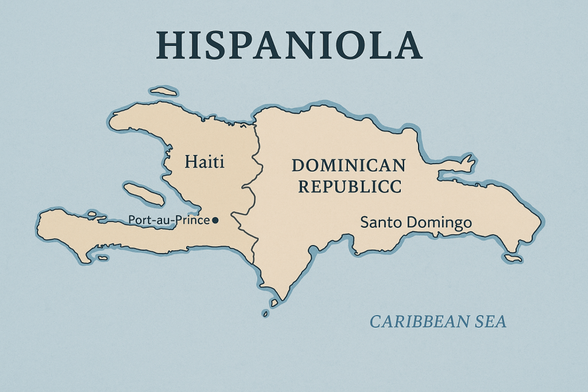
Boyer was president of Haiti from 1818 to 1843, known for unifying the island of Hispaniola and abolishing slavery in the eastern part (now the Dominican Republic). His rule began with revolutionary ideals but became increasingly authoritarian.
He freed people—but didn’t ask them what kind of freedom they wanted.
His Mission: Liberation or Occupation?
- Abolished slavery in the Dominican east, where it was still legal under Spanish colonial holdovers.
- Unification was strategic: Boyer feared Spain or France would use Santo Domingo as a launching pad to recolonize Haiti.
- Pan-African vision: He dreamed of a unified, Black-led island free of European control.
But…
- He imposed Haitian law without local input.
- He dismantled the Catholic Church’s influence without replacing the cultural void.
- He governed from a distance—centralized, top-down, and unaccountable.
Boyer wasn’t just driven by idealism—he was playing defense.
At the time, the eastern side of the island (Santo Domingo) was weaker, under-resourced, and vulnerable. Boyer feared that Spain or France would use it as a base to re-enter and recolonize the western side (Haiti), which had only recently won its independence through revolution.
So for Boyer, liberating the eastern side was also strategic—a preemptive move to keep all of Hispaniola free and out of European hands.
But here’s where he miscalculated:
Boyer failed to see how entrenched Spanish culture and colonial identity already were in the east.
His reforms didn’t come with cultural integration or local autonomy—they came with control. And as a result, many Dominicans saw his actions not as liberation, but as replacement.
That legacy echoes today in Dominican identity, where any mention of African or Taíno heritage is often met with resistance—while Spanish ancestry is exalted.
It’s a colonial mindset that Boyer tried to disrupt—but his approach lacked the cultural sensitivity to truly shift it.
Why Did Dominican Elites Revolt?
Let’s be honest: it wasn’t just about national pride. You need to dig deeper than the textbooks to understand who had the most to loose off this revolution.
Dominican elites—mostly light-skinned, wealthy, and tied to the Church—lost power, land, and control under Haitian rule.
- Slavery ended = they lost free labor.
- Church lands seized = they lost spiritual and economic power.
- Spanish cultural dominance threatened = they lost their status.
So, the 1844 “independence” was as much about reclaiming elite dominance as it was about self-rule. So in essence this was a ‘twofer.’ The Dominican Republic came to be its own country AND the elite held on to their power.
The Bigger Problem: Historical Erasure
The occupation gets framed as “colonization,” but it wasn’t extraction. It was revolutionary authoritarianism—not empire, but control without consent.
Boyer was afraid that Spain or France were going to use the eastern side (which was the weaker side at that time) to over power the western side. So for him liberating the eastern side was also strategic to keep the entire island free and away from the hands of Spain and France. But he failed to see how entrenched the Spanish culture had been then. This solidified entrechment shows today in the already cemented identity of the Dominican person who finds tremendous offense when anyone calls them out for forgetting their Taino and African heritage while boasting their Spaniard.
And just like that overprotective parent who wants the best for you but doesn’t trust you to choose it yourself…
Boyer liberated those who would soon call themselves Dominicans, but didn’t have enough cultural sensitivity to empower them.
So, What Do We Do With This History?
We stop repeating what textbooks told us.
I remind myself often that what we were taught come from the memories of the ones who won, because the ones who lost and died didn’t get a chance to tell their side.
We recognize both the liberation and the damage.
We hold space for complexity, and we center the stories that got erased by nationalism and anti-Blackness.
Because history isn’t just about what happened.
It’s about who gets to tell it—and who gets left out.
Watch the Full Breakdown
I dive into all of this and more in my latest YouTube video
Sources Cited:
- The Dominican Republic: A National History by Frank Moya Pons
- Avengers of the New World by Laurent Dubois
- Haiti: State Against Nation by Michel-Rolph Trouillot
- Black Behind the Ears by Ginetta E. B. Candelario
- Why the Cocks Fight by Michele Wucker
📣 Want More?
Subscribe to my newsletter, follow me on Threads (@haveacupofjohanny), or explore more history and magic on my site.
#antiBlackness #decolonizedHistory #DominicanCulture #DominicanIdentity