Bridging the Cybersecurity Gap for SMBs

I recently joined the MSP 1337 podcast with Chris Johnson to talk about something I’ve been thinking about for years:

Small and midsize businesses are being asked to operate with enterprise-level security expectations — without enterprise-level resources.

That gap is becoming impossible to ignore.
And AI is accelerating both sides of the problem.

Attackers are moving faster.
Infrastructure is becoming noisier.
Compliance requirements are multiplying.
Meanwhile, SMBs and MSPs are still expected to somehow manage everything with limited staff, fragmented tools, and endless alerts.

That model is cracking.

Btw, you can listen to it here:
Apple Podcasts
– Spotify

The Problem Isn’t Lack of Security Tools

The cybersecurity market is overflowing with products.

Another RMM.
Another EDR.
Another dashboard.
Another SIEM.
Another “AI-powered” feature.

But most SMBs don’t actually suffer from a lack of tooling.

They suffer from:

  • Too many disconnected systems
  • Massive operational overhead
  • Alert fatigue
  • Compliance drift
  • Lack of skilled security personnel
  • No realistic way to continuously enforce policy

And this is where most security conversations become disconnected from reality.

Enterprise security models assume: dedicated SOC teams, compliance departments, security engineers, analysts tuning detections and people reviewing thousands of events.

Most SMBs have none of that.
Sometimes the “security team” is: The MSP, the office manager or the founder wearing five hats.
Not so good.

The False Positive Problem Is Still Killing Everyone

One of the biggest issues in cybersecurity is not detection.

It’s prioritization.

Every platform can generate alerts.
Every system can scream.

The real challenge is figuring out: Which signals actually matter?

Anyone who has worked with SIEMs, firewall logs, endpoint alerts, or compliance tooling knows the pattern:
you turn something on and suddenly drown in noise.
And SMBs don’t have months available for “tuning.”
They need operational clarity immediately.

That’s one of the core reasons we built Espresso Labs the way we did.

  • Not to replace humans.
  • Not to pretend AI is magic.
  • But to eliminate huge amounts of repetitive operational work.

If AI can safely handle: Level 1 triage, repetitive remediation, evidence gathering, inventory correlation, policy enforcement, baseline monitoring, then human operators can focus on the things that actually require judgment.
That’s the shift.

AI Without Guardrails Is Dangerous

There’s a lot of excitement around AI agents right now.
There should be.

But there’s also a dangerous amount of blind trust entering the industry.

Security is not the place for vague prompts and “hopefully it works.”
You absolutely do not want:

  • an agent touching sensitive systems without boundaries,
  • unrestricted access to production environments,
  • or AI improvising security decisions.

That’s why we designed our local agents and browser controls around strict guardrails and isolation.

AI should augment operational capability.
Not create a new attack surface.
The right model is:

  • constrained execution,
  • scoped permissions,
  • auditable actions,
  • human escalation paths,
  • and continuous supervision.

Especially in cybersecurity.

SMBs Need Enterprise Capabilities — Without Enterprise Complexity

One realization became obvious very early for us:
SMBs still need:

  • endpoint security
  • compliance enforcement
  • browser protection
  • backup validation
  • inventory visibility
  • policy management
  • user monitoring
  • ticketing
  • audit trails
  • drift detection
  • remediation workflows

They just can’t afford a giant security team to operate all of it.
So the question became:
Can AI reduce the operational cost of security enough to make strong security realistic for smaller organizations?

That’s the problem we’re solving.

Compliance Is Becoming Continuous — Not Annual

This is especially visible with:

Historically, compliance was treated like a snapshot: prepare, audit, pass and move on.

But modern environments drift constantly.

New users appear.
Devices change.
Policies weaken.
Software becomes vulnerable.
People leave companies.

The environment changes daily.
So the future of compliance is not “annual preparation.”
It’s continuous enforcement.

That means:

  • detecting drift automatically,
  • continuously validating controls,
  • proving remediation,
  • maintaining evidence in real time.

This is where AI becomes incredibly powerful.

Instead of generating a PDF telling you what’s wrong…
the system can: identify the issue, explain the impact, enforce the control, validate the result and document the evidence.
That changes the economics of compliance entirely.

MSPs Need Flexibility — Not Another Locked Ecosystem

One thing I strongly believe:

MSPs should not be forced into a “take it or leave it” platform.

If you already use:

  • CrowdStrike
  • SentinelOne
  • Bitdefender
  • Fortinet

you shouldn’t have to rip everything out.

The real value comes from correlation and orchestration.
Security tools become exponentially more useful when: logs are centralized, inventory is unified, policies are enforceable and remediation becomes automated.

The goal is operational leverage — not forcing replacement.

The Bigger Shift Is Operational AI

Most people still think about AI in cybersecurity as: chatbots, copilots, summaries or search.

But the bigger opportunity is operational execution.
AI that can:

  • monitor continuously
  • learn organizational baselines
  • suppress known-good noise
  • escalate intelligently
  • automate low-risk remediation
  • maintain compliance posture.

That’s where this is all heading. Not AI replacing humans.
AI removing operational drag.

Cybersecurity Is Becoming a Scale Problem

The reality is simple:
Attackers are scaling with AI.

Defenders need to scale too.

But SMBs cannot solve this by hiring massive teams.
The economics don’t work.

The only viable future is:

  • better automation,
  • safer AI execution,
  • continuous enforcement,
  • and drastically reduced operational overhead.

That’s the direction we’re building toward at Espresso Labs.

And honestly, I think the entire industry is heading there whether it realizes it yet or not.

Recommended Reading

During the podcast, I mentioned one book I keep returning to:

The Psychology of Money by Morgan Housel
Not a cybersecurity book — but one of the best books on long-term thinking, incentives, and human behavior.
A lot of it applies surprisingly well to security leadership too.
You can learn more about Espresso Labs at: Espresso Labs

Be strong 💪🏼

Rate this:

#CMMC #cyber #MSP #podcast #security #technology

SMB Cybersecurity Is Broken — Here’s What We’re Doing About It

SMB cybersecurity is a mess. Yes – It’s 2026 and it’s broken. Big time.

Too many tools.
Too many dashboards.
Too many alerts that nobody has time—or context—to act on.

And the result?
A false sense of security.

You can have RMM, MDM, EDR, SIEM, compliance tools… and still be exposed. Not because the tools are bad—but because the system is unworkable for the people actually running it.

Most small and mid-sized businesses don’t have a SOC.
They don’t have a dedicated security team.
They don’t have time to interpret 300 alerts a day.

What they have is:

  • An overstretched IT person (or MSP or the owner that is busy with 127 other things that are all urgent)
  • A growing attack surface
  • And a stack of tools that don’t talk to each other

That’s the real gap.

A Quick Look

We recently shared a glimpse of what we’re building here:

https://vimeo.com/1181992238

The Problem Isn’t Detection. It’s Execution.

The industry has optimized for finding problems.

But detection without action is just noise.

If a phishing attempt is detected but not quarantined fast enough, it’s a failure.
If MFA isn’t enforced consistently, it doesn’t matter that you know about it.
If remediation requires five tools and manual coordination, it simply won’t happen reliably.

Security, at the SMB level, doesn’t break because of lack of data.
It breaks because nothing actually gets done.

What We’re Building at Espresso Labs

We started with a simple question:

What if security didn’t just alert you—but actually handled the problem?

That led us to rethink the model entirely.

Not another dashboard.
Not another stream of alerts.
Not another “single pane of glass” that still requires human glue.

Instead, we’re building something closer to an operator.

☕ Meet the AI Barista

We call it the AI Barista—not because it sounds nice, but because it reflects the job:

You don’t go to a barista for raw ingredients.
You go because they take complexity and turn it into something finished.

That’s exactly the role here.

The AI Barista doesn’t just observe—it acts:

  • Quarantines threats automatically
    No ticket.
    No delay.
    No “we’ll get to it.”
  • Verifies MFA enforcement continuously
    Not as a policy, but as a living control.
  • Guides and executes remediation
    Without requiring a full SOC or deep security expertise

This isn’t about replacing humans.
It’s about removing the parts humans are consistently bad at: speed, consistency, and follow-through.

Killing the Tool Sprawl

Underneath, there’s another important shift.

Today’s SMB stack is fragmented by design:

  • RMM for device management
  • MDM for mobile
  • EDR for endpoint security
  • Plus whatever you bolt on for compliance

Each layer adds cost, complexity, and integration pain.

We’re collapsing that into a unified platform—not for the sake of elegance, but because fragmentation is the root cause of inaction.

When systems don’t talk, people become the integration layer.
And people are the least reliable part of any security system.

The Real Goal

This isn’t about building a cooler security product.

It’s about changing the outcome.

Giving SMBs:

  • Enterprise-grade protection
  • Without enterprise overhead
  • Without needing a security team to operate it

Because the truth is simple:

Most small companies don’t need more tools.
They need fewer tools that actually work—and actually do the job.

Where This Is Going

We’re still early—but the direction is clear.

Security is moving from:

  • Tools → Systems
  • Systems → Automation
  • Automation → Agents that operate on your behalf

The winners won’t be the companies that detect the most threats.

They’ll be the ones that resolve them—fast, reliably, and without human bottlenecks.

That’s the bar.
And that’s what we’re building.

Rate this:

#AI #CMMC #Compliance #cybersecurity #CybersecurityForSmallBusiness #startups #technology

📰 Celerium Launches 'DIB CyberDome' to Automate CMMC Compliance for Defense SMBs

Celerium has launched the DIB CyberDome, a new platform to help small & mid-sized defense contractors achieve CMMC Level 2 compliance. It automates threat blocking and continuous monitoring, simplifying security for the DIB. 🛡️ #CMMC #DIB #Cybersec...

🔗 https://cyber.netsecops.io/articles/celerium-launches-dib-cyberdome-to-secure-defense-contractors/?utm_source=mastodon&utm_medium=social…

Celerium Launches 'DIB CyberDome' to Automate CMMC Compliance for Defense SMBs

Celerium has launched the DIB CyberDome, a new cybersecurity platform designed to help small and mid-sized businesses in the Defense Industrial Base (DIB) achieve CMMC Level 2 compliance with automated threat blocking.

CyberNetSec.io
AI AND CMMC - A DOUBLE-EDGED SWORD - AI has added complexity to efforts in complying with CMMC. Get ahead of the problem and TURN AI INTO A COMPLIANCE ASSET.
https://rosecoveredglasses.wordpress.com/2026/04/23/ai-and-cmmc-a-double-edge-sword-for-defense-contractors/
#AI #CMMC #ComplianceAssets

AI And CMMC: A double-Edge Sword For Defense Contractors

“WASHINGTON TECHNOLOGY” By AJ Yawn

“Recently, the rise of artificial intelligence has added even more complexity to the efforts of contractors to comply with CMMC requirements. Here’s how to get ahead of the problem and turn AI into a compliance asset.”

_______________________________________________________________________________________________________

“The Pentagon’s Cybersecurity Maturity Model Certification initiative, a program for verifying that defense contractors have implemented the cybersecurity controls required to protect sensitive government information, requires those contractors to take concrete steps to protect controlled unclassified information. These requirements are substantial – if companies fail to comply, they risk losing their contracts.

Recently, the rise of artificial intelligence has added even more complexity to the efforts of contractors to comply with CMMC requirements. This has created a real and immediate problem: AI tools are inadvertently expanding organizations’ CMMC assessment boundaries, introducing new attack vectors into CUI environments and complicating assessments.

For example, an employee may paste a CUI document excerpt into a commercial large language model such as ChatGPT, inadvertently transmitting CUI to a cloud environment not authorized or assessed under the company’s CMMC boundary. Doing this may represent a potential breach of CMMC requirements and a CMMC scope violation.

Additional risk may also be introduced when AI tools are used to draft policies, procedures and system security plan content. AI-generated content looks authoritative but may be inaccurate, generic or describe controls that do not match the actual technical environment. When using AI for these purposes, every implementation description still needs to be verified against the actual environment before it goes into a compliance review.

The good news is that contractors can conversely deploy AI tools to enhance CMMC compliance. Specifically, AI can help by automating the evidence collection process as well as system security plan generation and continuous monitoring.

In the area of evidence collection automation, AI-powered tools can reduce the cost of compliance by assisting with queries of the environment’s identity platforms, configuration management systems and security tools. AI can also help process raw output into consistently formatted artifacts and flag anomalies such as accounts with unexpected permissions, systems not enrolled in endpoint protection and patches that exceed remediation timelines.

When used correctly, AI tools are also effective for supporting the drafting of system security plans. An AI assistant can review a draft plan and identify missing implementation descriptions, inconsistencies between sections or controls that are documented without the appropriate references. In addition, AI can map existing policy documents to the applicable CMMC requirements they satisfy, identifying policy gaps and redundancies.

Also, when applied to continuous monitoring and anomaly detection, AI-based tools can help detect anomalous network behavior that may indicate malicious activity and monitor compliance to ensure that the controls assessed at certification remain in place. And when applied to risk assessment, these tools can process vulnerability scan data, threat intelligence feeds and configuration data to generate risk-prioritized remediation recommendations. This prioritization directly addresses one of the most common challenges in CMMC programs: knowing which of many gaps to fix first given limited resources.

Contractors can employ a five-step process for leveraging AI without creating more compliance risk. First, they need to identify every AI tool in their environment, including commercial AI assistants used by employees on work devices, and categorize them by whether they are deployed on-premise, in a private cloud, or in a commercial cloud. Contractors also must determine whether the tools can access, process or store CUI.

Second, they must assess whether users can input CUI into each of the tools identified in the environment. If the answer is yes, they have to look at whether the tool’s backend is authorized by the government’s FedRAMP program to process CUI.

Third, the organization should update their system security plan to document every AI tool identified as an in-scope asset, the security function it performs and how it is managed and controlled. For AI tools that have been determined not to process CUI, document the justification and the controls that prevent CUI from entering the tool.

Next, they should establish an acceptable use policy for AI that defines which tools are authorized for use on work systems; which categories of information cannot be entered into any AI tool; the approval process for adding new AI tools to the authorized list; and how violations are reported and addressed. Finally, they should train employees on which AI tools they can use, which information categories cannot be processed by AI tools and why. Abstract policy without context does not change behavior.

One caveat: Despite its usefulness in assisting with CMMC compliance, AI output requires human verification. A completeness check that an AI produces is useful, but a human with actual knowledge of the environment must confirm that the implementation descriptions accurately reflect technical reality.”

AI and CMMC: A double-edge sword for defense contractors

ABOUT THE AUTHOR:

AJ Yawn is the governance, risk and compliance advisor at NR Labs.

#AI #CMMC

Compliance has shifted more in 18 months than the previous five years, and most businesses have not read the map. 19 state privacy laws. California audits. DOJ Bulk Data Rule. CMMC. Which apply, at what thresholds, by which regulator?

#Compliance #DataPrivacy #CCPA #CMMC #Cybersecurity #SMB

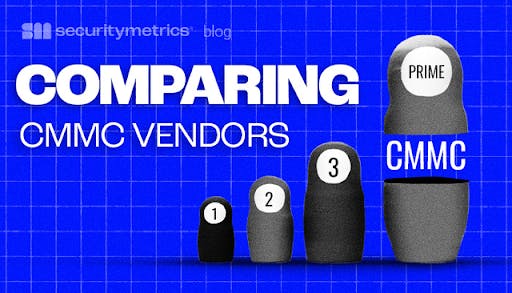
Navigating CMMC Phase 1? Compare top vendors like SecurityMetrics, Exostar, and Vanta to manage compliance flow down and secure your DoD contracts affordably. https://hackernoon.com/cmmc-compliance-vendors-finding-the-best-fit-for-your-flow-down-requirements #cmmc
CMMC Compliance Vendors: Finding the Best Fit for Your Flow Down Requirements | HackerNoon

Navigating CMMC Phase 1? Compare top vendors like SecurityMetrics, Exostar, and Vanta to manage compliance flow down and secure your DoD contracts affordably.

An Introduction to CMMC - Negative PID

If you work as a contractor for the United States Government, you must comply with stricter security rules than standard companies. One of these frameworks is

Negative PID
The first 100 days of CMMC were never meant to be dramatic. These are not signs of failure. Policy theory is now moving into operational reality.
https://rosecoveredglasses.wordpress.com/2026/04/08/the-first-100-days-of-cmmc-and-what-comes-next/
#GovernmnetContracting #CMMC
An Introduction to CMMC - Negative PID

If you work as a contractor for the United States Government, you must comply with stricter security rules than standard companies. One of these frameworks is

Negative PID