JOB: Research Associate in Historical Climatology and Historical Glaciology at King’s College London

3-year Research Associate position within the ERC project "AdaptAIR: Climate Adaptation through Artificial Ice Reservoirs in the Himalayas"

PhD in historical climatology, environmental history, glaciology, geography or a related area required (or PhD near completion)

Closing date: 20 April 2026

https://www.kcl.ac.uk/jobs/141807-research-associate-in-historical-climatology-and-historical-glaciology

#envhist #climateHistory

Research Associate in Historical Climatology and Historical Glaciology | King's College London

King's College London

The Akkadian Empire confronted prolonged drought 🌍

Environmental stress strained agriculture and political cohesion. Institutional response determines whether climate pressure becomes systemic decline.

Ancient patterns remain instructive.

#ClimateHistory #Mesopotamia #Brewminate

https://brewminate.com/drought-and-denial-the-akkadian-empire-and-the-politics-of-changing-climate/

Akkadian Collapse and the 4.2-Kiloyear Drought

How the 4.2-kiloyear megadrought destabilized the Akkadian Empire and reveals enduring patterns of climate denial and political inertia.

Brewminate: A Bold Blend of News and Ideas

Record-breaking 228m sediment core reveals unprecedented evidence of West #Antarctic Ice Sheet retreat

An international team drilled the longest-ever sediment core from beneath an ice sheet, uncovering 23 million years of #ClimateHistory. This breakthrough helps scientists predict how the ice sheet—holding enough water to raise global sea levels by 4-5m—will respond to warming. The #SWAIS2C project found evidence of past open ocean conditions, warning of potential future collapse.

https://swais2c.aq/media/record-breaking-sediment-core-provides-unprecedented-evidence-of-west-antarctic-ice-sheet-retreat

#ClimateScience
#ClimateCatastrophe
#TippingPoint

SWAIS2C - Record-breaking sediment core provides unprecedented evidence of West Antarctic Ice Sheet retreat

SWAIS2C

The Aral Sea catastrophe remains one of history's most devastating environmental disasters.
Once Earth's 4th-largest lake, Soviet irrigation projects diverted its rivers for cotton farming—draining an entire sea within decades.
The cost? Collapsed ecosystems, destroyed communities, severe health crises, and a legacy of damage spanning generations.
A stark reminder that nature cannot be "controlled" without consequences.

#AralSea #EnvironmentalDisaster #ClimateHistory #WaterCrisis #Sustainability #Engineering #CentralAsia

https://www.youtube.com/watch?v=RvXoqPp0CPU

The Sea That Disappeared – The Most Expensive Engineering Mistake Ever Made

YouTube

In 1990 the fossil fuel industry pushed the world straight through the climate safety limit of 350 ppm atmospheric CO2. In 2025 another limit was breached, 1.5C warming of the atmosphere, making it likely that climate change will now go out of control, feeding on itself.

And what is the fossil fuel industry asking Trump and the MAGAs and the EU gov to do now?

#climateHistory

The Black Death was not in volcanic ash.
Volcanic cooling disrupted climate and trade, allowing Yersinia pestis to spread through medieval ports.
https://historylife78.wordpress.com/2025/12/22/the-black-death-and-volcanoes-why-the-plague-was-never-in-the-ash/
#BlackDeath #PlagueHistory #MedievalHistory #ClimateHistory #YersiniaPestis
The Black Death and Volcanoes: Why the Plague Was Never in the Ash

Likely represents Sophia/logos (red robe with purple high status) Illumination of P Pythagoria Pi and phi – geometrical shapes set within circle bounded in green representing material world F…

@HistoryLife
The 8.2 ka climate event did not destroy Jiahu. It reshaped it. New research shows migration, labor reorganization, and social change helped this early Chinese village adapt rather than collapse. #Archaeology #ClimateHistory #HumanResilience #Neolithic https://www.anthropology.net/p/after-the-cold-snap-how-jiahu-rewrote
After the Cold Snap: How Jiahu Rewrote Its Social Rules During the 8.2 Thousand Year Climate Shock

At one of North China’s earliest villages, abrupt climate change did not end a society. It forced it to reorganize, absorb newcomers, and rethink how people lived together.

Anthropology.net
A 10,000-year Kurdish stalagmite reveals how climate instability shaped early communities in the eastern Fertile Crescent and influenced the rise of farming. New evidence suggests resilience, not stability, guided the path to agriculture. #Archaeology #ClimateHistory #Neolithic #FertileCrescent https://www.anthropology.net/p/stone-water-and-time-how-a-kurdish
Stone, Water, and Time: How a Kurdish Stalagmite Rewrites the Climate Story of Early Farming

A new cave record suggests that the road to agriculture in the eastern Fertile Crescent was forged through hardship, flexibility, and millennia of environmental instability.

Anthropology.net
New sediment evidence from Laguna Itzan shows the Classic Maya collapse was not driven by drought everywhere. A stable climate could not save a society woven into failing regional networks. #Archaeology #MayaStudies #Anthropology #ClimateHistory https://www.anthropology.net/p/when-the-rains-never-failed-rethinking
When the Rains Never Failed: Rethinking Collapse in the Maya Southwest

New sediment records from Guatemala complicate the long-held drought narrative and reveal a more tangled story of land use, interdependence, and resilience.

Anthropology.net
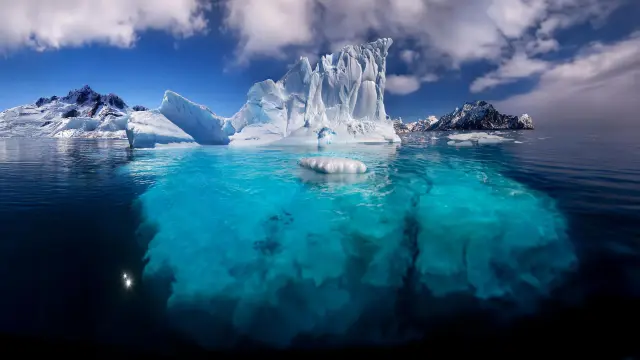
Scientists have found 6-million-year-old ice in Antarctica 🧊—the oldest ever directly dated! It offers rare climate snapshots, revealing 12°C cooling over time. A major leap in understanding Earth’s ancient climate. 🌍🔬 #Antarctica #ClimateHistory #COLDEX
🔗 https://phys.org/news/2025-10-million-year-ice-antarctica-unprecedented.html?utm_source=mastodon&utm_medium=social&utm_campaign=fedica-Autoposting
Six-million-year-old ice discovered in Antarctica offers unprecedented window into a warmer Earth

A team of U.S. scientists has discovered the oldest directly dated ice and air on the planet in the Allan Hills region of East Antarctica.

Phys.org