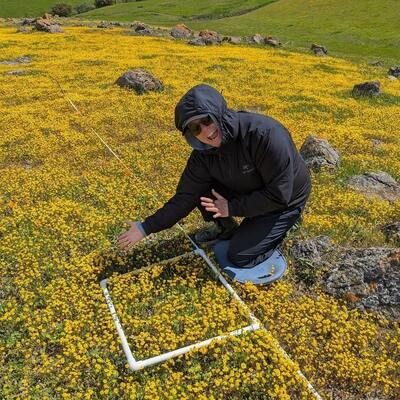
 Gina
GinaWhite-spotted Sawyer (Monochamus scutellatus) adults feed on pine and spruce for up to seven days after emerging in summer. Females chew small egg niches into dead or dying trees or logs, depositing one egg in each.
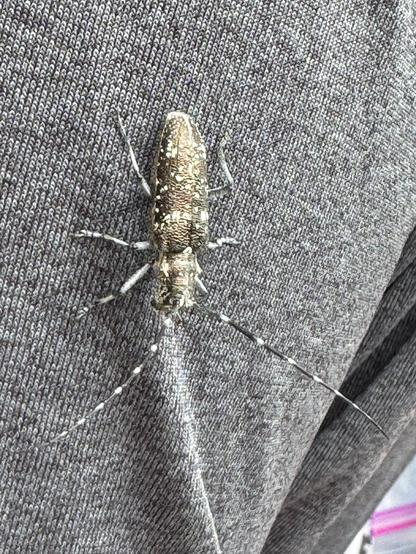
White-spotted Sawyer (Monochamus scutellatus) adults feed on pine and spruce for up to seven days after emerging in summer. Females chew small egg niches into dead or dying trees or logs, depositing one egg in each.
“Black Swift parents (Cypseloides niger) regurgitate a sticky mess of saliva and insects to feed their one and only nestling each season.”

The Black Swift dances high in the sky on sickle-shaped wings, where it feasts on winged ants. On sunny days it flies so high that it's just a speck. This large, black swift nests on dark and inaccessible ledges, often behind waterfalls, but much of the rest of its life is shrouded in mystery. It spends the winter somewhere in South America and the Caribbean, where it blends in with similar-looking swifts. Black Swift has lost more than 50% of its population in the past 50 years, and is experiencing steep recent declines, leading to its listing as an Orange Alert Tipping Point species.
Female Abert’s Thread-waisted Wasps (Ammophila aberti) dig nests in firm sand or mud, where they seal their larvae inside with a stash of about 10 geometrid caterpillars—enough to keep the young well-fed until they’re ready to emerge.
Vivid Dancer damselflies (Argia vivida) often find mates twice a day—once in the morning, when males dart from sunny perches to court females, and again in the afternoon, when they wait near water for females finishing earlier matings.
#damselflies #nature #wildlife #california #breedingbehavior
Pacific Spiketail (Zoraena dorsalis) females lay eggs by hovering above muddy stream edges and plunging their ovipositor up and down like a sewing machine—often in shady spots.
#dragonflies #odonates #nature #wildlife #california #breedingbehavior
