 bitsavers.org
Florida Man
Florida Man
suckin' data like a pig is
Florida Man
Bitsavers has been an invaluable resource for everyone in the retrocomputing community for a long time now, and @bitsavers now has a Patreon for it! If you find it useful, you should join! https://www.patreon.com/bitsavers
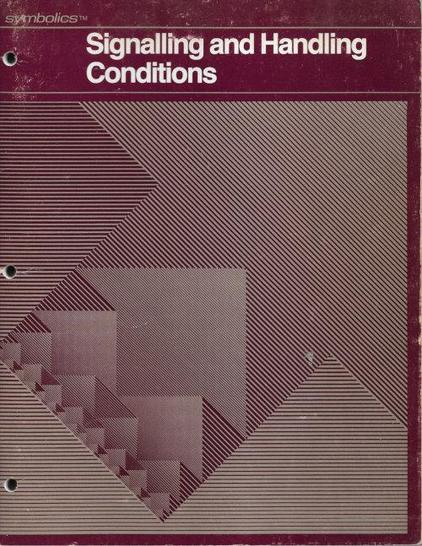
You can pick up the document 'Signalling and Handling Conditions' from this index page:
It was longer than I thought it would be, but I think you'll find it interesting to see what the Zetalisp condition system (which inspired the Common Lisp condition system) looked like.
In spirit, it was much the same. The biggest differences are:
* The CL system has 'active' restarts, where the ZL system had a passive thing where you returned a value to the case context and hoped that it would do the thing you wanted. It felt quite a bit more error-prone (if you'll pardon the reuse of 'error' here, maybe I should say 'mistake-prone').
* The ZL condition system offers a lot of really low-level stuff that did not seem proper for CL.
* The set of operations offered in ZL was richer, but also a lot more complicated, I thought, and I worried people would not really see what it was trying to do.
* Obviously, the ZL system was based on Flavors, not CLOS, and made reference to a lot of LispM-specific packages.
* The document was published in January, 1983 and identifies itself as part of Symbolics Release 4.0.
There are other differences as well.
#Zetalisp #LispMachine #LispMachines #Symbolics #LispM
#ConditionHandling #ConditionSystem #ErrorSystem #ErrorHandling #CommonLisp #CL #Flavors #CLOS #History #ComputerHistory
#InternetArchive #Bitsavers
Well, surfacing from another rathole, we research very early supermarket Point of Sale systems, in particular the ones from ESIS which were deployed initially in Jewel food stores in Chicago ca. 1971 just before UPC scanners came out in 1973. Finding a picture of one was really difficult, and the only one I found was from 1975 after Bunker-Ramo bought ESIS and had adopted UPC scanning. Each store required three ND-812 12 bit minicomputers to run the system.
http://bitsavers.org/pdf/nd/ESIS
and, like everything else, there is someone out there who collects old PoS registers.
A fun thing I came across on Tue in my stacks of random papers, the Mascor 132 Reference Manual ca. 1970. It was a startup that failed in the 1970 recession that a bunch of IBM ACS engineers went to before joining Amdahl. http://bitsavers.org/pdf/mascor I also added some related historical articles to http://bitsavers.org/pdf/amdahl/history
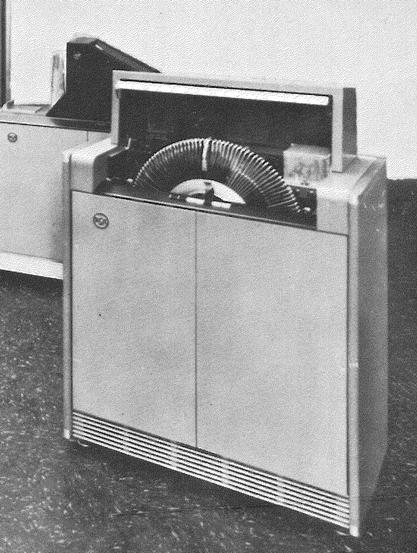
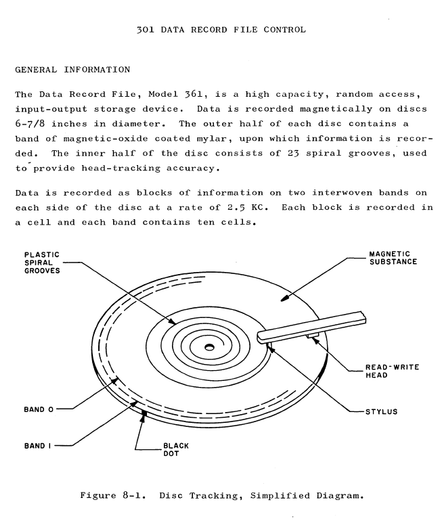
A weird failed product that I turned up scanning information on the RCA 301 computer yesterday, the 361 Data File jukebox, ca 1963
Not yet. It will eventually be in http://bitsavers.org/BBofBS
There is a video of my workflow for prepping magtape at https://www.youtube.com/watch?v=-xlq_MPWNKk
Yesterday I learned DEC sold a Teletex distribution and authoring system with speech using DECtalks
https://bitsavers.org/pdf/dec/vax/vms/layered_product/VTX/
I'm going to dig around to see if we have the other mentioned manuals in the archive
Evans and Sutherland Picture System 2 ca. 1977 documentation and software. Something I've been trying to find since 1980. Now, i have to find my copy of the sources to Simutech's 1979 F-16 flight simulator HUD course follower demo.
http://bitsavers.org/pdf/evansAndSutherland/picture_system_2
http://bitsavers.org/bits/EvansAndSutherland/Multi_Picture_System/
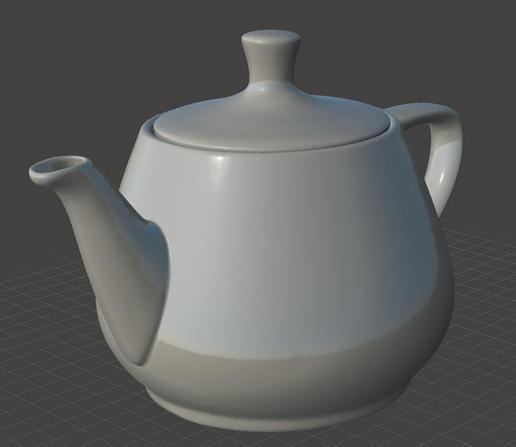
As far as I know, no one has ever 3D scanned and modeled a real Melitta large teapot.
Now a friend did this for me.
There was a large, medium and small one which I call the Teapot Family. I should have Mama and Baby Teapot available next week
http://bitsavers.org/pdf/melitta
 Chris Hanson
 Kent Pitman