LILA BRUYERE ON RESIDENTIAL SCHOOL EXPERIENCES IN NEW DOCUMENTARY

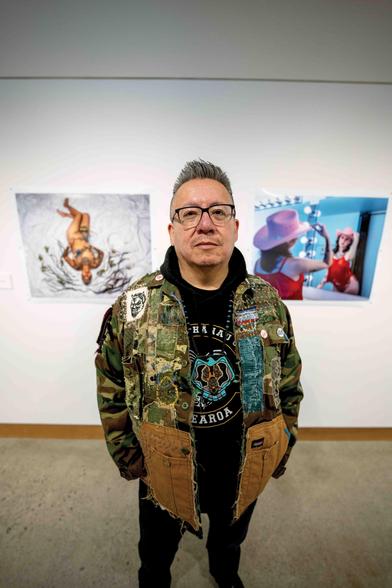
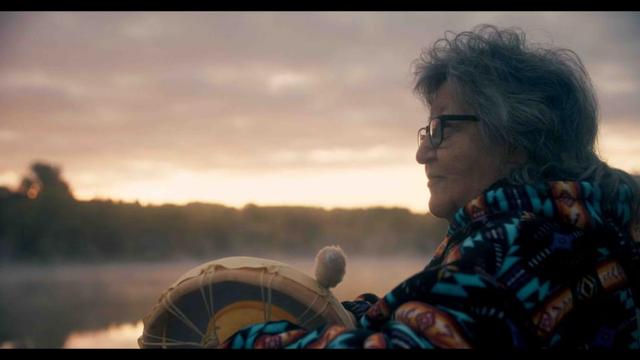
On Sept. 9, 2025, Bangishimo launched a GoFundMe campaign to support completion of the documentary I Am Water. Co-directed by Bangishimo and Erik O’Neill, co-founder of Astro Dog Media, the documentary tells the story of Lila Bruyere, who is Bangishimo’s mother and a survivor of the residential school system. 

Educator and public speaker Bruyere wrote her memoir of surviving the residential school system until an issue with her computer changed her plans. Losing months of work would be a blow to anyone, but Bruyere took it as a sign to tell her story in a different medium.  

“I had five chapters written, and I swore I saved it, but when I went back to continue, I couldn’t find it. Thankfully, my oldest son was able to find it, but then my computer ate it again. I take things as a sign, and then a friend of mine asked me if I had thought about doing a documentary,” she said.  

Bruyere was new to the documentary world and sought help from a friend with experience in filmmaking. She was approved for a grant to begin work on the documentary, but the project stalled after a friend who helped them apply for the funds failed to pass the money along. While there was no fraud involved, Bruyere’s son and photographer, and community leader Bangishimo said the experience was a major setback.  

“We did call him out on social media. He claimed that he never spent the money, so he didn’t steal it. He ended up giving it back to the Arts Fund, but then we had to start from square one,” Bangishimo said.  

Bruyere was frustrated, and Bangishimo offered to help introduce her to Erik O’Neill, co-founder of Astrodog Media.  

“I have already made two short documentaries with Erik, Stories from Land Back Camp and Recollections and Imaginings. I introduced the two of them, and they hit it off immediately. They’re like besties now, which is hilarious,” they said. 

Bruyere tells the story slightly differently.  

“I met Erik and I didn’t want him to do it. I told Bangishimo that he’s too miserable. But then I went over to his studio, and this was the first time he ever videotaped me, and we were talking and laughing. I thought, oh my gosh, like this guy does laugh. Now, we’re the best of friends,” she said.  

With a new crew onboard, the team travelled to Bruyere’s home reserve on Couchiching First Nation near Fort Frances, Ont. for a 10-day shoot in June 2025.   

“I told the crew I didn’t want this to be all doom and gloom, even though it is a sad story. This is not your ordinary documentary. This is a spiritual experience. I told them I hoped they were open to learning things about our culture, and they were amazing,” Bruyere said.  

The documentary trip was also the first extended trip home for Bangishimo. While they had passed through over the years, they said their experiences growing up as a queer person on a small reserve were not positive.  

“I didn’t have a lot of great memories in my community. Growing up on my reserve and in a small town was not always a safe place for queer kids, especially in the 80s. But once I got there, my whole perception had changed. My therapist told me the community that I grew up in is no longer that community and I am not that same person,” they said.  

The trip was a chance to run into relatives they had not seen since they were children and meet new ones they had not met before.  

“It was so nice to be with my people and on my people’s land. It was the highlight of 2025 for me, and it made me actually really miss home. We’re now hoping to go home again next summer just because we had such a great experience,” Bangishimo said. 

Bruyere hopes the documentary will change the conversation on residential schools to one of moving forward while not forgetting the atrocities committed. She added that she spent five years working with a therapist and attending counselling to deal with the trauma she experienced.  

“I know what happened to me, but I don’t live there 24/7. I don’t let it cripple me like it used to. I shouldn’t even be here because I went through so much drama. Sometimes, I don’t know where I got the strength from, but then I always give my credit to my mom. She was a really strong person, and I want people to know that there is life after residential school.” Bruyere said.  

For more information or to donate, visit the I Am Water GoFundMe.

#alexKinsella #astrodogMedia #bangishimo #documentary #educator #erikOneill #gofundme #lilaBruyere #localFilm #localHistory #memoir #nationalSurvivors #nationalSurvivorsCircle #queerHistory #residentialSchoolSurvivors #residentialSchools #truthAndReconciliation

WATERLOO REGION COMMUNITY RALLIES FOR WILLOW RIVER CENTRE

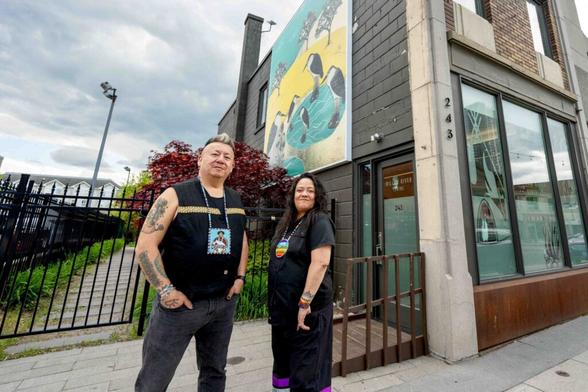
Downtown Kitchener’s Willow River Centre (WRC), an Indigiqueer led community center, and the brick-and-mortar base for Land Back Camp, was recently in imminent danger of closing.   

After receiving less grant money than anticipated, the WRC’s budget could no longer sustain their rent. For an organization whose mission is largely to provide a safe space for marginalized people, this issue presented a very formidable challenge.  

In an effort mainly organized by the Palestinian Youth Movement, a banquet and fundraiser were organized in a short time.  

“We had nothing to do with it, either…We just gave them our social media passwords, and they ran with it,” Bangishimo, co-founder of the centre said.  

With 200 tickets sold, 12 community sponsors, 86 donated raffle items, a meal provided by nine local businesses and plenty of volunteers, the fundraiser brought in over $27,000. The WRC was able to stay alive.  

“It was the most on point organizing I’ve ever seen,” Amy Smoke, the WRC’s other co-founder, said.  

The fundraiser was a triumph for the centre and the region at large.   

 A large portion of the WRC’s funding comes from the Upstream Fund, a fund created in 2022 to support community organizations and build a more harmonious and happier Waterloo Region.  

Upstream draws its money from the regional budget and aims to prioritize groups that service underrepresented, racialized, or marginalized people.  

Initially, the Community Edition reported in the June issue that the WRC’s funding issues were caused by Upstream extending their eligibility beyond Indigenous and Black organizations. With a greater pool of people to compete for funds, less money overall could be distributed to each individual group.  

This however, has proven to be untrue. While many of Upstream’s recipients are and have been Black and Indigenous, they have never been exclusively so. Furthermore, Upstream is not currently providing funds to more people than before. Their records consistently show cohorts numbering between 30 and 40 members each year since they started.   

According to the WRC’s grant writer, Robyn Schwarz, hard times are coming for nonprofits across the board. With a conservative government, whose mandate is to cut taxes, money for publicly funded services is drying up.  

“[The majority of Regional Council] wants a five per cent increase, but that’s actually a cut, because in order to keep current services where they are, we need about 12 per cent,” Schwarz said.  

Schwarz said nonprofits are particularly affected because Ontario’s provincial government and Canada’s federal government currently prioritize business support over social services.  

With only a five per cent tax increase (less than half of what Schwarz predicts is needed) nonprofits are the first to lose funding. Upstream gets cut, and by extension, so does the WRC.  

“Basically, the thing to blame is that we’re under a government right now that doesn’t want to tax things and doesn’t want to fund the nonprofit sector,” Schwarz said.  

Regardless of government funding, a substantial portion of the community wants to support organizations like the WRC, and that support was felt by Smoke and Bangishimo.  

“We were wrapped in care, and it was really lovely to be held by other people,” Smoke said.  

Despite the economic instability and the challenges of working as a nonprofit under a conservative government, the WRC is committed to keep working.  

“We’re still grant writing, still getting funds to continue doing what we need to do. Regardless of what happens in a brick and mortar, Land Back is a movement. We’re not going anywhere,” Smoke said. 

#AmySmoke #Bangishimo #BangishimoJohnston #blackAndIndigenous #ChristoffLeRoux #DowntownKitchener #Indigiqueer #landbackCamp #localActivism #PalestinianYouthMovement #RobynSchwarz #upstream #willowRiverCenter #wrc #ZackMason