nem a arca de noé carregou tanto animal

ultimo dia antes das ferias

o animal subiu o sistema pro servidor de partner (homologação) sem subir as mudanças que ELE fez no banco nem as que ELE fez no terraform

e agora descobriu que precisa fazer isso

"ele fez = ia"

#bamblers

eu era muito mais a turma que fez curso de 3 meses e entrou na área de paraquedas, pelo menos eles fizeram alguma coisa, sabiam o básico, essa lava que chega na era IA depois doa layoffs nunca fizeram um hello world #bamblers

botaram uma lontra pra mexer num sistema feito em C a bilhoes de anos atras, ele foi construido antes mesmo de inventarem a informatica, e dai o animal, nao conseguiu fazer nada

ai ele manda pro meu amigo avaliar

"nem as colunas da tabela vc viu? esse seu insert ai ta usando colunas que nem existem¨

passa um tempo, ele manda um comentario pro meu amigo"

isso é o que acho que devemos fazer

<texto de ia com emojis e topicos>

meu amigo: "vc nao acha isso nada, quem acha isso é a IA"

o sujeito, pelo menos foi correto e respondeu "you're right"

estamos rindo disso tem 2 hs

#sextou #bamblers

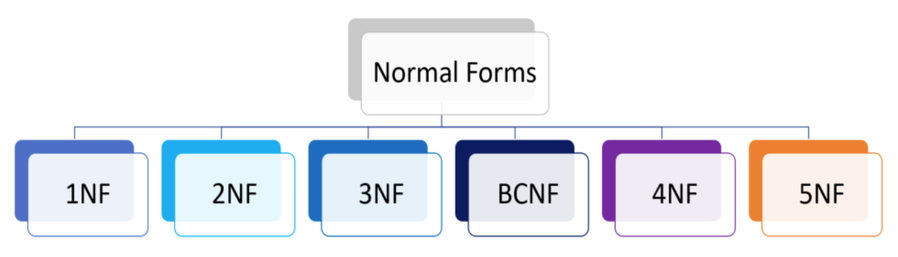
A Comprehensive Guide to Database Normalization with Examples - Visual Paradigm Guides

Introduction Database normalization is a crucial concept in the world of database management. It is a process that optimizes database structure by reducing data redundancy and improving data integrity. Normalization is a set of rules and guidelines that help organize data efficiently and prevent common data anomalies like update anomalies, insertion anomalies, and deletion anomalies. In this article, we will delve into the fundamentals of database normalization, the various normal forms, and provide practical examples to illustrate each level of normalization. Why Normalize a Database? Before we dive into the details of database normalization, it’s essential to understand why it’s necessary. Normalization offers several advantages: Data Integrity: Normalization helps maintain data accuracy and consistency by reducing redundancy. When data is stored in a non-repetitive manner, it is less prone to errors. Efficient Storage: Normalized databases tend to occupy less storage space as duplicate data is minimized. This reduces the overall cost of storage. Query Optimization: Queries become more efficient in normalized databases because they need to access smaller, well-structured tables instead of large, denormalized ones. Flexibility: Normalized databases are more flexible when it comes to accommodating changes in data requirements or business rules. Levels of Normalization Database normalization is typically divided into several levels, referred to as normal forms. The most commonly used normal forms are: First Normal Form (1NF): Ensures that each column in a table contains atomic, indivisible values. There should be no repeating groups, and each column should have a unique name. Second Normal Form (2NF): Building on 1NF, 2NF eliminates partial dependencies. A table is in 2NF if it’s in 1NF and all non-key attributes are functionally dependent on the entire primary key. Third Normal Form (3NF): Building on 2NF, 3NF eliminates transitive dependencies. A table is in 3NF if it’s in 2NF and all non-key attributes are functionally dependent on the primary key, but not on other non-key attributes. Boyce-Codd Normal Form (BCNF): A stricter version of 3NF, BCNF ensures that every non-trivial functional dependency is a superkey. This means that no partial dependencies or transitive dependencies are allowed. Fourth Normal Form (4NF): 4NF deals with multi-valued dependencies, where an attribute depends on another attribute but is not a function of the primary key. Fifth Normal Form (5NF) or Project-Join Normal Form (PJNF): These forms deal with cases where a table is in 4NF, but there are join dependencies that can be further optimized. Now, let’s illustrate these normal forms with examples: First Normal Form (1NF) Consider an unnormalized table that stores customer orders: OrderID Customer Products 1 John Apples, Bananas, Oranges 2 Alice Grapes, Strawberries 3 Bob Lemons, Limes This table violates 1NF because the Products column contains a list of items. To bring it to 1NF, we split the products into separate rows: OrderID Customer Product 1 John Apples 1 John Bananas 1 John Oranges 2 Alice Grapes 2 Alice Strawberries 3 Bob Lemons 3 Bob Limes Now, each cell contains an atomic value, and the table is in 1NF. Second Normal Form (2NF) Consider a table that stores information about students and their courses: StudentID CourseID CourseName Instructor 1 101 Math Prof. Smith 1 102 Physics Prof. Johnson 2 101 Math Prof. Smith 3 103 History Prof. Davis This table violates 2NF because the Instructor attribute depends on both StudentID and CourseID. To achieve 2NF, we split the table into two separate tables: Students Table: StudentID StudentName 1 John 2 Alice 3 Bob Courses Table: CourseID CourseName Instructor 101 Math Prof. Smith 102 Physics Prof. Johnson 103 History Prof. Davis Now, the Instructor attribute depends only on the CourseID, and the table is in 2NF. Third Normal Form (3NF) Consider a table that stores information about employees and their projects: EmployeeID ProjectID ProjectName Manager 1 101 ProjectA John 1 102 ProjectB Alice 2 101 ProjectA John 3 103 ProjectC Bob This table violates 3NF because the Manager attribute depends on the EmployeeID, not directly on the primary key. To bring it to 3NF, we split the table into two separate tables: Employees Table: EmployeeID EmployeeName 1 John 2 Alice 3 Bob Projects Table: ProjectID ProjectName 101 ProjectA 102 ProjectB 103 ProjectC EmployeeProjects Table: EmployeeID ProjectID 1 101 1 102 2 101 3 103 Now, the Manager attribute depends on the ProjectID, and the table is in 3NF. Boyce-Codd Normal Form (BCNF) BCNF is a stricter version of 3NF. To illustrate BCNF, consider a table that stores information about professors and their research areas: ProfessorID ResearchArea OfficeNumber 1 Artificial Intelligence 101 2 Machine Learning 102 3 Artificial Intelligence 103 This table violates BCNF because there is a non-trivial functional dependency between ResearchArea and OfficeNumber (i.e., the office number depends on the research area). To achieve BCNF, we split the table into two separate tables: Professors Table: ProfessorID ProfessorName 1 Prof. Smith 2 Prof. Johnson 3 Prof. Davis ResearchAreas Table: ResearchArea OfficeNumber Artificial Intelligence 101 Machine Learning 102 ProfessorResearch Table: ProfessorID ResearchArea 1 Artificial Intelligence 2 Machine Learning 3 Artificial Intelligence Now, the table is in BCNF because there are no non-trivial functional dependencies. Fourth Normal Form (4NF) 4NF deals with multi-valued dependencies. Consider a table that stores information about books and their authors: BookID Title Authors 1 BookA AuthorX, AuthorY 2 BookB AuthorY, AuthorZ 3 BookC AuthorX This table violates 4NF because there is a multi-valued dependency between BookID and Authors. To achieve 4NF, we split the table into three separate tables: Books Table: BookID Title 1 BookA 2 BookB 3 BookC Authors Table: AuthorID AuthorName 1 AuthorX 2 AuthorY 3 AuthorZ BookAuthors Table: BookID AuthorID 1 1 1 2 2 2 2 3 3 1 Now, each table is in 4NF, and multi-valued dependencies are removed. Fifth Normal Form (5NF) or Project-Join Normal Form (PJNF) 5NF or PJNF deals with join dependencies, which are beyond the scope of this introductory article. Achieving 5NF typically involves further decomposition and is often necessary for complex databases. Conclusion Database normalization is a critical process in database design, aimed at optimizing data storage, improving dataA Comprehensive Guide to Database Normalization with Examples

Visual Paradigm Guides

Fazem alguns anos que não trabalho com Java e Spring.

Mas é bacana ver essa direção aqui de monolito modular. Essa talk é muito boa e bem recente sobre o assunto:

https://youtu.be/wOKjf9gMWSw

#bamblers

From Chaos to Cohesion: Building Modular Monoliths in the Real World by Patrick Baumgartner SIO26

YouTube

Empresinha do caraleo hein, meu amigo?

#bamblers

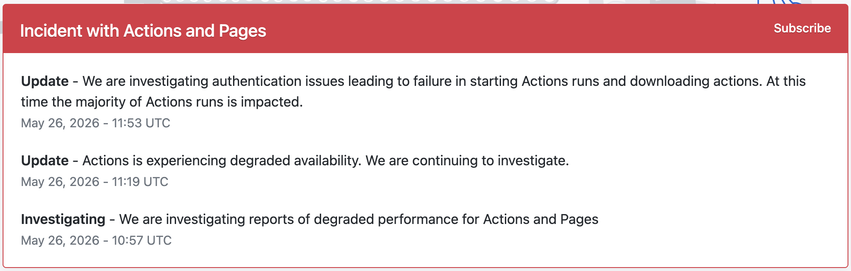
Se daqui 3 semanas a instância ficar fora do ar, já sabem o motivo.

#bamblers
#bolhers

#bamblers

Que documentação maravilhosa a do Elixir e do Phoenix.

Tô brincando um pouco com isso hoje

apanhei o suficiente do firefox sync com o syncstorage-rs que desisti. tentar algo mais simples pra sincar as abas e historico do librewolf entre os devices #selfhosting #bamblers

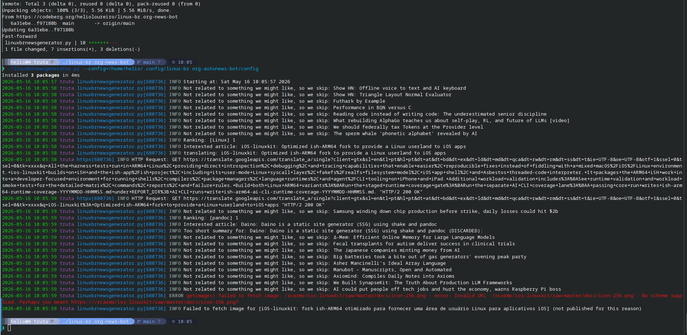
Pode não ter resolvido o problema, mas agora pelo menos fica com os logs bonitinhos.

Usei esse módulo: https://pypi.org/project/coloredlogs/

#bamblers