The Water Jar (Olla) embodies the rich culture of the Zuni, blending functionality with stunning artistry. The Rainbird symbolizes rain and life, showcasing both beauty and tradition. How do you see art reflecting everyday life in different cultures?
#ArtAppreciation #ZuniCulture #ClevelandArthttps://clevelandart.org/art/1937.898Explore the striking Water Jar from the Zuni (A:shiwi) culture, where art meets utility. The Rainbird motif symbolizes the essential relationship between nature and community. How do you interpret the blending of function and artistry in this piece?
#ClevelandArt #ZuniCulture #ArtInNaturehttps://clevelandart.org/art/1937.898
Water Jar (Olla) with Rainbird | Cleveland Museum of Art
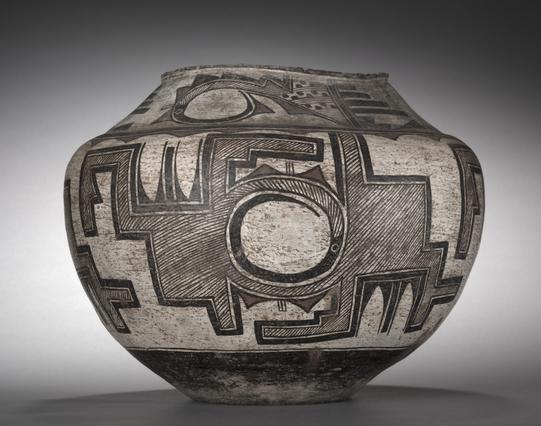
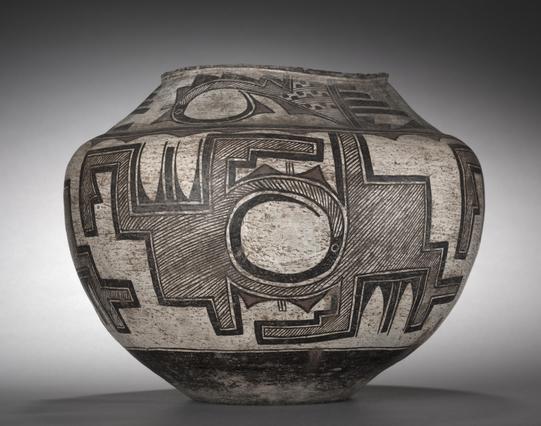
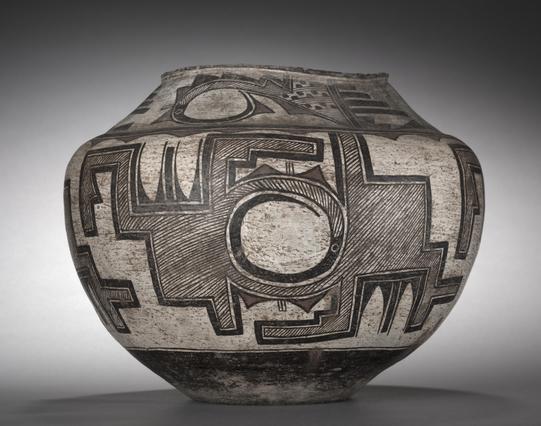
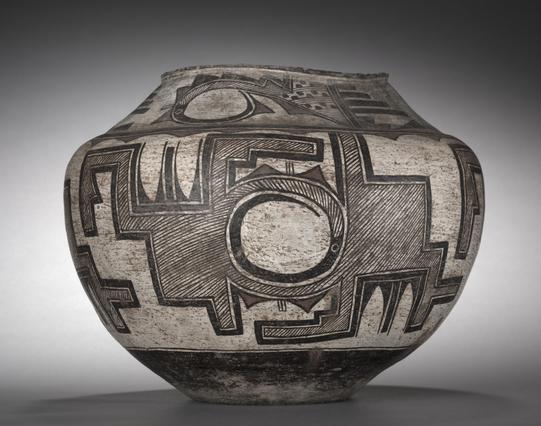
Zuni (A:shiwi) women used ollas (<em>oy-</em>ahs) like this one to collect, carry, and store water. The water well was a place for socializing, and the vessels’ public visibility may help to explain their elaborate, deftly painted decoration—here an abstract creature called the Rainbird whose beak spirals between two stylized, stepped wings that may allude to moisture-bearing clouds. Milford Nahohai, the contemporary Zuni potter, believes the motif is inspired by rain clouds that roll into the Zuni River Valley, their leading edges curled under the main mass to form a curve like that of the beak.
The Water Jar (Olla) with Rainbird beautifully intertwines utility and artistry, showcasing the Zuni's rich cultural heritage. Its vibrant designs evoke the essence of rain, vital for life. How do you think art and function coexist in everyday objects?
#ClevelandArt #ZuniCulture #ArtAndFunctionhttps://clevelandart.org/art/1937.898Water Jar (Olla) with Rainbird | Cleveland Museum of Art
Zuni (A:shiwi) women used ollas (<em>oy-</em>ahs) like this one to collect, carry, and store water. The water well was a place for socializing, and the vessels’ public visibility may help to explain their elaborate, deftly painted decoration—here an abstract creature called the Rainbird whose beak spirals between two stylized, stepped wings that may allude to moisture-bearing clouds. Milford Nahohai, the contemporary Zuni potter, believes the motif is inspired by rain clouds that roll into the Zuni River Valley, their leading edges curled under the main mass to form a curve like that of the beak.
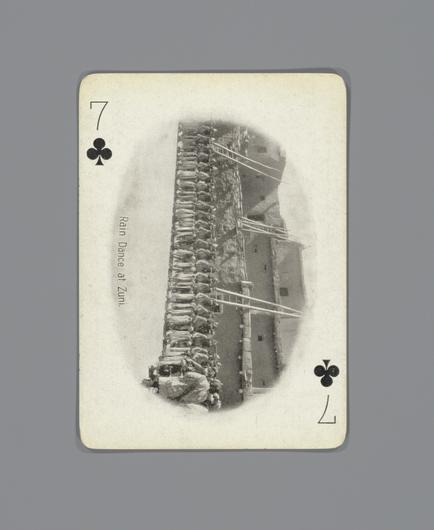
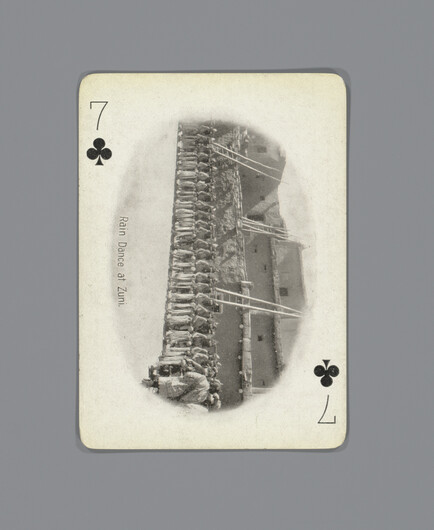
Experience the mesmerizing vitality of "Rain Dance at Zuni" by Adam Clark Vroman. This early 1900s piece captures the spiritual connection between the Zuni people and nature, showcasing the rhythm of their traditions. What's your interpretation of its symbolism?
#Rijksmuseum #ArtAppreciation #ZuniCulturehttps://www.rijksmuseum.nl/nl/collectie/RP-F-2020-40-7
Rain Dance at Zuni, Adam Clark Vroman, ca. 1900 - Rijksmuseum
Water Jar (Olla) with Rainbird beautifully combines functionality and artistry. Its painted motifs, reflecting Zuni culture, showcase a deep connection to nature and community. How do you think art influences daily life in different cultures?
#ClevelandArt #ZuniCulture #NativeAmericanArthttps://clevelandart.org/art/1937.898Water Jar (Olla) with Rainbird | Cleveland Museum of Art
Zuni (A:shiwi) women used ollas (<em>oy-</em>ahs) like this one to collect, carry, and store water. The water well was a place for socializing, and the vessels’ public visibility may help to explain their elaborate, deftly painted decoration—here an abstract creature called the Rainbird whose beak spirals between two stylized, stepped wings that may allude to moisture-bearing clouds. Milford Nahohai, the contemporary Zuni potter, believes the motif is inspired by rain clouds that roll into the Zuni River Valley, their leading edges curled under the main mass to form a curve like that of the beak.
Immersed in the mystique of the Rain Dance at Zuni, ca. 1900, by Adam Clark Vroman. Unveiling the spiritual connection between humans and the elements in this compelling photograph. What stories does it evoke in you?
#Rijksmuseum #RainDance #ZuniCulturehttps://www.rijksmuseum.nl/nl/collectie/RP-F-2020-40-7Rain Dance at Zuni, Adam Clark Vroman, ca. 1900 - Rijksmuseum
 Hidden Gems