
Who Is James Montier?

In a financial industry that rewards confidence, consensus, and the appearance of certainty, James Montier has spent his career doing something considerably less comfortable: telling investors, including professional ones, that most of what they believe about their own abilities is wrong. He is a behavioral finance researcher, strategist, and author whose work sits at the intersection of academic psychology, neuroscience, and practical investment management. For anyone trying to understand why smart people make bad financial decisions, and what to do about it, Montier is one of the most important voices in the field.

Early Life and Education

James Montier was born and raised in the United Kingdom. He studied economics at the University of Durham and went on to earn a master’s degree from the University of Exeter. His academic background is in economics rather than psychology, but his intellectual interests pulled consistently toward the behavioral side of financial decision-making at a time when that field was still considered somewhat outside the mainstream of serious investment research.

His entry into the professional world coincided with a period of growing institutional interest in behavioral finance following the foundational work of Daniel Kahneman, Amos Tversky, and Richard Thaler, whose research was beginning to attract serious attention in investment circles. Montier recognized earlier than most practitioners that the implications of behavioral research for investment management were not merely academic but deeply practical, and he built his career around making those implications accessible and actionable for working investors.

Career in Investment Research

Montier built his professional reputation as a global equity strategist, first at Dresdner Kleinwort and later at Société Générale, the French multinational investment bank. At both institutions his research reports attracted a devoted following among institutional investors, portfolio managers, and financial academics who found his combination of rigorous behavioral science and practical investment application unusually valuable.

His research notes at Société Générale in particular became some of the most widely circulated documents in professional investment circles during the mid-2000s. They were distinctive in several ways: they engaged seriously with academic research rather than simply citing it superficially, they were willing to reach conclusions that contradicted the prevailing consensus, and they were written with unusual clarity and directness for a genre that often prioritizes the appearance of sophistication over genuine communication. Investors who read his work regularly described it as genuinely changing how they thought about decision-making and market behavior.

In 2009 Montier joined GMO, the Boston-based investment management firm founded by Jeremy Grantham. GMO is known in the investment world for its long-term value orientation, its rigorous approach to asset allocation, and its willingness to take contrarian positions that diverge significantly from market consensus when its analysis suggests the consensus is wrong. It is an institution whose intellectual culture fits naturally with Montier’s own disposition toward evidence-based thinking and skepticism of popular narratives, and he has remained there as a member of the asset allocation team.

Books and Written Work

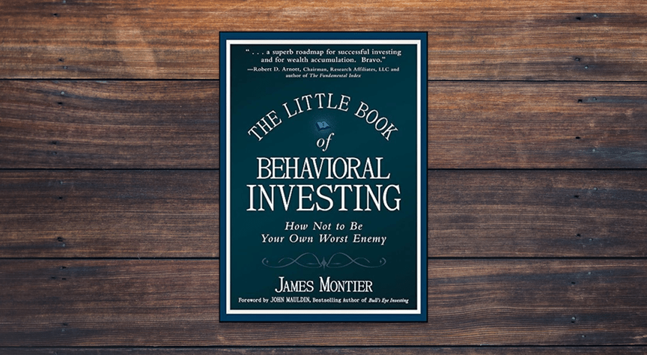
Montier has written several books on behavioral finance and investment management, ranging from technical academic texts to accessible popular works. His two most widely read titles are The Little Book of Behavioral Finance and The Little Book of Behavioral Investing, both published in 2010 as part of Wiley’s Little Book series and both reviewed on this site.

The Little Book of Behavioral Finance provides a broad introduction to the major cognitive biases that lead investors astray, drawing on decades of academic research to explain the mechanisms behind overconfidence, herding, loss aversion, and related phenomena. It is written for a general audience and remains one of the most accessible entry points into behavioral finance available.

The Little Book of Behavioral Investing, subtitled How Not to Be Your Own Worst Enemy, covers overlapping territory with a more specific focus on how these biases manifest in actual investment decisions and what structural changes to investment process can mitigate their influence. Together the two books form an unusually coherent and practically useful guide to the psychological dimension of investing.

His longer and more technically demanding work, Behavioural Investing: A Practitioner’s Guide to Applying Behavioural Finance, published in 2007, is aimed at professional investors and covers the same territory with considerably greater depth and more specific application to portfolio construction and investment process design. It is widely used in professional investment management settings and has influenced how a generation of portfolio managers think about decision-making and risk.

He has also published extensively through GMO’s research platform, producing white papers and client letters on topics ranging from valuation and asset allocation to the limits of quantitative investing and the behavioral foundations of market cycles. These publications are available through GMO’s website and have reached a wide audience within the investment profession.

Buy Your Money and Your Brain on Amazon

Core Ideas and Intellectual Contributions

Montier’s most important intellectual contribution is his sustained and rigorous application of behavioral science to investment practice. While behavioral finance as an academic discipline was well-established by the time he became prominent, the translation of that research into practical guidance for working investors was less developed, and Montier was among the first practitioners to do that translation work seriously and at scale.

His treatment of overconfidence is particularly important and particularly well-documented. The research he reviews consistently shows that professional investors, including highly educated and extensively experienced ones, systematically overestimate the accuracy of their own predictions and the quality of their own judgment. Forecasters who express ninety percent confidence in their predictions are right substantially less than ninety percent of the time. Analysts who construct detailed valuation models produce estimates with far wider error bands than their stated confidence levels imply. Montier does not present this as a character flaw or an intelligence failure. He presents it as a feature of human cognition that is shared universally and that requires structural solutions rather than simply greater effort or greater self-awareness.

His work on the value of systematic, rules-based investment processes as a defense against behavioral biases connects directly to the broader case for passive, low-cost, broadly diversified investing. If the primary source of investment underperformance is not insufficient analysis but the behavioral errors that accompany active decision-making, then strategies that minimize the number and frequency of active decisions are not just philosophically sound but specifically designed to address the actual mechanism of failure. This argument, which Montier develops with considerable supporting evidence, provides a behavioral foundation for the index fund investing philosophy advocated by figures like John Bogle and Burton Malkiel.

His skepticism toward financial forecasting is another consistent thread running through his work. Montier has documented extensively the poor track record of market predictions, including predictions made by the most credentialed and well-resourced analysts in the profession, and he is unsparing in his conclusion that the confidence with which most market commentary is delivered is wildly disproportionate to the actual predictive accuracy of the people delivering it. This critique has made him a valuable counterweight to the financial media’s appetite for confident directional calls about where markets are headed.

Influence and Legacy

Montier’s influence is difficult to quantify precisely but is clearly significant within the investment profession. His research at Société Générale shaped how a generation of institutional investors thought about behavioral finance, and his books have introduced the field to thousands of individual investors who might not otherwise have encountered it.

His work at GMO has contributed to one of the more intellectually distinctive investment firms in the world, an institution that has consistently been willing to make unfashionable calls based on valuation analysis and long-term thinking rather than chasing near-term performance. That institutional commitment to evidence-based, behaviorally informed investing reflects the same principles that run through Montier’s written work.

For readers building a serious financial education, engaging with Montier’s books is a valuable and underutilized step. Most personal finance education focuses on the mechanics of saving, investing, and debt management. It rarely addresses the cognitive architecture that determines whether people can actually execute those mechanics consistently over time. Montier’s work fills that gap with more rigor and more depth than almost anything else available in the accessible investment literature.

Where to Start

For readers new to Montier’s work, The Little Book of Behavioral Investing is the most practical starting point. It is short, accessible, and focused on the specific investment behaviors that most reliably destroy returns. The Little Book of Behavioral Finance covers similar ground with a somewhat broader lens and is equally accessible.

Both books pair naturally with Thinking, Fast and Slow by Daniel Kahneman which provides the most comprehensive account of the cognitive mechanisms underlying the biases Montier describes. A Random Walk Down Wall Street by Burton Malkiel provides the market efficiency framework that explains why those biases are so costly in investment contexts. And Thinking in Bets by Annie Duke addresses decision quality under uncertainty from a complementary angle.

Together these books form the core of a serious education in the psychology of financial decision-making, which is ultimately as important as any technical knowledge about investment products or strategies. Understanding why you make the decisions you make is the prerequisite for making better ones, and James Montier has done more than almost anyone to make that understanding accessible to working investors.

Buy The Little Book of Behavioral Investing on Amazon

#Author #Biography #Books #JamesMontier #TheLittleBookOfBehavioralInvesting #YourMoneyAndYourBrain


Book Review: Your Money and Your Brain by Jason Zweig

There is a version of investing that exists in textbooks and financial plans, where people make rational decisions based on expected returns and risk tolerance. And then there is the version that actually happens, where people panic-sell during market downturns, pour money into whatever went up last year, hold onto losing stocks far too long, and feel a rush of excitement when they hear about a hot tip that their rational mind knows perfectly well they should ignore. Your Money and Your Brain: How the New Science of Neuroeconomics Can Help Make You Rich, published in 2007 by Jason Zweig, is about the gap between those two versions of investing. More specifically it is about why that gap exists, what it is doing to your financial returns, and what you can do about it. It is one of the best books written on the intersection of neuroscience, psychology, and investment behavior, and it has lost none of its relevance in the nearly two decades since it was published.

Who Is Jason Zweig?

Jason Zweig is one of the most respected financial journalists in the United States, with a career spanning more than three decades of writing about investing, personal finance, and the financial industry for major publications. He is currently a personal finance columnist at The Wall Street Journal, where his column has appeared since 2008 and where he has built a reputation for intellectual rigor, skepticism of financial industry claims, and a consistent commitment to helping ordinary investors understand and protect their own interests.

Before joining the Journal he was a senior writer at Money magazine and a guest columnist for Time magazine, and he served as the editor of the revised edition of Benjamin Graham’s The Intelligent Investor, the definitive text on value investing that Warren Buffett has described as the best book on investing ever written. Zweig’s commentary for that edition, which appears in updated footnotes and chapter epilogues throughout the text, is widely considered one of the most useful guides to applying Graham’s principles in modern markets.

Zweig’s intellectual background is unusual for a financial journalist. He has a genuine and sustained interest in neuroscience and psychology, which predates the popular explosion of interest in behavioral economics and which gives his work a depth of scientific engagement that distinguishes it from more superficially psychological treatments of investment behavior. He has interviewed leading neuroscientists and participated in brain imaging research to understand how the brain responds to financial stimuli, and that direct engagement with the science is visible throughout Your Money and Your Brain.

Buy Your Money and Your Brain on Amazon

What the Book Is About

Your Money and Your Brain is organized around the specific brain systems and psychological mechanisms that most reliably lead investors to make poor financial decisions. Zweig draws on research from neuroscience, cognitive psychology, and behavioral economics to examine how the human brain, which evolved over millions of years to solve survival problems in an environment very different from modern financial markets, responds to the specific stimuli that investing produces.

The core insight is that many of the brain systems that generate problematic investment behavior are not malfunctions. They are features of human cognition that served adaptive purposes in environments where they evolved but that produce systematically harmful outputs when applied to financial markets. The dopamine reward system that makes potential gains feel compelling and urgent was useful for motivating our ancestors to pursue food and mates. In a brokerage account it produces the chase for performance and the excitement around speculative opportunities that reliably destroys long-term returns.

The book covers a range of specific phenomena including the neuroscience of prediction and why people cannot resist trying to forecast market movements even when the evidence shows they cannot do so reliably; the role of the amygdala in generating fear responses during market declines that override rational analysis; the social nature of financial decisions and why herding behavior is not simply irrationality but a deeply wired response to information from other people; the way the brain processes gains and losses asymmetrically and why losing money feels roughly twice as bad as gaining the same amount feels good; and the phenomenon of hindsight bias, the tendency to remember past events as more predictable than they were and to conclude from that false memory that future events should also be predictable.

Throughout the book Zweig grounds the neuroscience in specific and often vivid examples from investment history and from interviews with real investors, making the research findings concrete and recognizable rather than abstract.

Lessons Readers Can Take Away

The most immediately actionable lesson in the book is what Zweig calls the reflexive brain versus the reflective brain, his framing of the dual-process model of cognition that runs through behavioral finance and that Kahneman would later make famous as System 1 and System 2. The reflexive brain is fast, automatic, and emotionally driven. The reflective brain is slow, deliberate, and analytical. Financial markets are specifically structured to activate the reflexive brain at exactly the moments when reflective analysis is most needed, because the stimuli that markets produce, rising prices, falling prices, news, rumors, and social information about what other investors are doing, are precisely the kinds of signals that trigger automatic emotional responses.

The practical implication is that investment decisions made quickly in response to recent market events are almost always worse than decisions made slowly according to pre-established rules during periods of emotional calm. This argues strongly for investment policy statements, automatic contribution schedules, and rebalancing rules that are set in advance and followed mechanically rather than reconsidered each time the market moves. The goal is to move as many investment decisions as possible from the domain of in-the-moment reflexive response into the domain of prior deliberate planning.

A second lesson concerns what Zweig calls the prediction addiction. The human brain is a pattern-recognition machine that evolved to find predictive relationships in the environment. That capacity was invaluable when the relevant patterns were seasonal, behavioral, or ecological. In financial markets, where price movements are largely random in the short term, the same pattern-recognition machinery generates the confident illusion of predictive insight from noise. Zweig reviews research showing that this illusion is not confined to naive investors. Professional analysts and fund managers demonstrate the same overconfidence in their predictive abilities, with similarly poor results when their predictions are evaluated against outcomes.

A third lesson is about the specific neuroscience of anticipated gain, which Zweig covers with particular depth and clarity. Research using brain imaging shows that the anticipation of a financial reward activates the brain’s dopamine system in ways that are essentially indistinguishable from the response to addictive substances. The feeling of excitement and urgency that accompanies a hot stock tip or a rapidly rising investment is not a rational signal that an opportunity is genuinely attractive. It is a neurochemical response that evolved to motivate pursuit of survival-relevant rewards and that cannot reliably distinguish between a good investment and a lottery ticket.

A fourth lesson involves the social dimension of financial decision-making. Zweig draws on research showing that financial decisions are strongly influenced by information about what other people are doing, and that this social component of investment behavior operates largely below the level of conscious awareness. The investor who watches financial television, follows investment forums, and discusses portfolio performance with friends and colleagues is continuously exposing themselves to social information that activates herding responses in ways that systematically bias decisions toward whatever the crowd is currently doing. Managing this social input is a genuine component of investment discipline.

Buy Your Money and Your Brain on Amazon

Criticisms of the Book

The most common criticism of Your Money and Your Brain is that the practical guidance it offers is less developed than the scientific diagnosis it provides. Zweig is excellent at explaining why investors behave badly. The specific, operational tools for restructuring investment behavior in light of that understanding are covered but could be more detailed. Readers hoping for a complete investment framework built explicitly around the neuroscience will need to look to other books to complete the picture.

Another criticism is that some of the neuroscience research Zweig draws on, while well-established at the time of the book’s publication, has been subject to replication challenges in the intervening years. The broader neuroimaging research field has faced serious methodological critiques, and some specific findings about brain activation patterns have not reproduced cleanly in subsequent studies. The core behavioral findings that underpin the book’s argument are considerably more robust than the specific neuroscience, but readers should apply some epistemic caution to the finer-grained claims about brain systems.

A third criticism is that the book was published in 2007 and has not been updated. The fundamental behavioral phenomena it describes are not time-bound, but the investment landscape has changed significantly. The rise of algorithmic trading, smartphone-based brokerage apps that make it trivially easy to trade impulsively, and social media platforms that transmit financial social information at scale all represent amplifications of exactly the behavioral risks Zweig identifies, and the book does not address them.

A fourth criticism, which applies to the behavioral finance genre generally, is that understanding these biases does not reliably reduce their influence on behavior. Zweig is honest about this limitation and discusses it directly, but the gap between knowing about a cognitive bias and being immune to it in practice remains a genuine challenge that the book cannot fully resolve.

Should You Buy This Book?

Yes, particularly for investors who have already established a basic investment strategy and want to understand the specific psychological mechanisms that will work against them in executing it consistently.

Your Money and Your Brain is among the best books available on the neuroscience and psychology of investment behavior, and it covers material that most personal finance education ignores entirely. The standard financial literacy curriculum addresses what to do with money. This book addresses the biological and psychological architecture that makes doing it consistently so much harder than it sounds.

It pairs most naturally with Thinking, Fast and Slow by Daniel Kahneman, reviewed on this site, which provides the most comprehensive account of the cognitive architecture underlying the phenomena Zweig describes. The Little Book of Behavioral Investing by James Montier, also reviewed here, covers adjacent territory from a more explicitly investment-management perspective. Thinking in Bets by Annie Duke addresses decision quality under uncertainty and provides a complementary framework for thinking about investment choices as probabilistic decisions rather than matters of conviction.

For readers who have already spent significant time with the behavioral finance literature, some of the ground Zweig covers will be familiar. But his synthesis of neuroscience, psychology, and investment practice is distinctive enough to reward reading even for those with prior exposure to the field.

Final Thoughts

Jason Zweig wrote Your Money and Your Brain because he had spent years watching intelligent, well-informed investors make the same emotionally driven mistakes over and over again, and he wanted to understand why at a level deeper than the behavioral descriptions that most investment writing provides. The neuroscience he found offers a genuinely illuminating account of why these patterns are so persistent and so difficult to override through knowledge and intention alone.

The investment implications of that account are clear and consistent. Systematic, rules-based, low-cost investment strategies that minimize the number of decisions you need to make in real time, that remove as much as possible the opportunity for reflexive emotional responses to influence your portfolio, are not just philosophically sound. They are specifically designed to work with the actual structure of the human brain rather than against it. Regular automatic contributions to a broadly diversified index fund, reviewed on a scheduled basis and not tinkered with in response to market movements or news, sidesteps most of the neural traps Zweig documents so thoroughly.

Understanding why that is true, at the level of the actual brain systems involved, is what this book provides. And that understanding has a compounding value of its own, because every time you feel the pull of an exciting investment opportunity, the temptation to sell during a market decline, or the social pressure to follow what everyone else appears to be doing, the knowledge of what your brain is actually doing in those moments is one of the better defenses available against acting on it.

Buy Your Money and Your Brain on Amazon

#BookReviews #Books #Investing #JasonZweig #Nonfiction #Psychology #YourMoneyAndYourBrain