 Laura G, Sassy 70’s
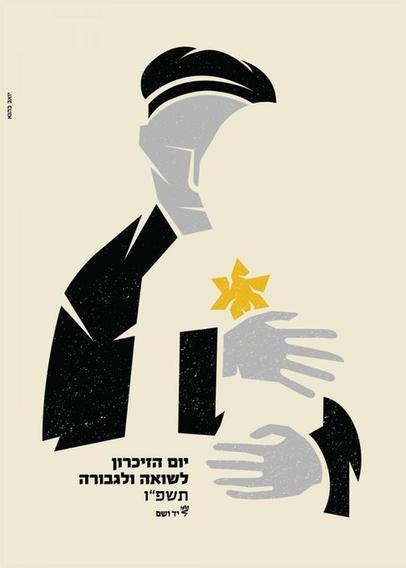
Your photography history post for today: By Henryk Ross (1910–1991), photo of a Łódź Ghetto scarecrow with Star of David, ca. 1940-1944, Museum of Fine Arts, Boston. Today is Yom HaShoah (Holocaust Martyrs' and Heroes' Remembrance Day), remembering the 6 million Jewish lives lost in the Holocaust. #PhotographyHistory #YomHashoa #holocaust #photography
From ‘The Jewish Photographer Henryk Ross: “I wanted to leave a historical record of our martyrdom",’ by Franziska Reiniger, Yad Vashem, The World Holocaust Remembrance Center: ‘When the Lodz Ghetto was sealed by the Germans in May 1940, Ross was forced to move into the ghetto. He managed to get a job as one of the official photographers in the ghetto. Along with his colleague Mendel Grossman, Ross was in charge of producing identity and propaganda photographs for the Department of Statistics in the Lodz Ghetto. Due to his task, Ross had access to film and processing facilities in the ghetto. He used these to secretly document the conditions in the ghetto, the suffering of the Jews there, and the brutality of the Germans. His work was an act of resistance against the prohibition of the Germans and the ghetto authorities to take pictures that were not officially approved. He hid his camera underneath his coat, opened it slightly, and snapped the photographs. Ross exposed himself to dangers and risked his life in order to take the pictures. In this fashion, he accumulated thousands of pictures that tell us what life was like in the Lodz Ghetto.
When the liquidation of the ghetto began in 1944, Ross buried his archive in the ground of the ghetto, so it could be dug up and could bear witness to the persecution of European Jewry after the war.
“Just before the closure of the ghetto (1944) I buried my negatives in the ground in order that there should be some record of our tragedy, namely the total elimination of the Jews from Lodz by the Nazi executioners. I was anticipating the total destruction of Polish Jewry. I wanted to leave a historical record of our martyrdom."…
Henryk Ross stayed behind in the ghetto as part of the clean-up commando. He survived the Holocaust, and located and dug up the documentary material after the war.’

 Antisemitismusbeauftragte NRW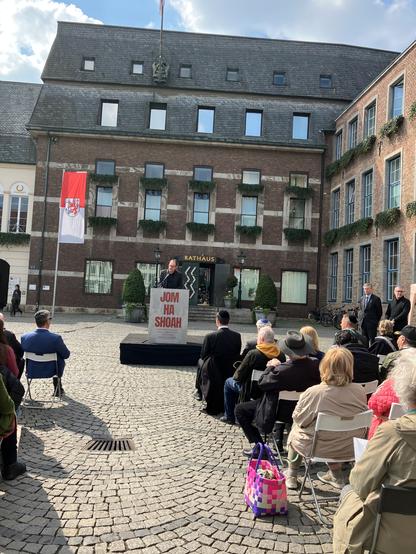
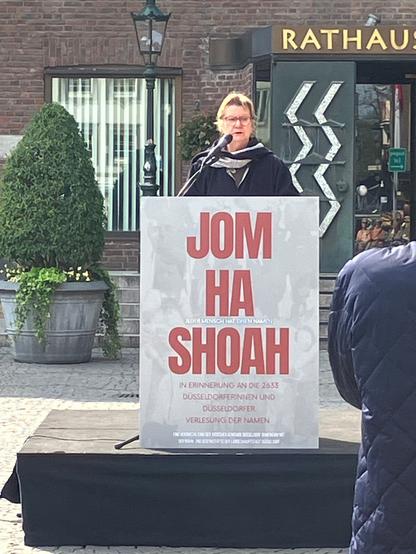
 Infoportal Düsseldorf
 Judah The Mac

 Daniel Kosmopolityczny 🇺🇦🇪🇺
 speaker_hat
 Christina Zacker