 WHO
WHOSafe drinking water 💧 is a basic human right, yet 2.1 billion people or 1 in 4 globally still live without it.
The most vulnerable people face the greatest inequalities.
More in the new WHO/@unicef.org report 👉 bit.ly/3UOAdg9 #WorldWaterWeek
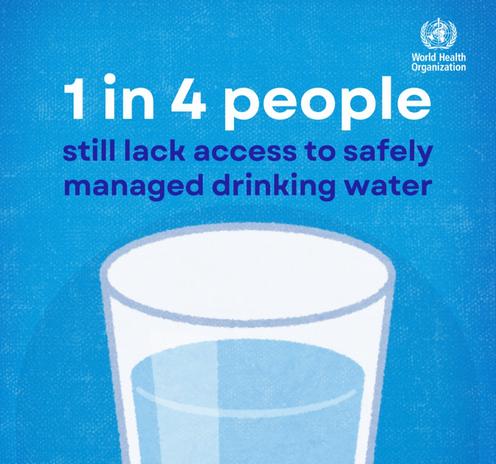

To mark World Water Week 2025, new report highlights persistent inequalities, with vulnerable communities left behind.Despite progress over the last decade, billions of people around the world still lack access to essential water, sanitation, and hygiene services, putting them at risk of disease and deeper social exclusion. A new report: Progress on Household Drinking Water and Sanitation 2000–2024: special focus on inequalities –launched by WHO and UNICEF during World Water Week 2025 – reveals that, while some progress has been made, major gaps persist. People living in low-income countries, fragile contexts, rural communities, children, and minority ethnic and indigenous groups face the greatest disparities. Ten key facts from the report:Despite gains since 2015, 1 in 4 – or 2.1 billion people globally – still lack access to safely managed drinking water*, including 106 million who drink directly from untreated surface sources.3.4 billion people still lack safely managed sanitation, including 354 million who practice open defecation. 1.7 billion people still lack basic hygiene services at home, including 611 million without access to any facilities. People in least developed countries are more than twice as likely as people in other countries to lack basic drinking water and sanitation services, and more than three times as likely to lack basic hygiene.In fragile contexts**, safely managed drinking water coverage is 38 percentage points lower than in other countries, highlighting stark inequalities. While there have been improvements for people living in rural areas, they still lag behind. Safely managed drinking water coverage rose from 50 per cent to 60 per cent between 2015 and 2024, and basic hygiene coverage from 52 per cent to 71 per cent. In contrast, drinking water and hygiene coverage in urban areas has stagnated. Data from 70 countries show that while most women and adolescent girls have menstrual materials and a private place to change, many lack sufficient materials to change as often as needed.Adolescent girls aged 15–19 are less likely than adult women to participate in activities during menstruation, such as school, work and social pastimes.In most countries with available data, women and girls are primarily responsible for water collection, with many in sub-Saharan Africa and Central and Southern Asia spending more than 30 minutes per day collecting water. As we approach the last five years of the Sustainable Development Goals period, achieving the 2030 targets for ending open defecation and universal access to basic water, sanitation and hygiene services will require acceleration, while universal coverage of safely managed services appears increasingly out of reach. “Water, sanitation and hygiene are not privileges, they are basic human rights,” said Dr Ruediger Krech, Director a.i, Environment, Climate Change and Health, World Health Organization. “We must accelerate action, especially for the most marginalized communities, if we are to keep our promise to reach the Sustainable Development Goals.”“When children lack access to safe water, sanitation, and hygiene, their health, education, and futures are put at risk,” said Cecilia Scharp, UNICEF Director of WASH. “These inequalities are especially stark for girls, who often bear the burden of water collection and face additional barriers during menstruation. At the current pace, the promise of safe water and sanitation for every child is slipping further from reach – reminding us that we must act faster and more boldly to reach those who need it most.” Notes for editors: Download the full report Multimedia material is available hereThis latest update – produced by WHO/UNICEF Joint Monitoring Programme for Water Supply, Sanitation and Hygiene (JMP) – provides new national, regional and global estimates for water, sanitation and hygiene services in households from 2000 until 2024. The report also includes expanded data on menstrual health for 70 countries, revealing challenges that affect women and girls across all income levels. The report is being launched during World Water Week 24-28 August 2025, the leading annual conference on global water issues, and bringing together stakeholders from across sectors to accelerate progress towards the Sustainable Development Goals.____________________________ *JMP definition of ‘Safely managed drinking water and sanitation services’: Drinking water from sources located on premises, free from contamination and available when needed, and using hygienic toilets from which wastes are treated and disposed of safely.**Fragile contexts: Fragility, according to the OECD, is the combination of exposure to risk and insufficient coping capacities of the state, system and/or communities to manage, absorb or mitigate those risks. It occurs in a spectrum of intensity across six dimensions: economic, environmental, human, political, security and societal.About the JMPThe WHO/UNICEF Joint Monitoring Programme for Water Supply, Sanitation and Hygiene (JMP) was established in 1990 and has been tracking global progress for 35 years. It is responsible for monitoring Sustainable Development Goal targets 1.4, 6.1 and 6.2, which call for universal access to safe water, sanitation, hygiene and the elimination of open defecation by 2030.For more information, please contact:WHO: [email protected]: Iris Bano Romero | UNICEF New York | +1 9178048093 | [email protected]
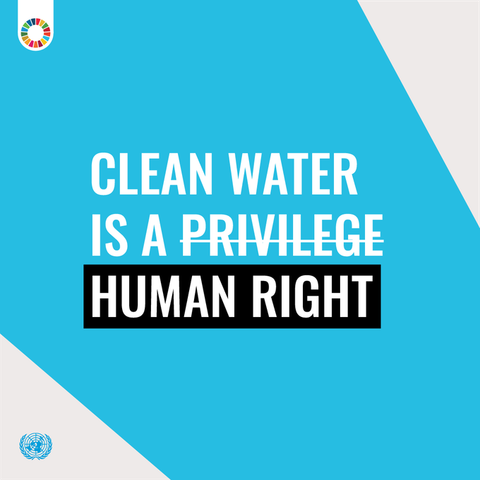
L'eau est un droit, pas un privilège.
Pourtant, des milliards de personnes n'ont pas accès à l'eau potable et à l'assainissement.
En cette #WorldWaterWeek, engageons-nous à protéger cette ressource précieuse. https://un.org/sustainabledevelopment/fr/water-and-sanitation/

#Diné Youth at #WorldWaterWeek in Sweden 2024
#BlackMesa youth travel to Stockholm, Sweden, for World Water Week to share the need to protect our water in the face of #FalseSolutions and #ClimateChange.
by Adrian Herder, Media/Community Organizer, #CensoredNews
[email protected]
FLAGSTAFF, Arizona – "On Friday, August 23, 2024, members of #TóNizhóníÁní traveled to Stockholm, Sweden, for World Water Week 2024, an international leading conference on global water issues organized by the Stockholm International Water Institute. Earlier this year, Tó Nizhóní Ání was invited to attend World Water Week 2024 and asked to be on a panel on #GreenColonialism. The #Sámi national youth organization, #Sáminuorra, organized this panel. Given this panel's #Indigenous youth focus, Tó Nizhóní Ání took this opportunity to fund raise and send a delegation of Diné (#Navajo) youth from the Black Mesa region to represent and speak on this topic.
"During the panel on Green Colonialism, #JarenNumkena, Diné youth from Black Mesa, spoke on his upbringing as a farmer, the history of his family as a #coal-impacted community member, and the proposed projects on and near Black Mesa, such as the #BlackMesaPumpedStorageProject and the #HydrogenPipeline. As our nation moves to alternative forms of energy, we must do so in a way that does not use or impact our water on the #NavajoNation, which is why we need #solar and #wind energy."
Read more:
https://bsnorrell.blogspot.com/2024/09/dine-youth-at-world-water-week-in.html
#WaterIsLife #WaterProtectors #RenewablesNow #Greenwashing #NoMiningWithoutConsent #RecycleCopper #LithiumAlternatives #PeabodyCoal #PeabodyEnergy #CorporateColonialism #ProtectTheSacred #ProtectMotherEarth #ReaderSupportedNews
RT by @EU_ENV: #WorldWaterWeek kicks off today, highlighting the critical role of global water cooperation in building a peaceful and sustainable future.
More on UNEP’s works to protect & restore freshwater ecosystems: https://www.unep.org/topics/fresh-water
[2024-08-25 06:10 UTC]
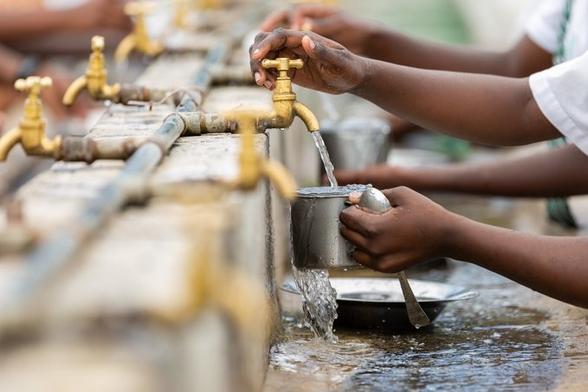
What: World Water Week: Presentation of Joint Report Who: The African Development Bank, the South African Water Research Commission, and Human Right 2 Water When: Sunday 25 August 2024, 7:00 – 9:30 (GMT+2) Where: Stockholm, Sweden The Water and Sanitation Development Department of the African Development Bank Group is participating in World Water Week, taking place in Stockholm, Sweden from 25 to 29 August 2024.
 Headlines Africa
 GREUBE HUMAINE
 DoomsdaysCW
 BlueNews
 Renatomancer
 EU Environment