@photography

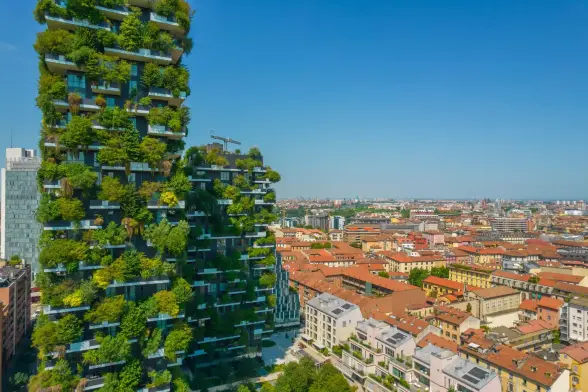
Stefano Boeri Architects built its first vertical forest, or Bosco Verticale, a decade ago in the Milan district of Porta Nuova.

Photograph: Audrius Venclova/Alamy

#Italy
#VerticalForests
#architecture

@photography

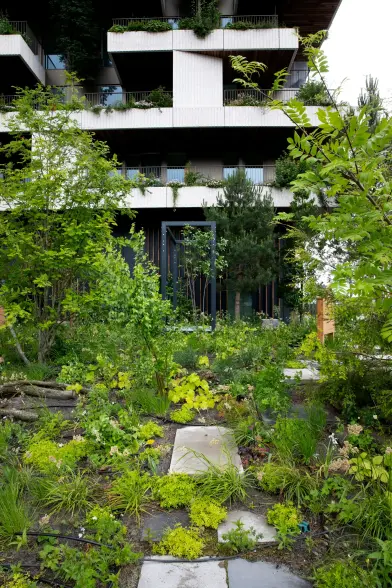
Designed by Stefano Boeri Architects and MVSA Architects, it’s the newest of many vertical forests cropping up in cities around the world.

Photograph: Judith Jockel/The Guardian

#Netherlands
#VerticalForests

A new tower brings apartments, office space and tens of thousands of plants to the heart of Utrecht

‘The buildings change color and shape with relation to the season.’

‘We’re used to thinking of architecture as stable, but these change continuously and every year is different.’

Photograph: Judith Jockel/The Guardian

@photography
#Netherlands
#architecture
#VerticalForests

First vertical forest towers by Stefano Boeri open in China

The first tenants have moved into Italian architect Stefano Boeri's Easyhome Huanggang Vertical Forest City Complex, the first of his vertical forest towers to open in China.

People began moving into the residential part of the development, which covers 4.54 hectares and is composed of five towers in total, a few weeks ago.

The complex's two residential towers are 80 metres high and covered in more than 400 trees, as well as other plants and greenery.

The tower has both open and closed balconies

Located in Huanggang in China's Hubei province, the plant-covered towers are a new kind of vertical forest that combine open and closed balconies, according to the studio.

Vertical forests are a building type invented by Boeri with facades covered with trees and plants. Existing vertical forest buildings by his studio, Stefano Boeri Architetti, usually feature just open balconies.

The structure of the Chinese complex was designed so that the foliage on the balconies would "fit perfectly" into the facade design.

The vertical forest tower is covered in over 400 trees

"The Huanggang version is characterised by the presence of openable bow windows with indoor plants that on their cover host a balcony with a pot for large trees," studio founder Boeri told Dezeen.

This design will ensure that the tenants are surrounded by trees.

"The design allows an excellent view of the tree-lined facades, enhancing the sensorial experience of the greenery and integrating the plant landscape with the architectural dimension," Boeri said.

"Thus, the inhabitants of the residential towers have the opportunity to experience the urban space from a different perspective while fully enjoying the comfort of being surrounded by nature."

Shrubs and perennial grass add to the greenery

The studio used local tree species for the 404 trees that clad the building, including Ginkgo biloba, Osmanthus fragrans, Acer griseum, Ligustrum lucidum and Chimonanthus praecox.

Easyhome Huanggang Vertical Forest City Complex also features 4,620 shrubs and 2,408 square metres of perennial grass, flowers and climbing plants.

[

Read:

Stefano Boeri covers social housing tower with 10,000 plants

](https://www.dezeen.com/2021/10/14/trudo-vertical-forest-social-housing-stefano-boeri-eindhoven-architecture/)

According to the studio, the trees and greenery will absorb 22 tons of carbon dioxide per year and produce 11 tons of oxygen per year.

As well as the tree-covered residential towers, the development, which Stefano Boeri Architetti describes as a "green complex," will also house hotels and large commercial spaces.

Extruded volumes sit between the trees

Easyhome Huanggang Vertical Forest City Complex is the first vertical forest building to open in China and Boeri thinks these types of buildings could be especially suitable for the country.

"In China we are experiencing a great interest in greenery and urban forestry these last years, also as a tool for absorbing the fine dust which is one of the main factors of air pollution in cities," Boeri said.

The two residential towers are part of a larger development

His studio will also shortly open two vertical forest towers in Nanjing, which were first unveiled in 2017.

"In this country, as well as in Huanggang and Nanjing – where in the next few weeks we will inaugurate two towers of vertical forests to house offices and a hotel– we are designing many different versions of vertical forest, of different heights and nature, in many other cities," Boeri said.

A stepped design allows trees to grow

"The vertical forest model in residences will fundamentally transform the landscape of future cities and change people's expectations for future ecological life," Xu Yibo, partner of Stefano Boeri Architetti China, said.

Boeri's earlier vertical forest designs include the very first one, Bosco Verticale in Milan, which contained luxury apartments, as well as his most recent one, Trudo Vertical Forest in Eindhoven.

The Eindhoven iteration of the concept was designed for social housing and features over 10,000 plants.

The photography is by RAW Vision Studio.

Project credits:

Project: Stefano Boeri Architetti China
Founder and partner: Stefano Boeri
Partner: Yibo Xu
Project director: Pietro Chiodi
Project architect: Huang Yitao
Design team: Yinxin Bao, Siyu Lei, Lei Cui, Jinye Du, Yifan Fei, Zhiyang Huang, Mohamed Hassan Ali Elgendy, Luca Xu, Liu Juan, Cecilia Picello, Sebastiano Cattiodoro, Linhong Jiang, Jialun Yuan, Mohamed Yasser Elsarif
Business manager: Palace Gong
Plantation consultant: Studio Laura Gatti
Structural design consultant: Luca Buzzoni, ARUP (Italy)
LDI: Central-South Architectural Design Institute Co., Ltd.
Wind test: RWDI
Construction: China Construction Third Engineering Bureau Group Co.,Ltd
Landscape construction: Landscape Architecture Corporation of China Co., Ltd.
Visual: LIFANG (Shanghai) Digital Technologies Co., Ltd. ; Shanghai Skyin Visual Arts Co. Ltd

The post First vertical forest towers by Stefano Boeri open in China appeared first on Dezeen.

#residential #all #architecture #news #china #stefanoboeri #plantcoveredbuildings #verticalforests

First vertical forest towers by Stefano Boeri open in China

The first tenants have moved into Italian architect Stefano Boeri's Easyhome Huanggang Vertical Forest City Complex, the first of his vertical forest towers to open in China.

Dezeen

Stefano Boeri covers social housing tower with 10,000 plants

Italian architect Stefano Boeri has completed the plant-covered Trudo Vertical Forest social housing tower in Eindhoven.

The housing block is 70 metres tall and surrounded with staggered, protruding balconies that support over 10,000 plants.

It is Stefano Boeri Architetti's first "vertical forest" in the Netherlands.

The Trudo Vertical Forest by Stefano Boeri Architetti is located in Eindhoven. Photo by Paolo Rosselli.

Unlike earlier vertical forests including Bosco Verticale that contained luxury apartments, the 18-storey tower has 125 affordable social housing units.

"The Eindhoven social housing tower establishes the possibility of combating both climate change and resolving the problem of housing through interpreting the idea of urban forestation," said Stefano Boeri Architetti partner Francesca Cesa Bianchi.

"Not only as a necessity in order to improve the environments in cities around the world, but also a great opportunity to improve the living conditions of poorer citizens," she told Dezeen.

The building incorporates over 10,000 plants and trees across its exterior. Photo is by Paolo Rosselli.

Trudo Vertical Forest is wrapped in white concrete horizontal bands that envelop the building between strips of solar-reflective glazing.

From the horizontal concrete bands, staggered planter balconies were extruded at different widths, heights and depths. These balconies support 10,135 plants, shrubs and trees.

The exterior is covered in protruding balconies of different sizes. Photo is by Paolo Rosselli.

The extruded planter balconies house the vertical forest and were fitted with sensors that monitor the hydration and nutrition levels of the soil.

The studio explained that it rationalised a number of technical solutions, used prefabricated components and cost-efficient materials in order to meet the budget constraints of social housing.

Plants and trees will annually absorb over 50 tonnes of CO2 and over 13 tonnes of oxygen

"The use of latest generation construction technologies, the rationalisation of certain technical solutions for the facades and more generally, the optimisation of resources related to the project and the construction of the building allowed to achieve the goal to realise a Vertical Forest especially intended to accommodate low-income users and young couples," said Cesa Bianchi.

"The materials chosen such as concrete and prefabricated components ensured cost containment in a strategy consistent with the inner nature of social housing," she continued.

"The design itself focused on finding the best performing solution, which could provide the right balance between aesthetic and economic objectives."

Apartment terraces are adjoined to the large planters

According to the studio, each year the vertical forest will absorb over 50 tonnes of CO2 and over 13 tonnes of oxygen.

The practice added solar panels to the roofs of adjacent buildings in order to produce some of the energy consumed by the tower, while a reservoir-cum-rainwater collection system was installed to irrigate the planting.

The apartments are to be rented as affordable social housing

Each of the 50-square-metre apartments has reconfigurable space with ceiling heights of at least 3.5 metres. Every apartment has its own balcony fitted with green boxes that contain a single tree and 20 bushes.

"On Trudo Tower plants and trees are inserted not only in tanks – just as in the Bosco Verticale in Milan – but also in vases placed at the same level as the terrace," added Stefano Boeri Architetti founder Stefano Boeri.

"This design has been led by the desire to offer multiple connections between inside and outside and humans and vegetation," he told Dezeen.

The apartments each have a balcony

The building accounts and accommodates for its tree's increase in weight and size by estimating that each tree could double in weight during its lifetime.

The tower's vertical forest will be monitored by abseiling gardeners who will maintain and prune its trees and shrubs.

The practice used prefabricated components to construct the building

Trudo Vertical Forest is one of many vertical forests designed by Stefano Boeri Architetti. In 2019 the practice unveiled plans to build a tower with vertical forest in Tirana, Albania.

More recently the practice completed a building in Antwerp which was wrapped in over 1,000 plants.

Photography is byNorbert van Onna unless stated otherwise.

The post Stefano Boeri covers social housing tower with 10,000 plants appeared first on Dezeen.

#residential #all #architecture #netherlands #eindhoven #stefanoboeri #socialhousing #plantcoveredbuildings #verticalforests

Stefano Boeri covers social housing tower with 10,000 plants

Italian architect Stefano Boeri has completed a social housing tower in Eindhoven with staggered, protruding balconies that support a vertical forest with over 10,000 plants.