 エミリーSEレクト
【 就職 直結 】王道パターン インフラエンジニア 勉強方法 なら絶対コレ![ インフラエンジニア エンジニア 転職 ]
#ansible #AWS #ChatGPT #iac #Ipアドレス #ITエンジニア #lac #LAMP #lan #osimodel #OSI参照モデル #pc #SE #tcp #tcpipmodel #tcpipprotocol #tcpipprotocoltutorial #terraform #Udemy #v...
【 就職 直結 】王道パターン インフラエンジニア 勉強方法 なら絶対コレ![ インフラエンジニア エンジニア 転職 ]
#ansible #AWS #ChatGPT #iac #Ipアドレス #ITエンジニア #lac #LAMP #lan #osimodel #OSI参照モデル #pc #SE #tcp #tcpipmodel #tcpipprotocol #tcpipprotocoltutorial #terraform #Udemy #v...



Today, I’m excited to share that we have completed the Coursera-Udemy combination, bringing together two mission-driven companies to create one of the world’s most comprehensive skills development platforms.
Coursera and Udemy are now one company
#HackerNews #Coursera #Udemy #merger #online #learning #skills #platform #education
Today, I’m excited to share that we have completed the Coursera-Udemy combination, bringing together two mission-driven companies to create one of the world’s most comprehensive skills development platforms.
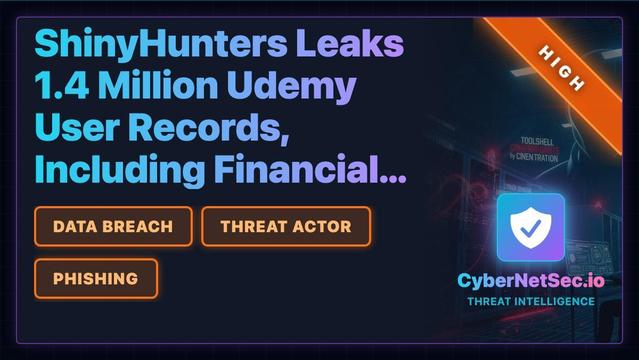
📰 ShinyHunters Leaks 1.4 Million Udemy User Records, Including Financial Data, After Failed Extortion
📚 ShinyHunters strikes again, leaking 1.4M records from Udemy after a failed extortion attempt. Data includes PII and instructor financial payout info. Users should reset passwords & enable 2FA now! #DataBreach #Udemy #ShinyHunters
Seems Udemy got hacked, but hasn't told anyone yet
Received this email about Udemy having been hacked. Doesn’t seem like Udemy feels any urgency in informing anyone.
Hi Jerry, an announcement has been made from Alexander, instructor of Elementor Mastery - Build Amazing Websites With Elementor, The Ultimate WordPress Boot Camp Course - Build 10 Websites and 1 more course.
Hi everyone,
I wanted to reach out directly about a security incident that affects this platform and may affect you.
On April 24, the threat group known as ShinyHunters added Udemy to their data leak site and issued a three-day deadline. The deadline passed on April 27, and the data has now been published. Have I Been Pwned has confirmed the leak contains approximately 1.4 million unique email addresses, along with names, physical addresses, phone numbers, employer information, and for instructors, payout method details (PayPal, cheque, bank transfer information).
As of this announcement, Udemy has not issued a public statement, has not responded to media inquiries, and has not directly notified affected users. I want to be transparent with you that this is the case, because you may not learn about it from Udemy itself.
What you should do right now:
Check your email address at haveibeenpwned.com to confirm whether your account is in the leaked dataset.
Change your Udemy password immediately, and change it anywhere else you may have reused that password.
Enable multi-factor authentication on your Udemy account if you have not already.
Be alert for targeted phishing emails over the coming weeks. Attackers will likely send messages referencing your course history, instructor name, or payout details to appear legitimate. Treat any unexpected email about your account, refunds, or payments with extra scrutiny.
If you are an instructor, monitor your linked payout accounts (PayPal, bank) closely for unusual activity.
I have published a video on my YouTube channel that walks through the breach in detail, explains how this attack pattern works, and covers each of these protective steps in depth. If you find this kind of breakdown useful, the link is below.
https://www.youtube.com/watch?v=Ycbeoibawp8
I will continue to update you here if Udemy issues a statement or if new information emerges. In the meantime, take the steps above and stay vigilant.
Stay safe,
Alex
 Media Japan
 Rich Aesthetic

 Qiita - 人気の記事
 N-gated Hacker News
 Hacker News
 jeff
jeff CyberNetsecIO
 Jerry on PieFed