 Yvonne Perkins
On a walk in the Toolangi State Forest, east of Melbourne today, we saw lots of small holes in the ground on the path.
Does anyone know what would have made these holes?
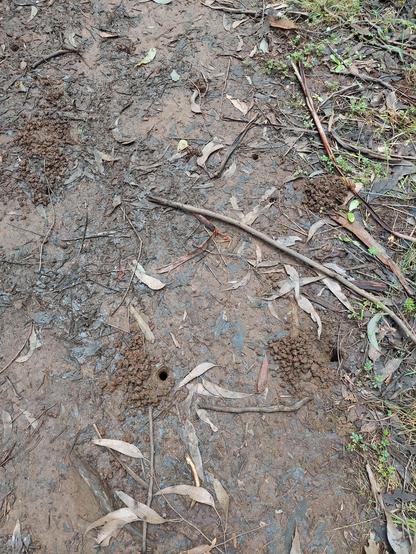
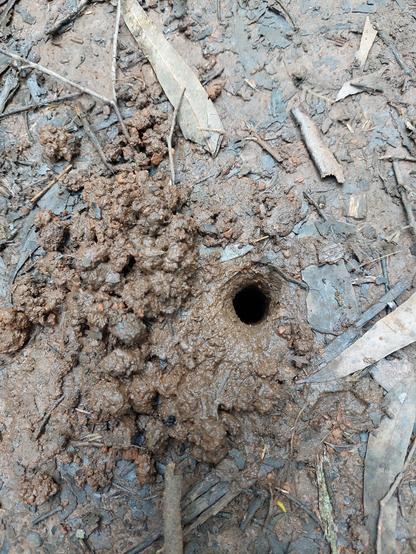
You were all right about the cause of the small holes in the ground pictured above. The Museum of Victoria has adjudicated and declared that the holes are most likely caused by freshwater crayfish. Here is the message I received from them after I submitted the photo as suggested by @stib :
" As you can imagine it is hard to say the species for sure without seeing who is at the bottom of the burrow. It is most likely a species of freshwater burrowing crayfish from the genus Engaeus. From there the most likely maker of the burrow is the species Engaeus hemicirratulus, commonly known as the Gippsland Burrowing Crayfish. This species is known to construct burrows away from water and despite the name there are some locality records on the Atlas of Living Australia website below that come in pretty close to Toolangi."
On a walk in the Toolangi State Forest, east of Melbourne today, we saw lots of small holes in the ground on the path.
Does anyone know what would have made these holes?
If you live in an Australian city, get out into the bush this weekend. It is Spring and the bush is full of growth and happy birds.
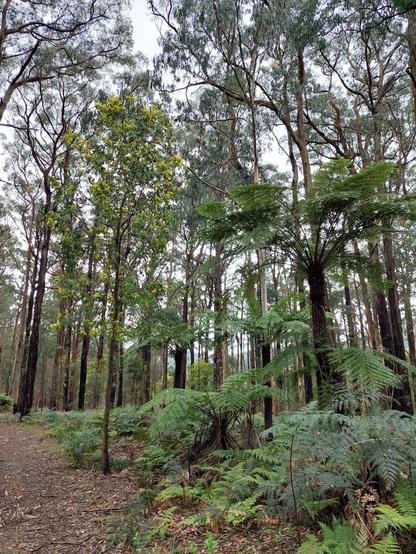
Today we did some short walks in the Toolangi State Forest and a drive on a dirt road out the back of Warbuton. It was glorious! There were explosions of yellow wattle throughout with luscious tree ferns at the base of magnificent Mountain Ash (Eucalyptus regnans).
We heard kookaburras, saw rosellas and breathed in fresh, cool air.