AI as We Know It is Just a Fad
Although AI is certain to transform society, not to mention computing, what we know of it is likely to change and last much longer. This episode of the Tech Field Day podcast brings together Glenn Dekhayser, Alastair Cooke, Allyson Klein, and Stephen Foskett to discuss the real and changing world of AI. Looking at AI infrastructure today, we see massive clusters of GPUs being deployed in the cloud and on-premises to train ever-larger language models, but how much business value do these clusters have long-term? It seems that the true transformation promised by LLM and GenAI will be realized once models are applied across industries with RAG or tuning rather than developing new models. Ultimately AI is a feature of a larger business process or application rather than being a product in itself. We can certainly see that AI-based applications will be transformative, but the vast investment required to build out AI infrastructure to date might never be recouped. Ultimately there is a future for AI, but not the way we have been doing it to date.
https://www.youtube.com/watch?v=4JqYukIg8Z0&list=PL4esUX7mpOVYdVlyHmbi5xVGdnRHUa6tH&index=1
Apple Podcasts | Spotify | Overcast | Amazon Music | YouTube Music | Audio
AI Field Day 5 is our next AI event happening September 11 through September 13. Check out the event page on the Tech Field Day website for more details.
We’re Talking About the Wrong Things When It Comes to AI
The current landscape of artificial intelligence (AI) is undergoing rapid transformation, and what we know of it today may soon be considered outdated. The conversation around AI has shifted significantly, especially with the rise of generative AI, which has captured the public’s imagination and driven massive investments in AI infrastructure. However, the sustainability and long-term business value of these investments are increasingly being questioned.
Initially, the excitement around AI was centered on its integration into various applications, promising to automate and enhance tasks such as log file analysis and predictive maintenance. AI’s ability to process large datasets quickly and identify patterns or anomalies offered clear business benefits, such as reducing unplanned downtime and improving service resolution times. This practical application of AI was seen as a valuable tool for enterprises.
However, the focus has shifted towards generative AI and the development of ever-larger language models. This shift has led to discussions about the power consumption, global trade in GPUs, and the phenomenon of AI “hallucinations”—where AI generates incorrect or nonsensical outputs. These issues pose significant challenges for enterprise IT as they attempt to integrate AI into business processes.
The current approach to AI, characterized by massive GPU clusters and high power consumption, is not seen as sustainable. The investments in AI infrastructure are substantial, with companies spending hundreds of millions of dollars to build single foundational models. This approach is not scalable and does not deliver significant business value to most organizations. The high costs and limited returns suggest that this model of AI development may not be viable in the long term.
There is a growing recognition that AI should be viewed as a feature of larger business processes or applications rather than a standalone product. The true transformation promised by AI will likely be realized when models are applied across industries with techniques such as retrieval-augmented generation (RAG) or fine-tuning existing models, rather than developing new ones from scratch. This approach can provide more immediate and practical business benefits without the need for massive infrastructure investments.
The rapid pace of AI development also means that the technology is constantly evolving. Enterprises are not yet ready for full-scale AI model training, as they often lack the necessary data preparation and infrastructure. Most enterprises are currently using existing models and focusing on RAG or fine-tuning, but even these approaches present challenges. The expectations for AI often exceed the current capabilities, leading to a mismatch between anticipated and actual outcomes.
The future of AI will likely involve more efficient and scalable solutions. Innovations such as on-device inferencing and smaller, more optimized models are already showing promise. These developments could reduce the need for large-scale GPU clusters and make AI more accessible and practical for a wider range of applications.
In conclusion, while AI is certain to transform society and computing, the current approach to AI infrastructure and development is not sustainable. The focus should shift towards integrating AI as a feature within larger business processes and finding more efficient ways to deploy AI technologies. The rapid pace of change in AI means that what we know of it today may soon be considered a fad, but the underlying potential of AI to drive business value and innovation remains strong.
Podcast Information
Stephen Foskett is the Organizer of the Tech Field Day Event Series, now part of The Futurum Group. Connect with Stephen on LinkedIn or on X/Twitter.
Alastair Cooke is a CTO Advisor at The Futurum Group. You can connect with Alastair on LinkedIn or on X/Twitter and you can read more of his research notes and insights on The Futurum Group’s website.
Allyson Klein, Global Marketing and Communications Leader and Founder of The Tech Arena. You can connect with Allyson on Twitter or LinkedIn. Find out more information on the Tech Arena website.
Glenn Dekhayser is the Global Principal at Equinix. You can connect with Glenn on LinkedIn and learn more on his website. You can learn more about Equinix on their website.
Thank you for listening to this episode of the Tech Field Day Podcast. If you enjoyed the discussion, please remember to subscribe on YouTube or your favorite podcast application so you don’t miss an episode and do give us a rating and a review. This podcast was brought to you by Tech Field Day, home of IT experts from across the enterprise, now part of The Futurum Group.
#AI #TFDPodcast #DemitasseNZ #GDekhayser #GestaltIT #SFoskett #TechAllyson #TechFieldDay #TechFieldDayPod #TheFuturumGroup
https://wp.me/p4YpUP-myf
 Stephen Foskett


 Stephen Foskett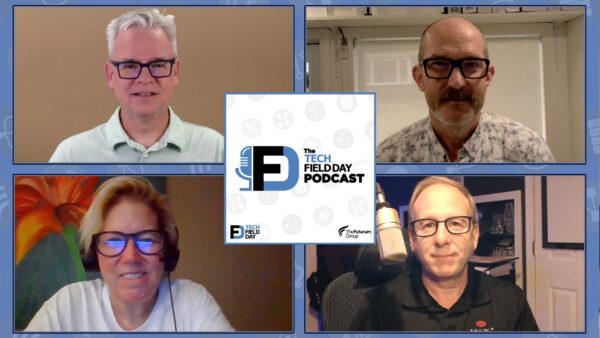

 Gestalt IT

