Good Morning, all,

impressive visualisation of our local neighbourhood from #ESA.

When I say 'local', I mean the bubble of space that extends 4,000 light years from our Solar System. Which represents a tiny fraction of our home galaxy...

BZ! Bravo Zulu #GAIA !

#SpaceExploration #Astronomy
#MilkyWay #StellarFormation
#StellarAstrometry #Astrometry
#Science
https://www.esa.int/Science_Exploration/Space_Science/Gaia/Fly_through_Gaia_s_3D_map_of_stellar_nurseries
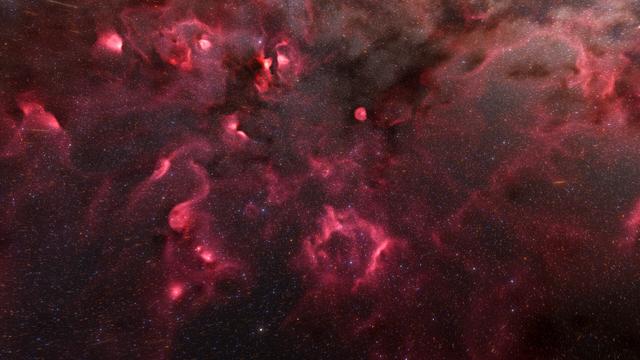
Fly through Gaia’s 3D map of stellar nurseries

Scientists created the most accurate three-dimensional map of star-formation regions in our Milky Way galaxy, based on data from the European Space Agency’s Gaia space telescope. This map will teach us more about these obscure cloudy areas, and the hot young stars that shape them.  

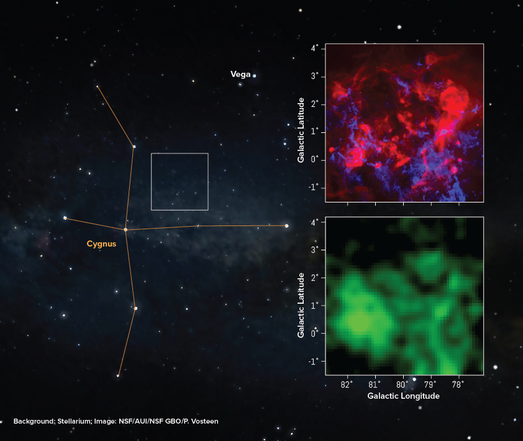
[From atoms to #stars...] Thanks to the NSF's Green Bank Telescope, astronomers (including Luigi Tibaldo from IRAP) have managed to map the dark molecular gas #CO in one of the most active star-forming regions in our galaxy: #CygnusX.

It is now possible to observe the transformation of simple atoms into complex molecular structures that will one day become stars and planets: https://public.nrao.edu/news/astronomers-map-mysterious-dark-gas-in-the-milky-way/ 👍 👏

#astrophysics #stellarformation

[Des atomes aux #étoiles ...] Grâce au Green Bank Telescope de la NSF, des astronomes (dont Luigi Tibaldo de l'IRAP) sont parvenus à cartographier le gaz moléculaire sombre #CO dans l'une des régions de formation stellaire les plus actives de notre galaxie : #CygnusX.

Il devient désormais possible d'observer la transformation d'atomes simples en structures moléculaires complexes qui deviendront un jour des étoiles, des planètes : https://public.nrao.edu/news/astronomers-map-mysterious-dark-gas-in-the-milky-way/ 👍 👏

#astrophysics #stellarformation