 Enrique Arribas-Garde
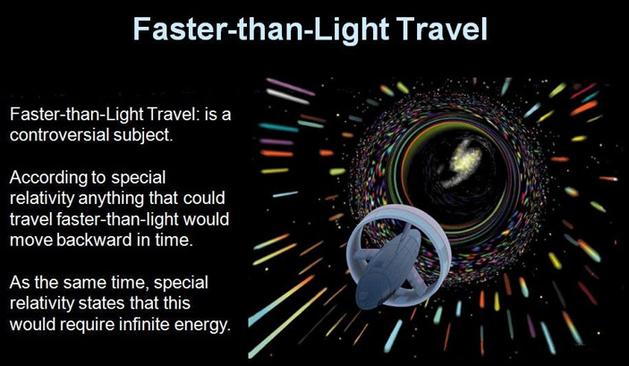
#SpeedOfLight The theory of special relativity, developed by Albert Einstein, demonstrated that the speed of light is constant and does not depend on the movement of the source or the observer. It revolutionized our understanding of space, time , and the fundamental laws of physics.
#SpeedOfLight The speed of light, c, is a fundamental constant in the structure of our universe. It serves as the upper limit of the maximum speed at which both information and energy can travel.
#SpeedOfLight Dark matter is a type of matter that we cannot see (that is the reason for its name), but that we can detect due to its gravity. It is believed to represent 85% of the matter in the universe.

#SpeedOfLight Hermann Bondi also obtained the so-called Bondi mass, which is the maximum value of the mass that a star can have before collapsing into a black hole.

#SpeedOfLight The steady-state theory was later questioned by various observational evidence, the most important being cosmic microwave background radiation; but, instead, it stimulated more research and debate on cosmology.
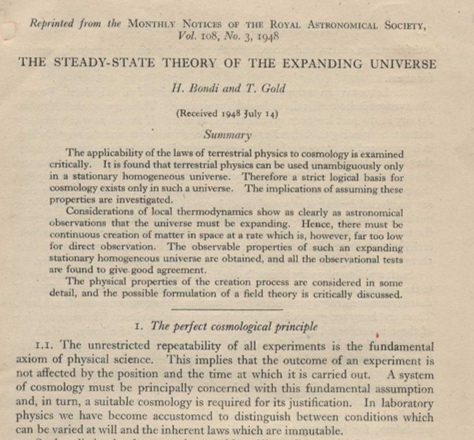
#SpeedOfLight Steady-state theory was an alternative to the Big Bang theory, which implied a beginning and an end to the universe.

#SpeedOfLight Steady-state theory proposed that the universe is expanding but remains essentially the same, with new matter continually being created to fill the gaps produced by the expansion.

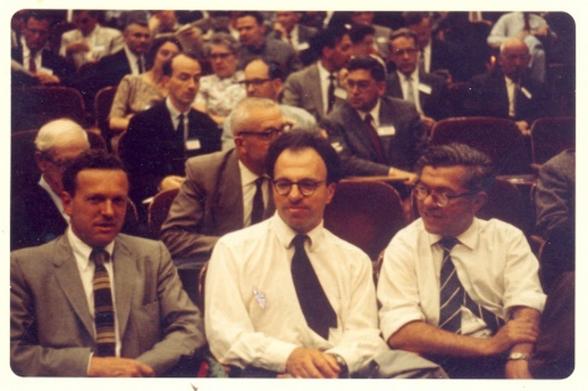
#SpeedOfLight Hermann Bondi, together with Fred Hoyle and Thomas Gold, developed the steady-state theory of the universe in 1948.
#SpeedOfLight The expansion of the universe is a captivating cosmic dance that reveals the dynamic nature of the cosmos. It invites us to explore, question and marvel at the mysteries that lie beyond our reach, reminding us of the infinite wonders that await our discovery.

#SpeedOfLight Research into the expansion of the universe drives scientific progress and deepens our understanding of the cosmos. It feeds the curiosity of the most advanced students, inspires new discoveries and reminds us of the immensity and beauty of the universe we inhabit.
