This is an interesting one - a small-scale, student-led series of high-altitude balloon experiments to build a functioning greenhouse system for space plants. The CO2 needed is provided by fungal mycelium.

https://spacebotany.uk/blog/can-high-flying-fungi-help-plants-breathe-in-space/

#astromycology #astrobotany #SpacePlants

Can High-Flying Fungi Help Plants Breathe in Space? - Space Botany

Mycelium threads spreading through substrate – not the lunar surface, though it could pass for one. Image credit: E Doughty A product originally designed to...

Space Botany

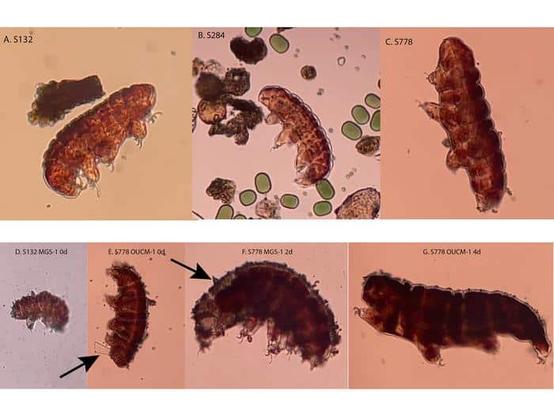
Researchers have done some interesting work exploring how well tardigrades can survive in Martian regolith simulants - and found a simple trick can improve its livability.

https://spacebotany.uk/blog/what-water-bears-tell-us-about-growing-plants-on-mars/

#tardigrades #astrobotany #SpacePlants

What Water Bears Tell Us About Growing Plants on Mars - Space Botany

Even tough little tardigrades struggle to live on Martian regolith - a quick wash could make it much more hospitable.

Space Botany

An update on the Hungarian VITAPRIC experiment to grow microgreens in space - the plant samples have finally made it back home!

https://spacebotany.uk/blog/hungarys-space-grown-microgreens-return-to-earth/

#astrobotany #SpacePlants

Hungary’s Space-Grown Microgreens Return to Earth - Space Botany

Plants grown in space from Hungarian seeds have made their way back to Debrecen University for analysis.

Space Botany

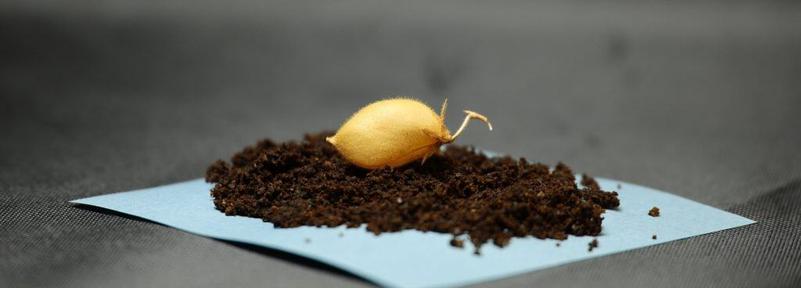
Women-led research has just grown chickpeas from seed to seed in simulated lunar regolith. The trick is to think like a gardener, and let composting worms and friendly fungi lend a hand.

https://spacebotany.uk/blog/fungi-worms-and-chickpeas-growing-food-in-lunar-regolith/

#SpacePlants #astrobotany #iwd2026

Fungi, worms, and chickpeas: growing food in lunar regolith - Space Botany

Header image: The β€˜Myles’ variety of chickpea was chosen for this study as its compact size and resiliency support crop production in space-limited mission environments....

Space Botany

Astronauts on the Chinese space station Tiangong have released a video of their aeroponic tomatoes for Lunar New Year:

https://spacebotany.uk/blog/space-tomatoes-for-lunar-new-year/

#SpacePlants #astrobotany

Space Tomatoes for Lunar New Year - Space Botany

Header image: This screenshot, captured from a video report released by China Media Group (CMG) on 18 February 2026, shows the crew of the Shenzhou...

Space Botany

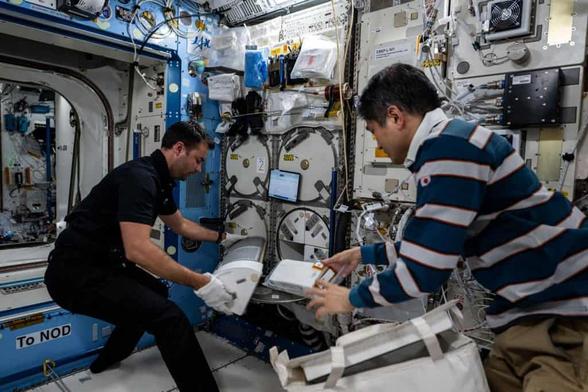
Crew-12 have (at least) 3 plant experiments on their docket for their mission on the International Space Station - Project Rapunzel, ChlorISS and Veg-06.

Details on the blog: https://spacebotany.uk/blog/three-plant-experiments-on-the-iss-for-crew-12/

#astrobotany #Spaceplants

Three Plant Experiments on the ISS for Crew-12 - Space Botany

Crew-12 have at least three plant experiments on the To Do list for their mission to the International Space Station.

Space Botany

This was an article I wrote for my day job, on early experiments exploring whether it would be possible to uses aquatic mosses (like you'd see in an aquarium) as biofilters on Mars.

Of three different species, Taxiphyllum barbieri proved the most pro-moss-ing πŸ˜‚

#astrobotany #SpacePlants #mosstodon

https://www.esa.int/Enabling_Support/Preparing_for_the_Future/Discovery_and_Preparation/Mosses_for_Mars_Testing_Aquatic_Plants_as_Space-Ready_Biofilters

Mosses for Mars: Testing Aquatic Plants as Space-Ready Biofilters

Long-duration space missions will require closed-loop life support systems that can regenerate oxygen and purify water while recycling waste. A recent ESA Discovery project led by the University of Naples Federico II explored whether aquatic mosses – often found in aquariums – could combine oxygen production with water filtration in compact, low-maintenance systems.

I published a new edition of the Mission Report yesterday, which includes seeds flying on Artemis II, Grok growing a potato, liverworts, space puddles and a new Deep Space Food Challenge.

https://spacebotany.uk/blog/mission-report-27-january-2026/

#astrobotany #Spaceplants

Mission Report: 27 January 2026 - Space Botany

My latest round-up of news from the world of space plants and astrobotany includes seeds flying on Artemis II, Grok growing a potato, liverworts, space puddles and a new Deep Space Food Challenge!

Space Botany

A newly-developed quinoa variety is bringing cultivation back to Argentina - and it may also be headed into space.

https://spacebotany.uk/blog/ancestral-crop-makes-a-comeback-and-eyes-the-stars/

#SpacePlants #astrobotany

Ancestral Crop Makes a Comeback – and Eyes the Stars - Space Botany

Header image: Quinoa growing in a UK garden, December 2009. Image credit: Emma Doughty Argentina’s agricultural research agency INTA has proposed sending seeds of a...

Space Botany

New on the blog - The Martian Grow project has big plans for space-flown Cannabis seeds this year.

#astrobotany #SpacePlants

https://spacebotany.uk/blog/martian-grow-cannabis-seeds-in-space/

Martian Grow: Cannabis Seeds in Space - Space Botany

The Martian Grow project has big plans with space-flown Cannabis seeds in 2026.

Space Botany