Possible Discovery of Luna 9, First Soviet Moon Lander, 60 Years Later

https://newsletter.tf/luna-9-moon-lander-found-1966/

Scientists may have found the lost Soviet Luna 9 Moon lander, the first to land softly and send pictures from the Moon in 1966.

#Luna9, #MoonLanding, #SpaceHistory, #SovietSpace, #LunarExploration

Old Soviet Moon Lander, Luna 9, Might Be Found After 60 Years

Sixty years ago, the Soviet Union's Luna 9 was the first to land softly on the Moon. It sent back the first pictures from the Moon's surface. Now, using new computer tools and help from many people, scientists think they may have found where it landed.

https://newsletter.tf/luna-9-moon-lander-found-1966/

#Luna9, #MoonLanding, #SpaceHistory, #SovietSpace, #LunarExploration

Old Soviet Moon Lander, Luna 9, Might Be Found After 60 Years

Scientists think they might have found Luna 9, the first Soviet spacecraft to land on the Moon in 1966. New technology is helping search for it.

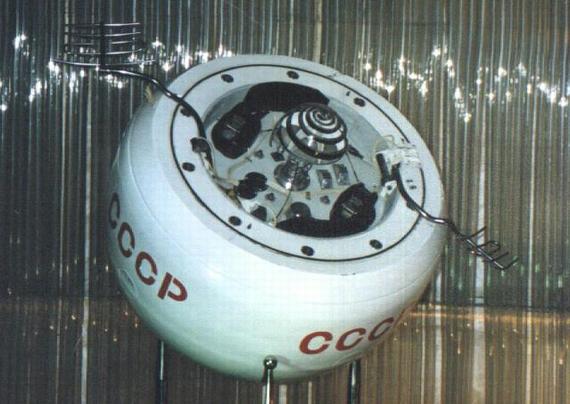
A 50-year-old Cold War relic, the Kosmos 482 Venus probe, is falling back to Earth. Its tough Venus-lander design means it will likely survive reentry. A rare piece of space history returns. #SpaceJunk #Kosmos482 #SovietSpace
A Soviet Venus probe from 1972 is set to re-enter Earth's atmosphere soon, and parts of it might survive the plunge timesca.com/soviet-space... #SovietSpace #VenusProbe #SpaceHistory #SpaceNews #Baikonur #Kazakhstan

Soviet Space Probe to Fall to ...
Soviet Space Probe to Fall to Earth 50 Years After Baikonur Launch - The Times Of Central Asia

In 1972, the Soviet Union launched a Venus-bound lander probe called Cosmos 482 from the Baikonur Cosmodrome in Kazakhstan, which was then a Soviet republic.

The Times Of Central Asia
A Soviet Venus probe from 1972 is set to re-enter Earth's atmosphere soon, and parts of it might survive the plunge https://timesca.com/soviet-space-probe-to-fall-to-earth-50-years-after-baikonur-launch/ #SovietSpace #VenusProbe #SpaceHistory #SpaceNews #Baikonur #Kazakhstan
Soviet Space Probe to Fall to Earth 50 Years After Baikonur Launch - The Times Of Central Asia

In 1972, the Soviet Union launched a Venus-bound lander probe called Cosmos 482 from the Baikonur Cosmodrome in Kazakhstan, which was then a Soviet republic.

The Times Of Central Asia
Heads up: A failed Soviet Venus lander, Kosmos 482, orbiting since 1972, is expected to make an uncontrolled reentry around May 10th. Built tough for Venus, the 1091lb piece might survive the fall, though the personal risk is tiny.
#SpaceJunk #Kosmos482 #SovietSpace
Today is (roughly, depending on your timezone) the 47th anniversary of the launch of #Soyuz 9. This mission was launched in preparation for the #Salyut space station missions which would launch in the following year. The scientific goal was to investigate the physiological and psychological effects on the crew of a long term stay in space, while the political goal was to re-take the space endurance record set by the US five years earlier when the crew of #Gemini 7 spent just short of 14 days in space. The two-person Soyuz 9 crew stayed 18 days, setting a new record which remains the longest stay in space achieved using a single vehicle. After a safe reentry and landing, the cosmonauts had to be helped out of the descent module and had difficulty walking for days afterward as they re-adapted to Earth's gravity. #spacehistory #sovietspace https://gnusocial.no/attachment/537816
Today is (roughly, depending on your timezone) the 46th anniversary of the launch of #Soyuz 11. Following the earlier failure of Soyuz 10 to dock with #Salyut 1, Soyuz 11 docked successfully with the world's first space station. The three cosmonauts remained on the station for 22 days, setting a space endurance record and gathering valuable experience relating to long-term living in space. The mission ended in tragedy when the descent module depressurised in orbit during preparations for reentry, resulting in the rapid asphyxiation of the crew. The descent module subsequently reentered under automatic control. Recovery crews were shocked to find the crew dead, having attributed the lack of contact to a radio fault. The deaths of the Soyuz 11 crew remain to date the only deaths to have occurred in space, as opposed to during launch or reentry. #spacehistory #sovietspace https://gnusocial.no/attachment/533936