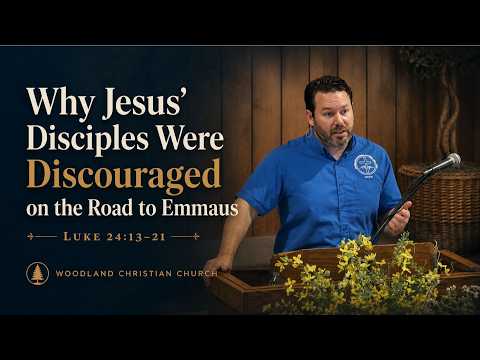
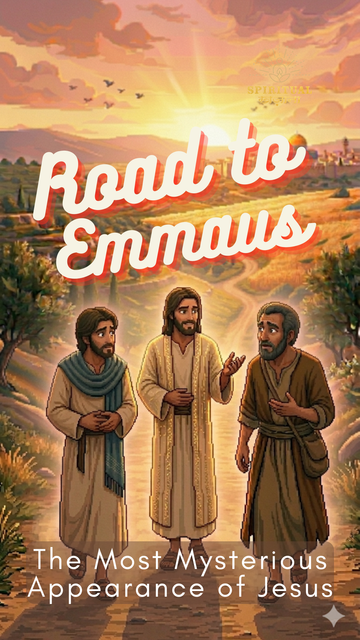
The Road to Emmaus: The Most Mysterious Appearance of Jesus
Two disciples were walking home in confusion after the crucifixion of Jesus. Their hopes were shattered and their faith shaken. But on the Road to Emmaus,... More details… https://spiritualkhazaana.com/web-stories/the-road-to-emmaus-appearance-of-jesus/
If you enjoy Bible stories explained in a clear and engaging way, make sure to like, subscribe, and share this video.
#BibleStory #RoadToEmmaus #JesusResurrection #BibleStories #ChristianContent #FaithStories #JesusChrist #BibleExplained

When Scripture Sets the Heart Ablaze

A Day in the Life

“Did not our heart burn within us while He talked with us on the road, and while He opened the Scriptures to us?”
Luke 24:32

I often find myself walking the Emmaus road without realizing it. Not literally, of course, but inwardly—moving through the day with conversations running in my head, trying to make sense of events that do not align with what I expected God to do. The two disciples in Luke 24 were doing exactly that. They were earnest, faithful men, replaying the recent events in Jerusalem and attempting to reconcile their hopes with a crucified Messiah. They were not casual observers of Jesus; they had invested their trust in Him. Yet now, disappointment clouded their vision, and confusion dulled their hope. What strikes me is that Jesus did not rebuke them for their bewilderment. He joined them.

Luke tells us that Jesus “drew near and went with them,” though their eyes were kept from recognizing Him. That detail matters. Christ does not wait for perfect understanding before He comes alongside us. He joins those who are honestly seeking, even when their theology feels shaky and their emotions unsettled. As they walked, Jesus listened. Then He began to interpret the Scriptures, showing how Moses and the Prophets pointed to the Messiah who must suffer before entering glory. Their circumstances had not changed, but their understanding began to shift. The Greek phrase describing their experience—kaiomenē hē kardia, “their heart was being kindled”—suggests a steady inner awakening, not a sudden emotional surge.

This is where I recognize my own need. Like those disciples, I often try to interpret life from my limited vantage point. The Emmaus travelers assumed that the death of Jesus meant the failure of God’s plan. Jesus, however, revealed that the cross was not a contradiction of Scripture but its fulfillment. As biblical scholar N. T. Wright observes, “They thought they knew the story God was telling, but Jesus shows them that God’s story was larger, deeper, and more costly than they had imagined.” That insight still rings true. When Jesus opens the Scriptures, He does more than provide information; He reorients the heart.

What transforms the scene is not merely that Jesus explains the Bible, but that He does so in the midst of their lived experience. Scripture is not treated as a detached text but as a living word that interprets reality. Hebrews reminds us that “the word of God is living and active” (Hebrews 4:12). The Emmaus disciples did not feel inspired because they heard something new; they felt awakened because truth met them precisely where confusion had settled. Their doubts did not vanish because circumstances changed, but because Christ’s presence reframed those circumstances.

Later, when Jesus breaks bread with them, their eyes are opened, and then He vanishes from their sight. Interestingly, they do not despair at His disappearance. Instead, they reflect on what had already happened within them. Recognition comes after illumination. This order is pastorally significant. We often want immediate clarity—visible proof before trust—but Jesus reverses that pattern. He allows the Scriptures, attended by His presence, to do their quiet work first. Only then do the disciples realize they have been walking with the risen Lord all along.

Once their hearts are ignited, they cannot remain where they are. Despite the late hour and the long road back, they return to Jerusalem to tell others what they have experienced. Encounter with the living Christ through Scripture always moves outward. As John Calvin once noted, “The Word is not given to be shut up in the heart, but to break forth in confession.” When Christ reorients us, He also re-commissions us.

If your own circumstances feel confusing today, the Emmaus story offers both comfort and direction. Jesus still draws near through the Scriptures. He still walks with those who are willing to bring their questions honestly before Him. When we open the Bible prayerfully, we are not merely seeking answers—we are welcoming Christ to interpret our lives. Over time, we may notice what those disciples noticed: a quiet burning within, an inner assurance that God is at work, even when the road ahead remains long.

For further reflection on the Emmaus encounter, see this thoughtful article from Bible Project:
https://bibleproject.com/articles/road-to-emmaus/

FEEL FREE TO COMMENT, SUBSCRIBE, AND REPOST, SO OTHERS MAY KNOW


#ChristianDiscipleshipJourney #JesusOpensScripture #livingWordOfGod #Luke24Devotional #RoadToEmmaus

When Jesus Walks Beside Us Unrecognized

A Day in the Life of Jesus

There are days when I read the Emmaus road account and realize how easily I could have been one of those two disciples. Luke tells us that “that very day”—the first Easter Sunday—two followers were walking away from Jerusalem, carrying confusion, disappointment, and grief in equal measure. They were not abandoning faith altogether; they were simply trying to make sense of shattered expectations. As I walk with them through Gospel of Luke 24:13–35, I sense how close Jesus often is when clarity feels far away. The risen Christ draws near, not with spectacle, but with presence. He listens before He teaches, asks questions before He gives answers, and joins them in their sorrow before reframing their hope.

What strikes me first is that Jesus allows them to speak freely. He asks, “What are you discussing together as you walk along?” and Luke says they “stood still, looking sad.” Grief has a way of stopping us in our tracks. Cleopas speaks for both of them, explaining that they had hoped Jesus would be the one to redeem Israel. That word “redeem” carried political and national weight in their minds. Like many of us, they were faithful readers of Scripture yet selective interpreters. They knew the promises but filtered them through cultural expectations. Even today, we often want redemption without suffering, victory without the cross, resurrection without Good Friday. The irony is painful: they are explaining Jesus to Jesus, unaware that the answer to their despair is walking right beside them.

When Jesus responds, His words sound sharp to modern ears: “How foolish you are, and how slow of heart to believe.” The Greek term anoētos (ἀνόητος) does not mean unintelligent but “unthinking” or “undiscerning.” He is not insulting them; He is diagnosing a spiritual blindness shaped by incomplete faith. Their problem was not ignorance of Scripture but resistance to its full witness. As one commentator notes, “They believed the promises of glory but stumbled over the necessity of suffering.” This is where Jesus patiently re-teaches them the story of God, beginning with Moses and all the Prophets. I imagine that walk as the most insightful Bible study ever given—Scripture interpreting Scripture, centered on Christ. Their hearts burn because truth, when rightly understood, always ignites something within us.

The turning point comes not on the road, but at the table. Hospitality slows the moment. Bread is taken, blessed, broken, and given. Luke uses language that echoes the Last Supper, and suddenly their eyes are opened. Recognition comes through shared fellowship and broken bread. It is no accident that they see Jesus clearly in an act that mirrors communion. The One they failed to recognize in conversation becomes unmistakable in surrender and gratitude. Then, just as suddenly, He vanishes. Faith, it seems, must now walk without visible proof. Yet they are no longer the same. The road that once carried them away from Jerusalem now propels them back with urgency and joy.

The deeper lesson emerges when we consider why they missed Him in the first place. They expected a Messiah who would rescue Israel from Rome, not from sin. Like many first-century Jews, they envisioned power displayed through force rather than self-giving love. The cross dismantled their categories. As N. T. Wright observes, “The early Christians did not invent the idea of a suffering Messiah; they were forced into it by the resurrection itself.” Only after encountering the risen Christ could they reinterpret the suffering servant passages of Isaiah and the psalms of lament as pathways to glory. Their hope had died because it was too small. God’s plan was larger, deeper, and far more costly than they imagined.

I find myself asking the same question raised in the study: Will I step outside the values of my culture and trust Jesus on His terms? Our world still struggles with a suffering Savior. We admire strength, efficiency, and success, yet Jesus reveals God most clearly through patience, vulnerability, and sacrificial love. The Emmaus disciples teach me that disappointment does not disqualify faith; it often becomes the doorway through which deeper understanding enters. When Jesus walks beside us unrecognized, He is still guiding, still teaching, still drawing our hearts toward burning clarity.

This passage invites me to slow down, to listen more carefully to Scripture, and to remain open to Christ’s presence in ordinary moments. Sometimes recognition comes only after reflection, after the bread is broken, after the journey has been long enough to expose our misplaced hopes. Yet when our eyes are opened, movement follows. The disciples cannot stay silent. They return to community, bearing witness not only to what they saw, but to how their hearts were changed along the way.

May you be blessed today as you walk with Jesus—whether in clarity or confusion—and may your heart grow warm as He opens the Scriptures to you and reveals Himself in ways both quiet and unmistakable.

For further study on the Emmaus encounter and its meaning for discipleship, see this helpful reflection from The Gospel Coalition:
https://www.thegospelcoalition.org/article/jesus-road-emmaus/

FEEL FREE TO COMMENT, SUBSCRIBE, AND REPOST, SO OTHERS MAY KNOW


#ChristianDiscipleshipJourney #Luke24Devotional #resurrectionAppearancesOfJesus #RoadToEmmaus #walkingWithJesusDaily

📖✝️ Tonight's Gospel reading from Luke takes us on the road to Emmaus - a powerful passage that has shaped my faith journey for 22 years. Let's reflect on the importance of Scripture, Eucharist, and Christian fellowship in our lives. #FaithJourney #RoadToEmmaus

https://www.angloorthodox.com/post/the-road-to-emmaus-encountering-the-risen-christ-through-scripture-and-the-eucharist

The Road to Emmaus: Encountering the Risen Christ through Scripture and the Eucharist - Anglo-Orthodoxy

Anglo-Orthodoxy is a home for those interested in the Christian East who practice their faith within the Anglican Tradition.

Anglo-Orthodoxy