 PREreview
RE: https://mas.to/@prereview/115860963397094217
🔜 There’s still time to join our PREreview and JMIR Publications collaborative #livereview!
📍 Register now: bit.ly/live-review-jan-23
RE: https://mas.to/@prereview/115860963397094217
🔜 There’s still time to join our PREreview and JMIR Publications collaborative #livereview!
📍 Register now: bit.ly/live-review-jan-23
🙌 Want to join researchers from all over the world to improve a #preprint on AI use in healthcare?
Registration is now open for the PREreview + JMIR Publications Live Review.
✍️ Sign up here: bit.ly/live-review-jan-23

This #PeerReviewWeek why not join a collaborative, Live Review, hosted by @prereview and @JMIRPub to provide feedback to a #preprint?
WHEN: Sep 18, 2025, at 08:00 PT / 11:00 ET / 15:00 UTC
WHAT: Join a 90-minute collaborative discussion of the following preprint
‘Interactive Evaluation of an Adaptive-Questioning Symptom Checker Using Standardized Clinical Vignettes’
DOI: https://doi.org/10.1101/2025.08.21.25333628
WHERE: Zoom - https://bit.ly/sep18-LiveReview

📢 Want to join researchers from all over the world to improve a #preprint? Join us for our next #LiveReview with @JMIRPub next Thursday, June 26 at 15:00 UTC!
Read the preprint in advance, and register to join us:
🔗 DOI: https://doi.org/10.1101/2025.04.27.650828
🔗 Register here: https://bit.ly/june-livereview


Background Accurate characterization of human sperm motility is crucial for understanding male fertility potential. Traditional motility assessment methods primarily focus on static velocity parameters, often overlooking temporal declines in motility during the sperm trajectory. Objective We aimed to develop and validate a novel fatigue-based profiling approach to assess intra-trajectory motility decline in human spermatozoa. Methods Using computer-assisted sperm analysis (CASA)-derived motion tracking data from 1,118 sperm trajectories, we introduced the Fatigue Index, a log-fold metric quantifying the decline in forward progression (VSL) over time. We performed descriptive, clustering-based, and predictive modeling analyses, including Random Forest classifiers, to characterize fatigue patterns. Results Fatigued spermatozoa exhibited significantly lower straight-line velocity (VSL: 18.4 vs 42.7 μm/s) and steeper VSL slopes (−0.34 vs −0.08 μm/s/frame) compared to non-fatigued counterparts. The Fatigue Index reliably identified subpopulations of sperm with motility deterioration. A Random Forest model achieved high discriminative performance (AUROC = 0.956), and feature importance analysis highlighted VSL slope as the dominant predictor. Conclusions Fatigue-based temporal profiling offers a new dimension for understanding sperm motility, highlighting the dynamic nature of forward progression and identifying subtle impairments that may be overlooked by conventional assessment methods. This approach shows promise as a quantitative tool for dynamic sperm quality evaluation. ### Competing Interest Statement The authors have declared no competing interest.
Want to join researchers from all over the world to improve a #preprint? Registration is now open for our next #Live-Review with @JMIRPub next Thursday, May 15, at 15:00 UTC!
We will be reviewing:
'Predictive Modelling of Normative Lower Limb Sagittal Kinematics in Young Ghanaian Adults' - https://doi.org/10.1101/2025.04.03.25325168
Sign up to join: https://bit.ly/may-livereview


Clinical Gait Analysis (CGA) is a pivotal technique for evaluating pathological conditions, particularly musculoskeletal disorders. However, its efficacy is often hindered by the fact that normative gait data is almost always used worldwide as a basis for CGA, regardless of differences in critical parameters such as BMI, age, gender, and walking speeds. To address this, we developed multiple regression models for predicting lower limb sagittal kinematic waveforms. We recorded anthropometric, demographic, spatiotemporal, and kinematic data from 30 healthy individuals. Leveraging the gait cycle time and joint angles as dependent variables, and BMI, age, gender, and walking speeds as predictors, we developed 46 regression equations. We employed PCHIP utilizing 80% of the kinematic data to reconstruct the waveforms and validated via leave-one-out cross validation. Our models successfully reconstructed hip, knee, and ankle kinematic waveforms, achieving R2 ≥ 0.9 and RMSE ≤ 6° from the validation study. P-values < 0.05 as well as the clinical relevance of the predictors were considered during the regression analysis. These outcomes underscore the potential for our approach to be used as the basis to enhance the precision of region-specific gait data predictions, thus facilitating more accurate CGA. ### Competing Interest Statement The authors have declared no competing interest. ### Funding Statement This study did not receive any funding ### Author Declarations I confirm all relevant ethical guidelines have been followed, and any necessary IRB and/or ethics committee approvals have been obtained. Yes The details of the IRB/oversight body that provided approval or exemption for the research described are given below: The University of Ghana local Ethics Committee for Basic and Applied Sciences (ECBAS) had already approved a data collection protocol our predecessors used. Since our study was an extension of the previous works done, the protocol for the current study was simply waived. The data recording process was briefly explained to the participants and they were made to fill a consent form which was approved by the University of Ghana local Ethics Committee of Basic and Applied Sciences prior to their inclusion. The protocol was conformed to the Declaration of Helsinki for human experiments (World Medical Association, 1974). I confirm that all necessary patient/participant consent has been obtained and the appropriate institutional forms have been archived, and that any patient/participant/sample identifiers included were not known to anyone (e.g., hospital staff, patients or participants themselves) outside the research group so cannot be used to identify individuals. Yes I understand that all clinical trials and any other prospective interventional studies must be registered with an ICMJE-approved registry, such as ClinicalTrials.gov. I confirm that any such study reported in the manuscript has been registered and the trial registration ID is provided (note: if posting a prospective study registered retrospectively, please provide a statement in the trial ID field explaining why the study was not registered in advance). Yes I have followed all appropriate research reporting guidelines, such as any relevant EQUATOR Network research reporting checklist(s) and other pertinent material, if applicable. Yes All data produced in the present study are available upon reasonable request to the corresponding author. https://github.com/PhilipKone/Predictive-Gait-Analysis- * CGA : Clinical gait analysis LM : Linear Model SLM : Stepwise Linear Model RLM : Robust Linear Model C1 : self-selected normal walking speed C2 : slow walking speed C3 : fast walking speed BMI : Body Mass Index PCHIP : Piecewise Cubic Hermite Interpolating Polynomial R2 : coefficient of determination RMSE : Root Mean Squared Error WS : dimensionless walking speed LED : Light Emitting Diode
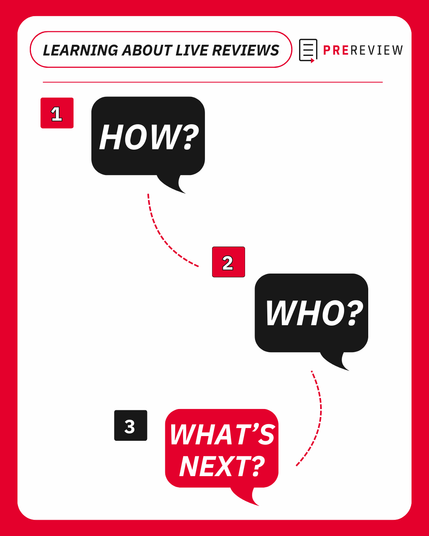
Thank you for Learning about Live Reviews with us! Make sure to follow us to learn when our next Live Review will be. We hope to see you there!
📣 Want to be part of a collaborative, open, peer review process? Join @prereview and @JMIRPub this week for our next Live Review!
⭐ When: April 10 @ 16:00 UTC
🔗 DOI here: https://doi.org/10.48550/arXiv.2503.04802
🔗 Register here: http://bit.ly/livereview-april
#prereview #openpeerreview #openscience #livereview
#reviewtogether


Background:Speech patterns have emerged as potential diagnostic markers for conditions with varying etiologies. Machine learning (ML) presents an opportunity to harness these patterns for accurate disease diagnosis. Objective: This review synthesized findings from studies exploring ML's capability in leveraging speech for the diagnosis of neurological, laryngeal and mental disorders. Methods: A systematic examination of 564 articles was conducted with 91 articles included in the study, which encompassed a wide spectrum of conditions, ranging from voice pathologies to mental and neurological disorders. Methods for speech classifications were assessed based on the relevant studies and scored between 0-10 based on the reported diagnostic accuracy of their ML models. Results: High diagnostic accuracies were consistently observed for laryngeal disorders, dysarthria, and changes related to speech in Parkinsons disease. These findings indicate the robust potential of speech as a diagnostic tool. Disorders like depression, schizophrenia, mild cognitive impairment and Alzheimers dementia also demonstrated high accuracies, albeit with some variability across studies. Meanwhile, disorders like OCD and autism highlighted the need for more extensive research to ascertain the relationship between speech patterns and the respective conditions. Conclusion: ML models utilizing speech patterns demonstrate promising potential in diagnosing a range of mental, laryngeal, and neurological disorders. However, the efficacy varies across conditions, and further research is needed. The integration of these models into clinical practice could potentially revolutionize the evaluation and diagnosis of a number of different medical conditions.
⭐ Interested in building community? Want to contribute to a collective, open, peer review process?
Join @prereview and @JMIRPub on April 10 @16:00 UTC for our next Live Review, where we will be reviewing: "The order in speech disorder: a scoping review of state of the art machine learning methods for clinical speech classification."
🔗 DOI here: https://doi.org/10.48550/arXiv.2503.04802
🔗 Register here: http://bit.ly/livereview-april
#prereview #openpeerreview #openscience #livereview #reviewtogether

Background:Speech patterns have emerged as potential diagnostic markers for conditions with varying etiologies. Machine learning (ML) presents an opportunity to harness these patterns for accurate disease diagnosis. Objective: This review synthesized findings from studies exploring ML's capability in leveraging speech for the diagnosis of neurological, laryngeal and mental disorders. Methods: A systematic examination of 564 articles was conducted with 91 articles included in the study, which encompassed a wide spectrum of conditions, ranging from voice pathologies to mental and neurological disorders. Methods for speech classifications were assessed based on the relevant studies and scored between 0-10 based on the reported diagnostic accuracy of their ML models. Results: High diagnostic accuracies were consistently observed for laryngeal disorders, dysarthria, and changes related to speech in Parkinsons disease. These findings indicate the robust potential of speech as a diagnostic tool. Disorders like depression, schizophrenia, mild cognitive impairment and Alzheimers dementia also demonstrated high accuracies, albeit with some variability across studies. Meanwhile, disorders like OCD and autism highlighted the need for more extensive research to ascertain the relationship between speech patterns and the respective conditions. Conclusion: ML models utilizing speech patterns demonstrate promising potential in diagnosing a range of mental, laryngeal, and neurological disorders. However, the efficacy varies across conditions, and further research is needed. The integration of these models into clinical practice could potentially revolutionize the evaluation and diagnosis of a number of different medical conditions.
📢 @prereview & @JMIRPub have been joining forces to improve scholarly peer review! Learn more about Live Reviews, how we’ve partnered to bring them to you, and how you can join researchers globally to improve a preprint together: https://bit.ly/collaborative-live-reviews
Illustration credit: Lorraine Chuen, developed in 2019 for PREreview - CC BY 4.0Have you ever envisioned a peer review process that is more transparent and collaborative? Imagine a setting where authors and reviewers engage in direct, constructive, real-time discussions to enhance scholarly dialogue. Live Reviews make this possible. Designed
📢 @prereview and @JMIRPub are once again joining forces to improve scholarly peer review!
Join us on February 21 @5 PM UTC for our next Live Review of 2025, where we will be reviewing: https://buff.ly/4aNfWyI
Sign up here: http://bit.ly/review-together-Feb-2025