
'Thủ phạm' khiến thai phụ chuyển nguy kịch cực nhanh, tính mạng bị đe dọa
Dấu hiệu suy hô hấp tiến triển nhanh, người phụ nữ đang mang thai tuần 11 phải vào Bệnh viện Bệnh Nhiệt đới Trung ương trong tình trạng nguy kịch.

Healthy man goes camping—lands in ICU for 40 days with respiratory failure
The man was in Argentina when he fell ill, but such cases occur in the US, too.
We reviewed and commented the
#evidence on
#HighFlow nasal
#oxygen in acute hypoxemic
#RespiratoryFailure: both before and after the
#COVID19 pandemic.
Many new insights, and just as many remaining questions!
https://www.frontiersin.org/articles/10.3389/fmed.2022.1068327/full#.Y4DuLQ_Sa6c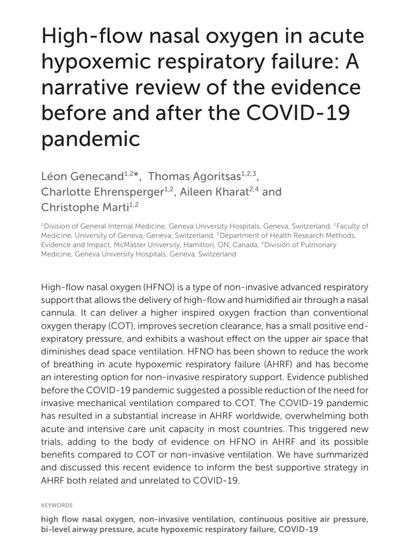

High-flow nasal oxygen in acute hypoxemic respiratory failure: A narrative review of the evidence before and after the COVID-19 pandemic
High-flow nasal oxygen (HFNO) is a type of non-invasive advanced respiratory support that allows the delivery of high-flow and humidified air through a nasal cannula. It can deliver a higher inspired oxygen fraction than conventional oxygen therapy (COT), improves secretion clearance, has a small positive end-expiratory pressure, and exhibits a washout effect on the upper air space that diminishes dead space ventilation. HFNO has been shown to reduce the work of breathing in acute hypoxemic respiratory failure (AHRF) and has become an interesting option for non-invasive respiratory support. Evidence published before the COVID-19 pandemic suggested a possible reduction of the need for invasive mechanical ventilation compared to COT. The COVID-19 pandemic has resulted in a substantial increase in AHRF worldwide, overwhelming both acute and intensive care unit capacity in most countries. This triggered new trials, adding to the body of evidence on HFNO in AHRF and its possible benefits compared to COT or non-invasive ventilation. We have summarized and discussed this recent evidence to inform the best supportive strategy in AHRF both related and unrelated to COVID-19.
 Columbus - Feeds
 VTC News Bot
 Ars Technica News
 Thomas Agoritsas, MD, PhD