Another small section of our lean meadow. Variety of #colors and smells.
Daisies, hawkweed, wild thyme, devil's claws, plantains, rattle pots, yarrows, vetches, wild caraways...

#wildflower #meadow #daisy #flower #pilosella #orange #biodiversity
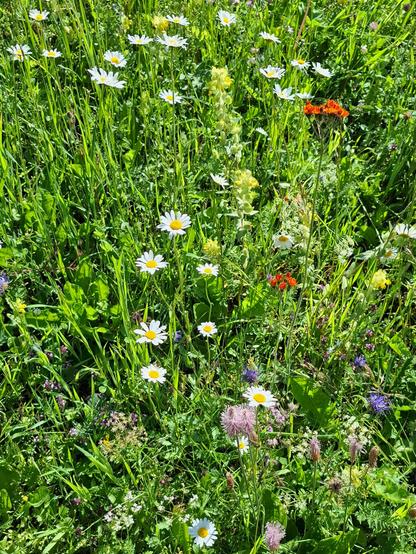
Pilosella guthnikiana (Guthnik’s Hawkweed, Rötliches Mausohrhabichtskraut) is a rare and regionally specialized perennial species typically found in nutrient-poor, dry to semi-dry grasslands, open forest edges, and extensively managed mountain meadows in Central Europe. As a member of the hawkweed group, it contributes to the floristic diversity of low-nutrient sites and coexists well with fine grasses and other lean-site herbs. Its orange flower heads attract various pollinators, such as wild bees, butterflies, and hoverflies, offering nectar and pollen in habitats where floral resources can be scarce. Due to its preference for traditional, unfertilized meadows, it serves as an indicator species for intact, extensively used grassland ecosystems and is of conservation value where such habitats are in decline. Its moderate growth form does not promote aggressive spreading, allowing it to blend harmoniously into species-rich plant communities.

#wildflower #daisy #meadow #flower #pilosella #pilosellaguthnikiana #Guthnikshawkweed #orange #rot #habichtskraut #biodiversity
Mouse-ear Hawkweed (Pilosella officinarum, Kleines Habichtskraut) is a low-growing perennial with bright yellow, dandelion-like flowers that bloom from May to September. It thrives in dry, nutrient-poor grasslands, meadows, and sandy soils, often in sunny, open locations.
This hardy plant provides nectar and pollen for bees, butterflies, and hoverflies, supporting insect diversity in otherwise sparse habitats. Its creeping growth helps stabilize soil and prevent erosion, while also indicating species-rich, low-nutrient environments.
A small but ecologically valuable plant that benefits pollinators, improves soil stability, and reflects healthy, undisturbed habitats.

#hawkweed #pilosella #pilosellaofficinarum #habichtskraut #kleineshabichtskrau #yellow #flower #wildflower #wildblume #biodiversity
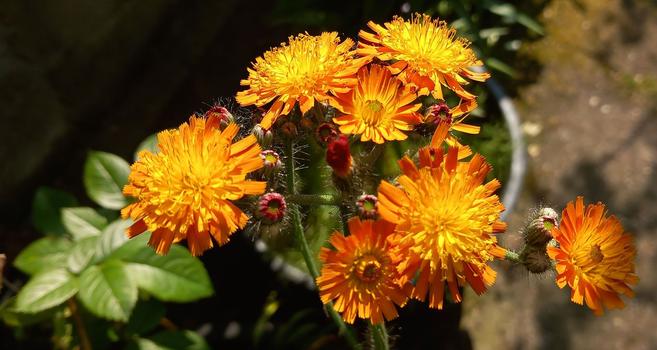
Blüten des Mausohr-Habichtskraut (Pilosella).
(Juni 2023)
(Foto: © Rüdiger Benninghaus)
#Blumen, #flowers, #Blüten, #blossoms, #Mausohr_Habichtskraut, #Pilosella, #Pflanzen, #plants
If Pilosella flowers were as big as they seem in my photo, they would be blinding! In fact, they’re a few millimetres across. Another plant often treated as a weed, but who would dig this out? #inmygarden

#pilosella #macro #macroFlowers #GayGardener #GayGarden #GardenFlowers