 Tom MacInnes
Who’s Punk?! What’s the Score?!…Song #15/21: Picture My Face by Teenage Head
For all the talk about Punk rock being a UK thing or a New York thing, it may come as a surprise to some to know that at the same time as both legendary music scenes were exploding, Toronto was undergoing a similar musical transformation. Using the famous Horseshoe Tavern for a homebase, bands such as The Diodes, The Viletones, The Ugly, The Mods, Cardboard Brains, The Scenics, L’Etranger (featuring future N.D.P. parliamentarians Charlie Angus and Andrew Cash) and from Hamiliton, Forgotten Rebels and the most famous punk band of them all, Teenage Head, all ruled a music scene that burned brightly for a few years before fizzling out in a series of riots and then being swallowed by the arrival of New Wave and Alternative music that characterized the 1980s. But for a few short, intense years at the end of the 1970s, punk rock in Toronto was as vibrant a music scene as anywhere else in the world. You can believe it. It’s true. While all of the aforementioned bands had their moments of artistic brilliance or notoriety, it was Teenage Head that came closest to actually becoming national and international stars. They had even signed a U.S. record deal and were prepared to start touring in America when fate intervened with other plans for the boys. However, despite never becoming Canada’s version of The Clash or perhaps more fittingly, The New York Dolls or The Ramones, Teenage Head still left an indelible mark on Canada’s music scene…a mark that began with the arrival of their self-titled debut album and a song called “Picture My Face”.
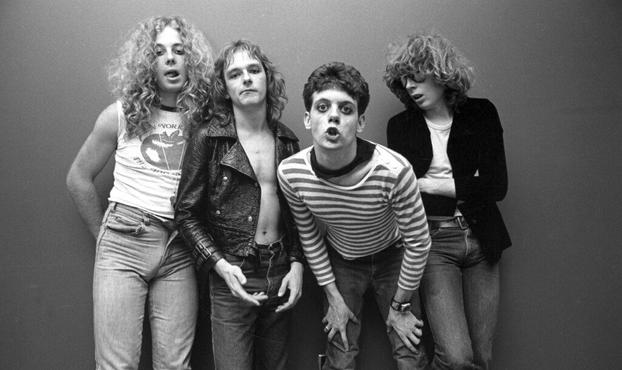
Teenage Head: Gord Lewis, Nick Stipanitz, Frankie Venom, Steve Mahon.Teenage Head formed in Hamilton, Ontario in 1975. The original members were Frank Kerr (who donned the great stage name of Frankie Venom), Gord Lewis, Steve Mahon and Nick Stipanitz. While I will be talking more about the punk scene as it played out in Toronto, I would be remiss if I didn’t make mention of the fact that the city of Hamiliton (immediately to the west of Toronto) had a burgeoning music scene of its own. During the 1970s, bands such as Forgotten Rebels, Simply Saucer (whose members floated in and out of the lineup for Teenage Head over the years) and, of course, Teenage Head all played in venues around the working class city that was built upon a foundation of steel. While Teenage Head was playing high school dances and legion halls in the city, across town musician/producer Daniel Lanois had opened Grant Avenue Studios and was producing the likes of Martha and the Muffins just as they released “Echo Beach”, The Spoons (and “Nova Heart”). Johnny Cash came through, as did Brian Eno, the Killjoys, and even Peter Gabriel stopped by, too. Today, The Sheepdogs and The Arkells proudly call Hamilton home. But back in the day, it was the four lads who made up Teenage Head that made the most noise and helped to put Hamilton firmly on Canada’s musical map.
The band’s name was nicked from a song on an album by 1960s US rockers The Flamin’ Groovies. Being teenage boys, the idea of “Teenage Head” appealed to them, and they adopted that moniker as their identity. But what made Teenage Head successful right from their very first album was that these guys could actually play really well. As much as Teenage Head is called a punk band, they were equally a rock band. Many people flocked to their live shows, not because the band was outrageous or even dangerous, it was because Teenage Head knew how to put on a good show and knew how to play great party music. It is for this reason that many people say that Teenage Head and The Ramones were musical cousins of a sort. In any case, in the pre-Internet world of the late 1970s, it was word-of-mouth by fans of the band that helped pave the way for Teenage Head to migrate down the highway from Hamilton to Toronto. It also helped that the band had a single that was actually available in record stores. That single was called “Picture My Face”. While not the first Canadian punk song to hit the airwaves, “Picture My Face” became one of the most popular. It was a clarion call to the music world that Teenage Head had arrived and would not quickly be forgotten. The lyrics to “Picture My Face” speak of remembering the tough times and having your character forged by those experiences. Because of that DNA in their blood, the band declared themselves as a band that would not merely survive but actually become a band worth remembering.
Once in Toronto, Teenage Head quickly became one of the top must-see punk acts. Their live shows were great fun and their recorded music was well received. In fact, it was when they released their second album called Frantic City and issued their first single “Let’s Shake” that the band really took off all across the country. “Let’s Shake” was very much a radio friendly song that became a staple of many a high school dance playlist as the 1980s began. Also from that album came smaller hits “Something on my Mind” and “Disgusteen”. Not long after Frantic City became a national hit, Teenage Head was positioned to be the next big thing and were preparing to sign a contract with a U.S. record label. However, just prior to leaving for a series of showcase performances in New York, guitarist Gord Lewis was involved in a serious car accident. The performances never went off as intended. This might have been a blessing in disguise, because had they officially signed in America it was rumoured that they were going to be pressured to alter their band name to become Teenage Heads so as to remove the sexual connotation that their Canadian band name implied. In any case, by the early 1980s, the band released an album called Some Kinda Fun and had a big hit with that, too. They had one last album in the early 1980s called Tornado which contained the title track which, in turn, landed on the soundtrack of a Michael J. Fox movie. It was to be Teenage Head’s last charting song. As the 1980s rolled along, the lineup of the band became unstable, with members coming and going. There were several other albums and reunions along the way, but the glory days of Teenage Head were drawing to a close.
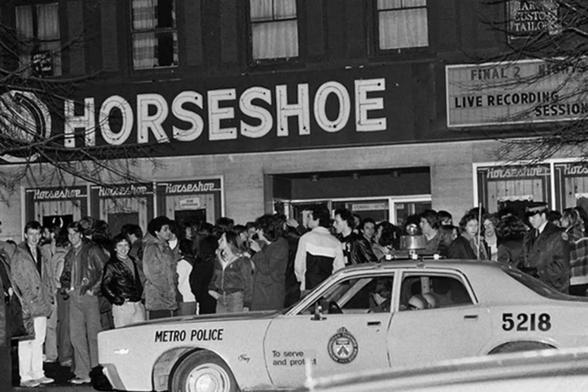
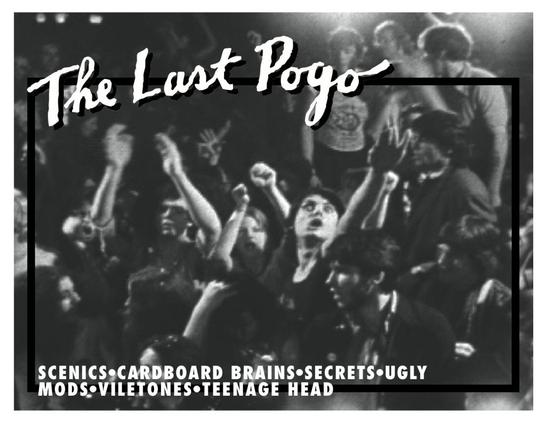
Crowds gather outside of The Horseshoe tavern in Toronto for The Last Pogo.However, the legend of Teenage Head remains to be told. While their music helped to gain them a measure of fame, it was their involvement in two separate riots that has cemented their status as one of Canada’s greatest bands. First things first: let’s start with The Last Pogo. One of the things that caused punk music to emerge as a genre was that it was partially a reaction to what some people perceived as being the bloated, leaden state of rock music at the time in the world. In the case of the Toronto punk scene, there was a gathering of all the most well known Toronto and area punk bands at a venue called The Horseshoe Tavern on Queen Street West. For almost a full year, two local music promoters known as “The Garys” had leased out The Horseshoe in order to put on punk shows that would cash in on this fresh, emerging music scene. After nine months, the owners of The Horseshoe had had enough and terminated the lease agreement with The Garys. At the same time as this was transpiring, famed movie director Martin Scorsese released his ode to the famous rock group The Band called The Last Waltz. In Toronto, this documentary was greeted with the same disdain by local punk rockers as UK prog rock bands like Yes, Genesis and others of that ilk were viewed by The Sex Pistols and The Damned over there. Back in Toronto, The Garys decided to mimic Scorsese’s The Last Waltz by organizing a punk rock blowout that they dubbed The Last Pogo. Maybe everyone knew it at the time or maybe they didn’t, but The Last Pogo concert at The Horseshoe Tavern turned out to be the last great moment for the original first wave of Toronto’s punk rock scene. Because almost every punk band of note was scheduled to appear, crowds quickly gathered outside The Horseshoe. A filmmaker was hired to document the concert (just like Scorsese did). As with most events of this type, there was a series of opening acts who all took to the stage in front of an overflow crowd. The final two acts were scheduled to be Teenage Head and The Viletones. By the time Teenage Head took the stage, it had become dangerously hot inside The Horseshoe Tavern. It was also becoming late in the evening, and at the time, there were noise restrictions in place for how loud a band could play and how late into the evening they could play. Because crowds were spilling out onto Queen Street West and because the concert was still going full tilt late into the evening, by the time Teenage Head took to the stage, the police had arrived and were intent on shutting the concert down. The members of the band began to play anyway and got through two songs before the police put their foot down and canceled the rest of the show. Needless to say, their intervention was not appreciated. A full blown riot erupted outside on Queen Street and inside the Horseshoe Tavern, too. The Last Pogo was punk rock’s last great stand in Toronto and the genre went down fighting. A twenty-eight minute documentary came out of the experience. The documentary is called The Last Pogo and was recorded and produced by a man named Colin Brunton. I have watched it. It is a terrific historical document of a time when music really mattered in Toronto. You can feel the heat and the claustrophobic nature of the scene through your own screen. You can also get to watch a roster of bands who were at the top of their game in 1978. It is a great film and a sad film at the same time. Because it was Teenage Head battling the police, quite literally, their status as a legendary band was confirmed for all time.
But that was not the last big incident for Teenage Head. The second riot that they found themselves in the middle of happened two years later at an event called The Heatwave Music Festival that was being held at a location known as Ontario Place. For those of you unfamiliar with Toronto, Ontario Place is a theme park, of sorts, that sits on the southern edge of the city along the shores of Lake Ontario. In 1980, you could buy a day pass into the park. Included with this pass was free access to the concert bowl. There had never been an issue with this setup until the day of the Heatwave Music Festival. Like all concert facilities, there was a capacity limit at the concert bowl. By the time Teenage Head took the stage there, the capacity limit had been far exceeded. Festival promoters were overwhelmed by the thousands and thousands of people who swarmed into the concert bowl and, in a panic, decided that the best course of action was to lock the access gates. This infuriated people who were not yet inside but had paid their fare to get a day pass. Needless to say, another riot broke out. People became injured. The police were needed to restore order. From that point on, the owners of Ontario Place enacted a concert ban that lasted for over a decade. As for the general public, Teenage Head cemented their reputation as the most notorious band in the land. Even if they were still a fun party band, the atmosphere surrounding attending a Teenage Head concert going forward had changed. Teenage Head may have formed in a blue collar town as a reaction to the rules of authority figures such as politicians and the police, but they were never a band whose purpose was to call for anarchy and to incite violence. Teenage Head was a rock band at its core. It played songs that spoke of lust and partying. As such, the tone surrounding concerts by the band changed. Even though they had some commercial success in the years that followed the Ontario Place riot, things were never the same.
Teenage Head at Ontario Place…just before the riot.As mentioned above, by the mid-1980s the members of Teenage Head splintered into various alternative projects, only to reform as Teenage Head every now and again throughout the next two decades. In 2008 Frankie Venom passed away from throat cancer. In 2022, guitarist Gord Lewis was found murdered at the hand of his own son. In 2023, the surviving members of the band worked with drummer Marky Ramone (of The Ramones) to record and release a collection of B-sides and alternative tracks called Teenage Head with Marky Ramone. Former Toronto Star newspaper columnist Geoff Pevere penned the definitive book on the career of Teenage Head and about the Toronto punk scene in general. His book is called Gods of the Hammer: the Story of Teenage Head. That title cleverly gives a nod to another great rock n’ roll music book called Hammer of the Gods by Stephen Davis about Led Zeppelin. It is also a nod to the city of Hamilton, which many locals call “The Hammer”. Finally, in addition to the documentary called The Last Pogo, TVO (TV Ontario) has produced a documentary called Picture My Face: The Teenage Head Story. This documentary takes a look at the history of the band but focuses mostly on the last days of Gord Lewis’ life and his many struggles with addiction and mental illness. And finally, for the last time…I really mean it…there is a video for a series produced by the CBC called Backstage Pass that is hosted by two members of modern Toronto punk band F*cked Up! This twenty-five minute show is hosted by Damian Abraham, lead singer of F*cked Up! and Jonah Falco, who is the band’s drummer. Abraham has become known as a music historian of note and hosts his own podcast where he delves into the stories behind the songs that defined Punk Rock history. In this particular video, he talks about The Last Pogo, and, with his band, he covers some of the most memorable performances including doing a ripping cover of “Picture My Face” by Teenage Head.
All in all, Teenage Head has earned its place in Canada’s musical canon. If you are not familiar with their music, then I am predicting that “Picture My Face” may surprise you. It is more rock n’ roll than what many would consider punk rock to be. If you go on to listen to songs such as “Let’s Shake” and “Some Kinda Fun”, you will be even more drawn into the rock n’ roll party vibe that Teenage Head was really known for. In any case, class is dismissed for the day. If you didn’t know about Teenage Head before, well now you do. If you didn’t know that Toronto had a kickass punk rock scene that rivaled those scenes in the U.S. and the U.K., well, now you know that too. Have a great rest of your day. Thanks for reading my words.
The link to the video for the song “Picture My Face” can be found here.
***This video is the actual performance from The Last Pogo. You will note how chaotic it all was inside the Horseshoe tavern just before the riots began. lyrics video is here.
***A cleaner, clearer version is here.
***The lyrics version is here. This is a full live concert that was held as a tribute when Frankie Venom passed away. Pete Macaulay stood in for Venom. All songs have subtitles. “Picture My face” is song #2.
The link to the official website for Teenage Head can be found here.
The link to the video for The Last Pogo documentary can be found here.
The link to the video for the TVO documentary called Picture My Face: The Teenage Head Story can be found here.
The link to the video for the CBC Backstage Pass episode hosted by Damian Abraham and bandmate Jonah Falco regarding the history of The Last Pogo can be found here.
The official website for The Horseshoe Tavern in Toronto can be found here.
The name of this series is borrowed from a lyric in a song called “Boxcar” by a great punk band called Jawbreaker. Please take a moment and visit Jawbreaker’s website. You will find it filled with great videos, tour information, cool merch and much, much more. Thanks. You can link to their website here.
***As always, all original content contained within this post remains the sole property of the author. No portion of this post shall be reblogged, copied or shared in any manner without the express written consent of the author. ©2024 http://www.tommacinneswriter.com
#PictureMyFace #Punk #TeenageHead #TheHorseshoeTavern #TheLastPogo #WhoSPunkWhatSTheScore_ #2