Midlake Play “Bandits”

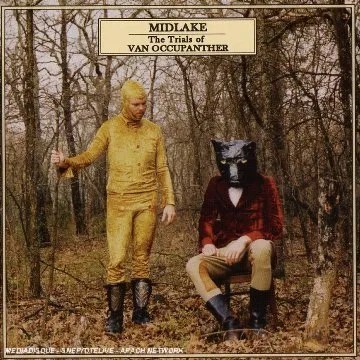
Listen to this track by indie-folk storytellers from Denton, Texas, Midlake. It’s “Bandits”, the second cut off of their 2006 sophomore release The Trials of Van Occupanther. As a progression from their 2004 debut Bamnan and Silvercork, the band double down on their influences that range from Sixties British folk-rock scenes, the singer-songwriters of Laurel Canyon, and the expansive art rock of contemporaries Grandaddy. Even a whiff of Jethro Tull’s pastoral prog gets a look-in. The concoction makes for a heady mix of rural energy and deep melancholy that is perhaps an unexpected direction for a bunch of jazz students from The University of North Texas College of Music to take.

Their jazz roots aren’t very audible in this song, although their ability to fashion an edge of twilight golden hour mood by way of a lush and layered arrangement certainly is. This song balances that instrumental mood with lyrical storytelling that suggests a folk tale in the broadest sense of that term. “Bandits” is rife with rural imagery, presented against a cinematic musical backdrop. On the surface, the intricacies and issues of the modern world sound as far away from what we’re hearing as it’s possible to be. Yet as in any enduring folk tale, they’re closer than one might assume.

On this tune, singer and main songwriter Tim Smith’s voice suggests a sleepier Tim Buckley as he sings the story of a trip away from home one day with a partner, only to return to find their home has been ransacked by bandits. His subdued lead vocal is wrapped in a dance between piano and acoustic guitar with Richard Thompson-like electric guitar interjections that provide striking contrast. It’s all set to a waltz-like pulse that only accentuates how dreamlike and downright restful this song is, despite it opening with a robbery. The band reference classic textures while moving beyond them with a quality that this song could have been written in any era in the last 50 years.

This sense of timelessness has as much to do with the story as it does with the music, suggesting socially resonant themes. It begins with a provoking question: Did you ever want to be overrun by bandits/To hand over all of your things and start over new? The song’s narrator responds to the events of being cleaned-out by bandits as a chance at transformation and personal revision rather than the cause of trauma.

In real life, one would have to consult with someone who’s had that experience directly to judge how viable that would be. But there’s more to discover here beyond idealized, hippyish detachment from worldly goods. The song suggests instead that the motivations and events people encounter from day to day are almost always more complex and connected to unknown quantities than we usually think they are.

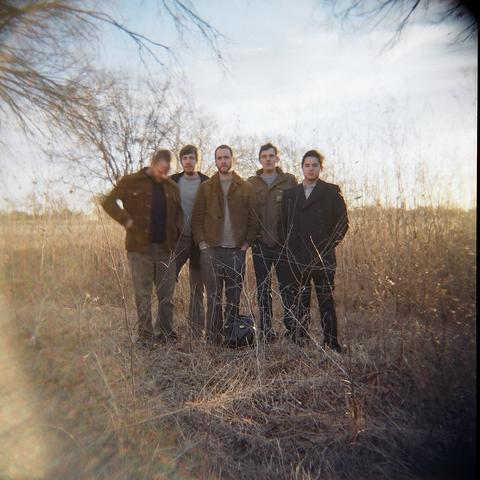
Midlake in 2006. image: Jason Upshaw 

One of the forces at work underneath the events in this song is the universal nature of human desperation in the face of how uncertain and unpredictable life so often is. Overwhelming forces that range from hunger to greed drive people to do desperate things at the expense of others in light of this. Not even the morality of this is always straightforward, with motivations never excusing the bad effects that desperate actions sometimes cause in the lives of others.

But neither are these human behaviours a one-way street. People take important things away from us even as we have also taken them away from others. All of this is often in a bid to protect ourselves. Humanity is trapped inside this perpetual motion machine as the cycle continues. In this, “Bandits” suggests that human desperation in its many, many forms is the common source of our misery, and the real villain of the story.

The song asks another provocative question: what if we set aside our own uncertainty and gave shelter to people, even the ones who have wronged us? Even this is murky moral territory of course. The nature of forgiveness, redemption, and reconciliation as they play out in real life are too nuanced and dependent on context to be so neatly defined or judged in a universal way. These are powerful forces that churn in the lower cauldrons of the human experience. As such, they are also serious matters and not to be undertaken lightly or reflexively.

But that’s where the folk tale form of storytelling plays into things so well in “Bandits”. This is a story in which forgiveness and reconciliation are at least possible because of how it plays out between its characters; the victims of a robbery, and the bandits who robbed them as they themselves become victims and find themselves in need of shelter and respite which those original victims provide. What comes next in the story is not a moral imperative. It’s just what ends up happening based on who the characters are and the decisions they make. The story gives shape to what that choice might look like.

This is the beauty of the form that Midlake uses to present this song to listeners. Folk tales like this are not meant to be digested like a set of moral instructions. Instead, they serve to help visualize how the world can be, not necessarily what it is in present times or to dictate how it should be.

Stories like this, whether written, told, or sung about, are reminders that sometimes having a vision for something better than what we have can help to illuminate a path to greater understanding. They connect us to what’s common to all humans; what we need to thrive, and what we need to eliminate that keep us from thriving – that keep us in a state of desperation. And that really is a source of transformation that opens up a world of possibilities.

After their third album, 2010’s The Courage of Others, Tim Smith departed from Midlake to pursue his own projects under the name Harp. You can learn more about that project and hear the songs at harpband.com.

Midlake are a going concern today. Check out their site at midlakeband.com for news and new music.

Enjoy!

#2000sMusic #folkRock #Midlake #PastoralMusic
Shelagh McDonald Sings “Stargazer”

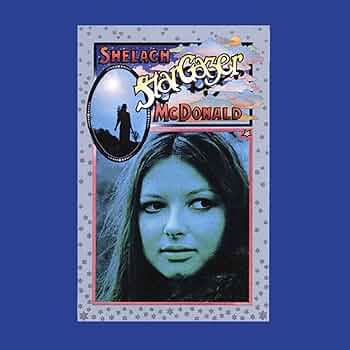
Listen to this track by Edinburgh-born and Glasgow-raised chamber-folk singer and one-time musical cold case file Shelagh McDonald. It’s “Stargazer”, the title track to her 1971 record to follow up her debut that appeared the year before. The album features contributions from a galaxy of British folk luminaries including Richard Thompson, Dave Mattacks, Danny Thompson, and others.

This level of talent on her record is a reflection of McDonald’s status in that community of songwriters and musicians. Her clear alto voice is easily in the same league with the genre’s best singers like Jacqui McShee, Sandy Denny, and others of the era. The late 1960s and early 1970s was a period when traditional music from the British Isles and original songs inspired by it represented a commercial beachhead to build a lasting career. With the Stargazer album’s positive reception at the time, things were really looking up for Shelagh McDonald.

However, McDonald’s path as a professional musician and songwriter didn’t exactly go to plan. Strange circumstances surrounded her life after this song and its namesake album came out. For many years, McDonald’s life trajectory was shrouded in mystery after a severe reaction to LSD sidelined her career as a musician. Plagued with the aftermath of her bad trip that included temporarily her losing her ability to sing, McDonald left London and went back to her parents in Scotland. Later on, she married Gordon, a bookshop owner and scholar. Things didn’t go to plan there, either.

Instead of settling down into a middle-class life similar to her upbringing, McDonald spent years in dead-end jobs and on government benefits. She lived with her husband in a tent for a long while before returning to writing and performing. Her return to the world came after she read about her own decades-long disappearance one day in the local paper. This was around the time the Let No Man Steal Your Thyme compilation came out in 2005 when the assumption had been that she’d simply vanished.

After reconnecting with some of her old contacts, she’d follow up with a third record Parnassus Revisited in 2013, 42 years after its predecessor. By then, she’d reinvented herself and her singing voice for live appearances. She considered her time as a missing person as if it were a kind of parallel existence rather than as lost time. She experienced great disappointment and grief over the loss of her career as a professional musician. But looking back, McDonald remained satisfied that things worked out well for her overall. She’d eluded fame’s treadmill and had lived her life free of its obligations.

Shelagh McDonald had come to be a songwriter and musician from the grass roots level, initially as an admirer of Bert Jansch, Joan Baez, Peter, Paul, and Mary, and others. By the end of the 1960s, she’d started playing the same folk clubs in Glasgow as John Martyn, Billy Connolly, Gerry Rafferty, and others. Soon enough, she received an invitation to come down to London through fellow musician Keith Christmas to establish herself on the scene there, too. This eventually led to becoming a recording artist.

Making a record was a new world for her. She’d been a musician used to solo club dates and “floor spots”, not studios. But by the time of her second album, Stargazer, she’d got used to the way things were done in the studio. It helped that she had a good feel for working with engineer John Wood who’d famously worked closely with her contemporary, Nick Drake. But sometime during the making of a follow-up record by 1972, everything went awry.

The derailment of her career as a rising star of British folk was considered a tragedy by many, and almost thought of in the same way as Nick Drake’s unfortunate path. That’s hard to refute in terms of her lost artistic potential as a recording artist, given her level of talent. Of course, unlike Drake and also her contemporary Sandy Denny, she survived. The only tragedy that remains is how much attention her one-time missing person status took away from the praise her work deserves. Her slim volume of material showcases her abilities as a singularly gifted vocalist who delivers original material that packs an emotional punch.

Title track of her second record “Stargazer” is a case in point by itself; a richly layered song that pulls from traditional music in terms of both textures and themes, but also from chamber pop, film music, and even an operatic chorus in the extended outro to lend it powerful gravitas and a kind of cinematic majesty. There is a wintry beauty to this track that’s full of natural images, overwhelming and unspoiled landscapes, and of mythical evocations of idealized love and the passage of time in the tradition of British Romantic poetry.

He was a stranger to her, his father was a poet

Led her by the hand up the hill

Touched the golden sunset

How do feelings die? He’s afraid to know

Why does she have to lie?

She’ll only stay until it’s time for her to go

She said: take the sun in your hand, be glad

For this is love you hold …

~ “Stargazer” by Shelagh McDonald

The string arrangement on this cut is by Robert Kirby who’d worked up similar arrangements on Nick Drake’s Five Leaves Left and Bryter Layter. The quality he struck on those records also apply here; a kind of tragic wistfulness that also contains a sunrise of hope only just hidden and about to emerge behind the song’s foreground. This is in line with the lyrics to this original tune by McDonald, full of the same kind of imagery and with an emotional palette of wonder, loneliness, expectation, and contentment all living in the same space and as a part of a melancholic spectrum. True to folk traditions, “Stargazer” reflects a quality both of its time and transcendent of it. It’s impact, which is the result of how well the arrangement frames McDonald’s voice and the story she’s telling, is immediate and profound.

This cut captures a central truth to the human experience; that we’re all wandering to one degree or another, seeking the light of the sun as we climb the hill. None of us have any assurances that the one holding our hand as we ascend will still be there when we reach the top. Yet it’s in moments along the way that we find the our rewards as we make our way upward and onward, holding onto love as best we can as we go.

For more on Shelagh McDonald, read this interview with musician Ian Anderson from 2012, just before she returned to the stage by early the following year. McDonald touches on her career and the events and intervening years that interrupted it. But she also expands on what the vital British folk scene looked like and how it felt to be a part of it during its late-Sixties-early-Seventies golden period.

There’s also this 20-minute interview on the BBC to hear McDonald talking about her early career, her life off the grid, and what it was like to return to music.

Enjoy!

#70sMusic #britishFolk #chamberFolk #pastoralMusic #shelaghMcdonald #singerSongwriters