Hacker News
CS336: Language Modeling from Scratch
#HackerNews #CS336 #LanguageModeling #StanfordAI #MachineLearning #NaturalLanguageProcessing #TechEducation
CS336: Language Modeling from Scratch
#HackerNews #CS336 #LanguageModeling #StanfordAI #MachineLearning #NaturalLanguageProcessing #TechEducation
Prompt Politeness Affects LLM Accuracy
https://arxiv.org/abs/2510.04950
#HackerNews #PromptPoliteness #LLMAccuracy #AIResearch #NaturalLanguageProcessing #MachineLearning

The wording of natural language prompts has been shown to influence the performance of large language models (LLMs), yet the role of politeness and tone remains underexplored. In this study, we investigate how varying levels of prompt politeness affect model accuracy on multiple-choice questions. We created a dataset of 50 base questions spanning mathematics, science, and history, each rewritten into five tone variants: Very Polite, Polite, Neutral, Rude, and Very Rude, yielding 250 unique prompts. Using ChatGPT 4o, we evaluated responses across these conditions and applied paired sample t-tests to assess statistical significance. Contrary to expectations, impolite prompts consistently outperformed polite ones, with accuracy ranging from 80.8% for Very Polite prompts to 84.8% for Very Rude prompts. These findings differ from earlier studies that associated rudeness with poorer outcomes, suggesting that newer LLMs may respond differently to tonal variation. Our results highlight the importance of studying pragmatic aspects of prompting and raise broader questions about the social dimensions of human-AI interaction.
How Can We Prevent AI Models From Cannibalizing Themselves When Human-Generated Data Runs Out?
Getty Images While the evolution of artificial intelligence (AI) systems has shown no sign of slowing, there's a growing concern that large language models (LLMs) will soon run out of human-made data to ingest and learn from. Once this happens, scientists say, AI models will increasingly rely on synthetic AI-made information, which will lead to an effect called "model collapse."......Continue reading... By: Roland Moore-Colyer Source: Live Science . Critics: A backdoor in a […]
Getty Images While the evolution of artificial intelligence (AI) systems has shown no sign of slowing, there’s a growing concern that large language models (LLMs) will soon run out of human-m…
I'd like to introduce #Emily, an #OpenSource #InformationRetrieval system I've been working on in my spare time.
Harnessing Amazon Kinesis in Machine Learning and Artificial Intelligence
Amazon Kinesis, a suite of services offered by AWS, allows the collection, processing, and analysis of real-time streaming data, proving integral to advances in machine learning and artificial intelligence. The services support real-time ingestions, predictions, anomaly detection, personalized user experiences, predictive maintenance, fraud detection, and natural language processing. The tool's scalability, data quality, cost management, and security presents challenges, which can be mitigated with proper configuration, data validation, and robust monitoring.
NATURAL LANGUAGE PROCESSING IN ARTIFICIAL INTELLIGENCE (b)
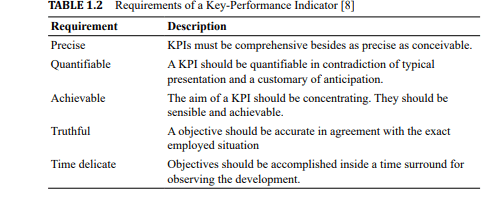
(being continued from 12/06/24) CHAPTER 1A Survey on Social BusinessIntelligence: A Case Study of Application of Dynamic Social Networks for Decision MakingSUBRATA PAUL,1CHANDAN KONER,2and ANIRBAN MITRA3Research Scholar, MAKAUT, and Annex College, Kolkata, West Bengal,India, E-mail: [email protected]. B C Roy Engineering College, Durgapur, West Bengal, India3Amity University, Kolkata, West Bengal, India ABSTRACTOver the years, the popularity of social network platforms has […]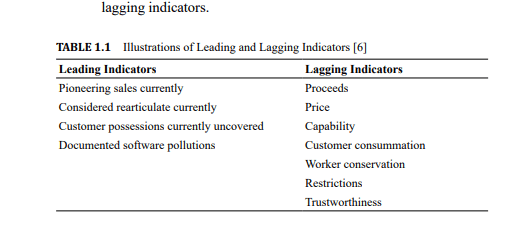
ARTIFICIAL INTELLIGENCE (44) – Natural Language Processing (22) RAG (Retrieval‑Augmented Generation)
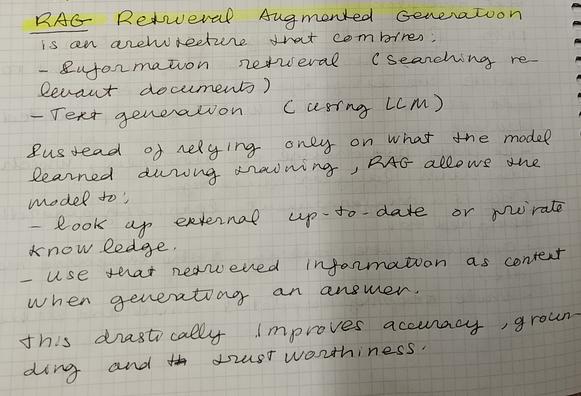
Retrieval‑Augmented Generation (RAG) is an architecture that combines: Information retrieval (searching relevant documents), and Text generation (using a Large Language Model). Instead of relying only on what the model learned during training, RAG allows the model to: Look up external, up‑to‑date, or private knowledge, and Use that retrieved information as context when generating an answer. This drastically improves accuracy, grounding, and trustworthiness. Overview of the Main […]Natural Language Autoencoders: Turning Claude's Thoughts into Text
https://www.anthropic.com/research/natural-language-autoencoders
#HackerNews #NaturalLanguageProcessing #Autoencoders #Claude #AIResearch #TextGeneration
ARTIFICIAL INTELLIGENCE (40) – Natural Language Processing (18) Few-Shot Prompting
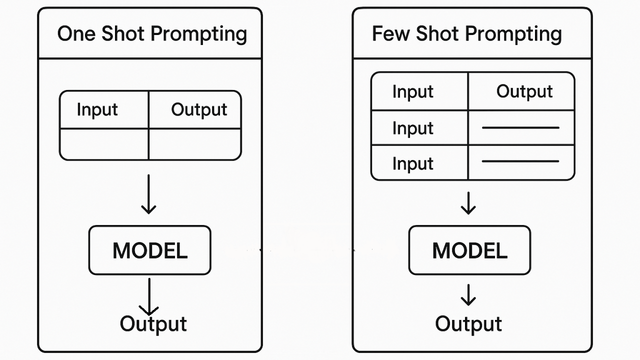
Few-shot prompting is a technique used with large language models where the model is given a small number of examples inside the prompt itself to show what kind of task it should perform and how the output should look. Importantly, the model is not retrained or fine-tuned. Instead, it learns on the fly from the examples provided in the context. This behavior is often called in-context learning. Emergent few-shot learning highlights that this ability of modelsl was not explicitly programmed, […]
 Online Marketing Scoops
 Pete Bleackley
 atozofsoftwareengineering.blog
 WE THE ECOUMENISTS exontes zilon FOR AN OECOUMENIC POLIS
 yolandamuriel.com