 Judith Beyer
Nerding out on a Sunday.
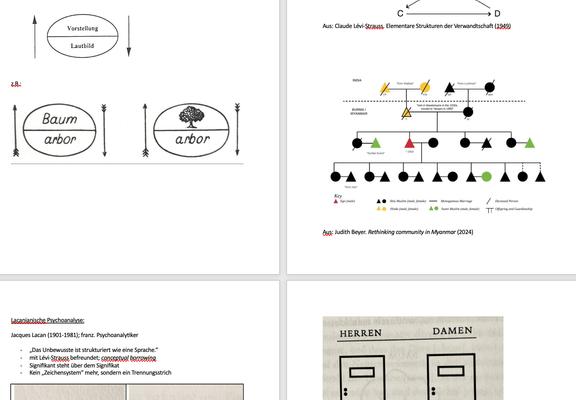
I am preparing for my MA-course on #theory in #anthropology, covering #semiotics #structuralism and #Lacan #psychoanalysis 😍
Is There a Universal Enjoyment? —Todd McGowan
https://quokk.au/c/zizek/p/964833/is-there-a-universal-enjoyment-todd-mcgowan
Is there a psychoanalytical concept for how one frustration can be a synecdoche for frustration as such?
I came across a reference to the abjet petit a and immediately had a flash of what it might mean For Lacan the objet petit a is the object cause of our desire, it is the slither of the sublime which invests a concrete object with a sense of wondrous desirability. The sense of a deeper primordial loss from the trauma of socialisation lurks in the background of our psychic machinery, leading us to invest a flicker of what we feel was lost into the objects we now encounter in the present.
When I encountered the abjet petit a term, I hoped it described a parallel experience of frustration. There are times when a particular frustration takes on an outsized significance beyond what it is actually stopping us doing or impeding. A particular annoyance exists as a synecdoche for annoyance as such: this one thing we can’t control, this one thing which frustrates us, condenses the weight of all the things we can’t control, all the things which frustrate us. This one event becomes a spot where you feel the sheer traumatic weight of the world’s fundamental intransigence. What realists think of as the recalcitrance of reality (the causal criterion of existence) sometimes manifests itself as an affront to us which is deeply painful. If objet petit a is about desire, abjet petit a I hoped would be about castration: the trauma of recognising our limits.
Unfortunately this is not what Lacan meant. It seems to just be a late spin on the original concept which is slightly more inflected towards the Real. Is there an existing concept for what I’m describing here? I feel that there should be. Now back to being inexplicably pissed off with the cyclists riding on the pavement on my way to work.
#abjetPetitA #castration #desire #Lacan #objetPetitA@courtcan How was it? I'm looking into getting a copy of *Looking Awry* by Žižek.
More generally, I'm looking for like-minded folks who read/know Jacques Lacan and Lacan-adjacent writers and thinkers. 25 years ago, my French professor/mentor applied Lacanian theory to books, films, and...well, everything. I was/still am fascinated by it, and I want to expand my knowledge/grasp of it.
#Lacan #Žižek #Philosopy #Books #CriticalTheory #Psychoanalysis
Qui, sur Mastodon, a lu et étudié sérieusement la théorie psychanalytique de Jacques Lacan ?
Ma connaissance dans ce domaine reste assez rudimentaire, mais mon mentor français à l’université, il y a vingt-cinq ans, appliquait la pensée lacanienne aux textes, au cinéma et presque à tout. J’étais fasciné.
J’aimerais beaucoup approfondir ma propre compréhension de Lacan, s’il y a ici quelqu’un qui voudrait et pourrait m’y aider.
Merci d’avance.
I’m Chris, a writer and independent researcher from Minnesota. I’m a Prince obsessive, French cinema/literature lover, sci-fi person, and Lacanian wanderer.
I live with spastic quadriplegic cerebral palsy and use a wheelchair. I write about music, memory, disability, embodiment, film, literature, and the strange ways art helps us survive ourselves.
Glad to be back on Mastodon.
#WritersOfMastodon #Prince4Ever #FrenchCinema #FrenchLiterature #Disability #CerebralPalsy #Lacan
Die folgende Arbeit entwickelt den borromäischen Knoten als Denkfigur für ein rotierendes Zusammenspiel von drei Registern in einer selbstreflexiven, dreiwertigen, paradoxen Logik mit drei involutiven Negationsoperatoren.
#psychology #lacan #polykontextualitat #polykontextural #logic #reflection #philosophy #ai #ki #paradox #Paradoxien #logik #semiotik #semiotic #semiotics #cybernetics #kybernetik #semioticsystem #cybernetic #kybernetiker #kybernethik
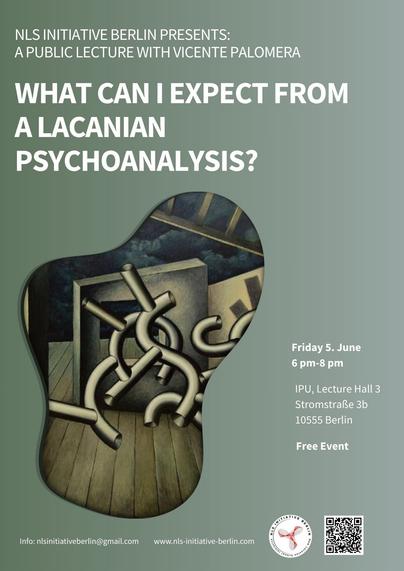
Le même ya 3 mois avec Sandra #Lucbert pour une révision politique de la #psychanalyse - émancipée de l'héritage de #freud et #lacan - inspirée par #MélanieKlein et d'autres - et surtout qui retrouve son ancrage social, responsabilité face au #patriarcat au #capitalisme à la #CultureDuViol etc.
Pertinence extra ! Carrefour #TPTS
The voluntaristic streak in Mari Ruti’s psychoanalytical art of living
I found Mari Ruti’s The Call of Character a remarkable book. It offers a psychoanalytical framing of the ‘art of living’: the classical notion that living well is fundamentally a practice which can be undertaken in better or worse ways. At the core her conception is the Lacanian notion of the Thing: the primordial lost object which dimly echoes in the mundane objects which we desire.
In The Call of Character (2013) this is conceived of in terms of our sensitivity to the echo of the Thing. There are little slivers of the sublime we find in certain objects, which can give us direction in how we choose to live. What matters is cultivating a sensitivity to that echo, to better discern when we hear the call and when we do not. It’s only through doing so that we can be faithful to our own desire.
In The Creative Self (2025)* this is conceived of in terms of placing the glow into these objects. Lacan’s phrase about raising mundane object to the dignity of the Thing is taken quite literally at points, as if there is a choice about when and how we do this. It’s still acknowledged that we find objects with this sliver already embedded but Ruti says that “many forms of creativity are a matter of generating this glow” (loc 324). Particularly towards the end of her section, Ruti argues that we need to be discerning about which objects we raise in this way. We should be highly selective: “Not all objects should qualify; the objects in question should have something genuinely special about them” (loc 2105). I can see three different relations being posited here:
It’s 3 which troubles me. If it’s a question of which objects should qualify it implies that our raising an object to the dignity of the Thing is a voluntaristic action. We choose what to elevate in a concrete way, with the corollary that sometimes our choices are mistaken. I don’t understand what this choice entails though: the examples Ruti cites draws heavily on Marion Milner’s creative practice which I read as much more to do with 1 i.e. cultivating qualities of attention which enable us to discover the echo/glow in the mundane objects of the world. What 3 shares with 2 is a subtle voluntarism which I think sits uneasily with the psychoanalytical logic of the argument. I also don’t think it fits Ruti’s own account of her personal experience of creativity which has much more in keeping with the receptive unconscious rather than a purposeful practice of sublimation.
I see why Ruti wants to do this, I think. It provides a critical vantage point in which something like existential authenticity can be a bulwark against the siren song of consumer capitalism. The problem is that I don’t think it works. I think the psychoanalytical logic is betrayed by the political uses to which it is put. This is not to say that I don’t think psychoanalysis has political implications. Clearly it does. But I don’t think it can be used to provide the foundation for a critical theory. Or at least not as neatly as Ruti is trying to do.
As you can tell from the last few days of blogging, this point is bugging me. I want to emphasise that I love Ruti’s work. This has been a revelation to me. But the reason why I never found critical theory deploying psychoanalysis intellectually satisfying in the past remains the case here, albeit in a more subdued way.
*This is written with Gail Newman but they seem to have written their sections individually.
#creativity #GailNewman #Lacan #MariRuti #MarionMilner #theThing ジン
ジン Mark Carrigan
 Chris J. ♿
 infosophia.eu
 Amans
Amans