How did ancient cities shape their identities? Kepa Martinez Garcia, Fellow of our KIŠIB project, explores Early Dynastic Mesopotamia through its cylinder seals, revealing networks of cooperation and cultural exchange between city-states like Ur, Lagash, and Šuruppak.

📅 10 December 2025 | 4:15 PM
📍 @freieuniversitaet, Holzlaube, Room 0.2052

#Mesopotamia #CylinderSeals #Glyptic #Archaeology #KISHIB #FUBerlin

A busy week for the KIŠIB team:
We were present at two conferences – Bytes & Bygones in Ghent and the Glyptic Day at the Louvre in Paris.
Lots of inspiring talks, great conversations, and valuable impulses for our seal research!

#Archaeology #DigitalHumanities #KISHIB

In Old Assyrian times, women produced textiles, managed households, invested in trade, lent silver, and wrote strikingly personal letters. Their seals authenticated contracts and protected property, giving them an active and visible role in economic and social life.

Read the full story here:
➡️ https://anetoday.org/women-assur-kanesh/

#Mesopotamia #Assyriology #Seals #WomensHistory #KISHIB

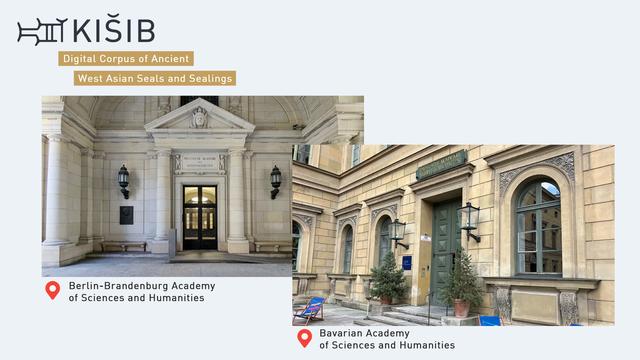
KIŠIB is based at two renowned academies:

🏛️ Berlin-Brandenburg Academy of Sciences (BBAW, @BBAW)
🏛️ Bavarian Academy of Sciences (BAdW)

Tradition meets digital innovation – providing the backbone for our work on seals and sealings.

📍 Would you have expected such a digital project to be rooted in centuries-old academies?

#KISHIB #DigitalHumanities #Mesopotamia

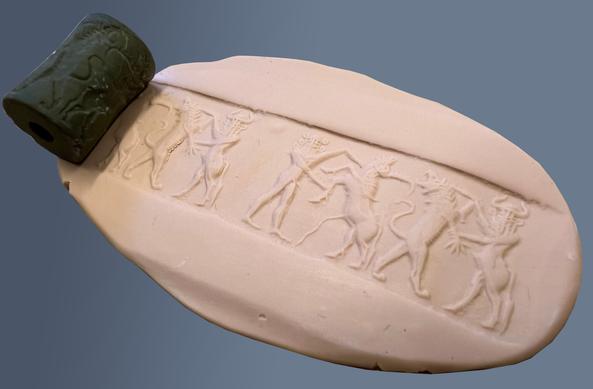
Wrapping up our week on cylinder seals 🌀

The seal was the tool – the impression carried the meaning, authority, and story.
Which would you keep: the carved object or the rolled design?

#KISHIB #Mesopotamia #DigitalHumanities

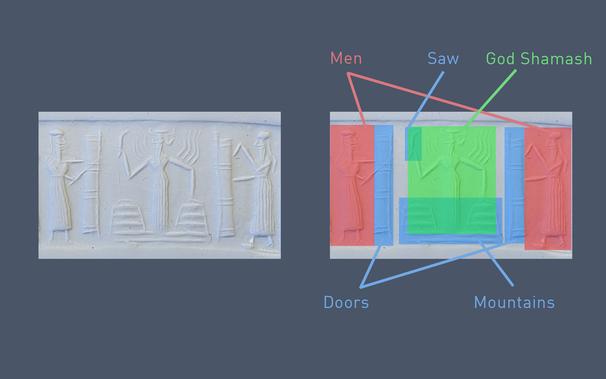
To “read” a cylinder seal impression:
🐂 Spot the motifs
🌀 Follow the narrative flow
🔠 Look for inscriptions

These impressions were more than decoration – they carried identity and authority.

Shamash is identified by the rays and the saw. He was the Mesopotamian sun god. He was also responsible for justice and could be associated with the underworld.

All visible in this tiny serpentine cylinder from the Akkadian Period (end of 3rd millennium BCE).

#KISHIB #CylinderSeal #Mesopotamia